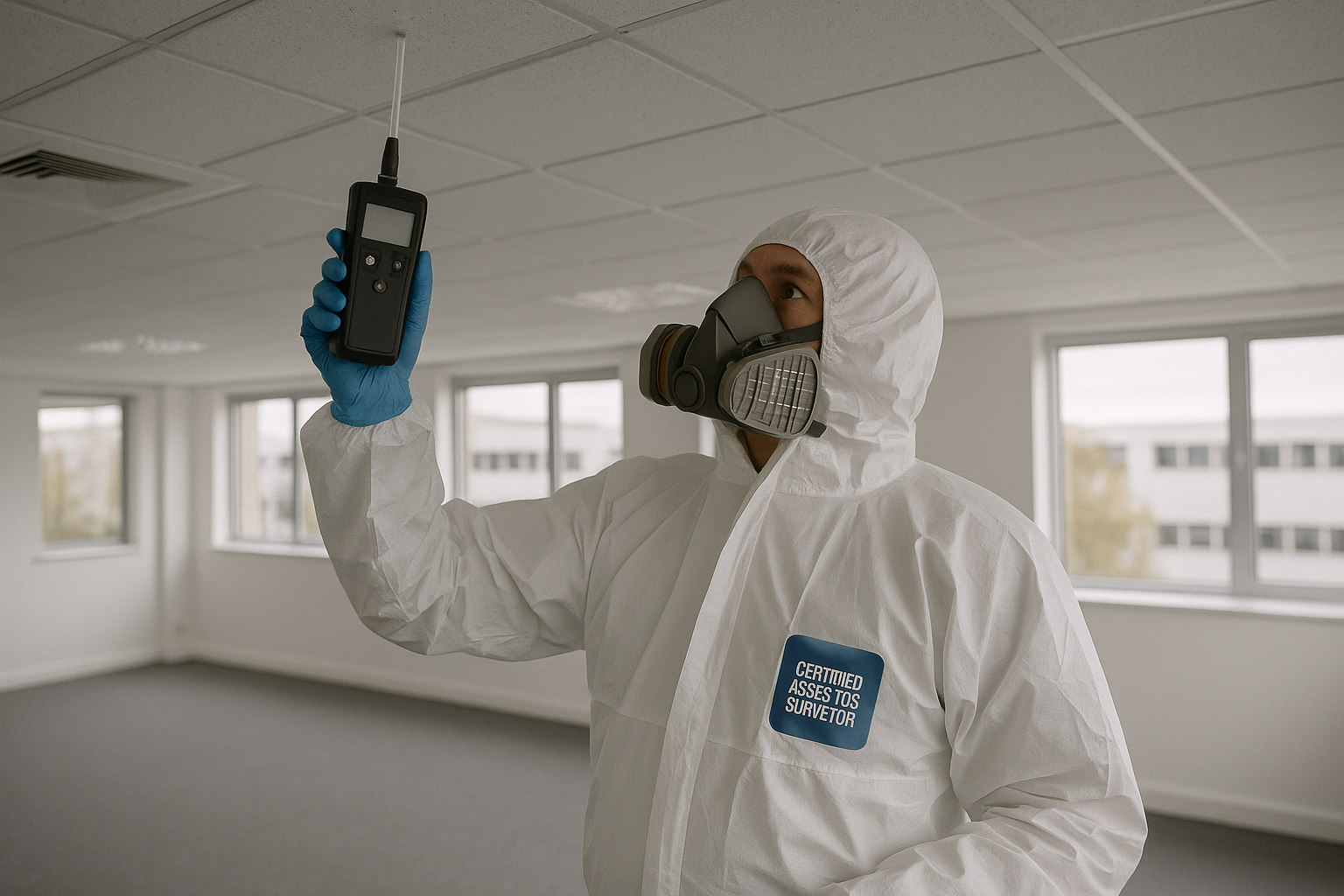
Ask when did asbestos stop being used and the short answer is clear: all types of asbestos were finally banned from new use, importation and supply in the UK in 1999. The more useful answer for anyone managing a property is this: if a building was built or refurbished before 2000, asbestos may still be present and it needs to be identified and managed properly.
That matters because the ban did not remove asbestos already installed in homes, schools, offices, factories and public buildings. It still turns up in ceilings, floor tiles, insulation, cement products, service ducts and plant rooms across the UK. So while people often search when did asbestos stop being used, the real issue is whether asbestos is still sitting quietly inside the building you are responsible for.
When did asbestos stop being used in the UK?
If you are searching when did asbestos stop being used, the key date is 1999. That was the point when all asbestos types were banned from new use in the UK.
There were earlier restrictions before the final ban. Blue asbestos and brown asbestos were prohibited first, while white asbestos remained in some products for longer. That is why buildings refurbished in the late 1980s and 1990s can still contain asbestos-containing materials.
As a practical rule:
- Pre-war buildings: asbestos may be present, especially in later alterations and service areas
- Post-war to 1970s buildings: often the highest likelihood of asbestos in multiple materials
- 1980s to 1999 buildings: asbestos may still be present, particularly white asbestos products
- Post-1999 buildings: asbestos should not normally appear in standard construction materials, though imported products and unusual cases can complicate things
Refurbishment history matters just as much as the original build date. A 1930s office updated in the 1960s, 1980s and 1990s may contain asbestos from several different periods.
Why asbestos was used so heavily in UK buildings
To understand when did asbestos stop being used, it helps to understand why it became so common in the first place. Builders and manufacturers used it because it was cheap, durable and highly resistant to heat, fire, moisture and chemicals.
Those qualities made it attractive across domestic, commercial and industrial construction. It was also easy to mix into other products, which meant it appeared in far more places than many property managers expect.
Common asbestos-containing materials
Asbestos was used in a wide range of products, including:
- Pipe lagging and boiler insulation
- Asbestos insulation board
- Cement sheets, roof panels and wall cladding
- Textured coatings such as Artex
- Floor tiles and bitumen adhesive
- Ceiling tiles
- Soffits, fascias, gutters and downpipes
- Gaskets, seals and rope products
- Panels behind heaters, fuse boards and service equipment
During post-war building programmes, asbestos became a routine specification in housing, hospitals, schools, offices and public buildings. That legacy is still with us today.
History of asbestos in the UK – Part 2: why older buildings still carry risk
The heaviest use of asbestos in Britain came during the post-war decades. From the 1940s through to the 1970s, it became embedded in the national building stock, which is why so many premises still present asbestos risks now.
This is the practical side of the question when did asbestos stop being used. Even after restrictions increased, asbestos did not disappear overnight. Existing stock continued to be used, and white asbestos remained in some products until the final ban.
If you manage a property from this period, asbestos should always be considered before maintenance, refurbishment or intrusive inspection work.
Where asbestos still turns up
Some asbestos-containing materials are tightly bonded and relatively stable when in good condition. Others are more friable and can release fibres more easily if damaged. Both can become dangerous when disturbed.
Typical locations include:
- Plant rooms and boiler cupboards
- Pipe insulation and service ducts
- Ceiling voids and partition walls
- Textured coatings on ceilings and walls
- Floor tiles and adhesives
- Garage roofs and cement outbuildings
- Panels in risers, cupboards and behind electrical equipment
- Soffits, gutters and external rainwater goods
You cannot confirm asbestos by sight alone. If a material needs to be identified, arrange professional asbestos testing before anyone drills, cuts, sands or removes it.
The risk of asbestos in Artex ceilings
One of the most common concerns in homes and older commercial premises is textured coating. The risk of asbestos in Artex ceilings is real because many textured coatings applied before the ban contained asbestos, usually white asbestos.
In good condition, a textured coating may present a lower risk than friable insulation materials. The problem starts when ceilings are scraped, sanded, drilled or broken during rewiring, lighting work, refurbishment or repairs.
What to do if you suspect asbestos in textured coatings
- Do not scrape or sand the surface
- Do not let trades start work until the material has been assessed
- Check whether previous survey records mention textured coatings
- Arrange sampling if the material is likely to be disturbed
- Make sure contractors see the survey information before work begins
If there is any doubt, book targeted asbestos testing rather than relying on guesswork. It is quicker and safer than discovering the problem halfway through a job.
Why was asbestos banned?
Asbestos was banned because inhaling airborne fibres can cause severe and often fatal disease. The risk arises when asbestos-containing materials are damaged or disturbed and microscopic fibres are released into the air.
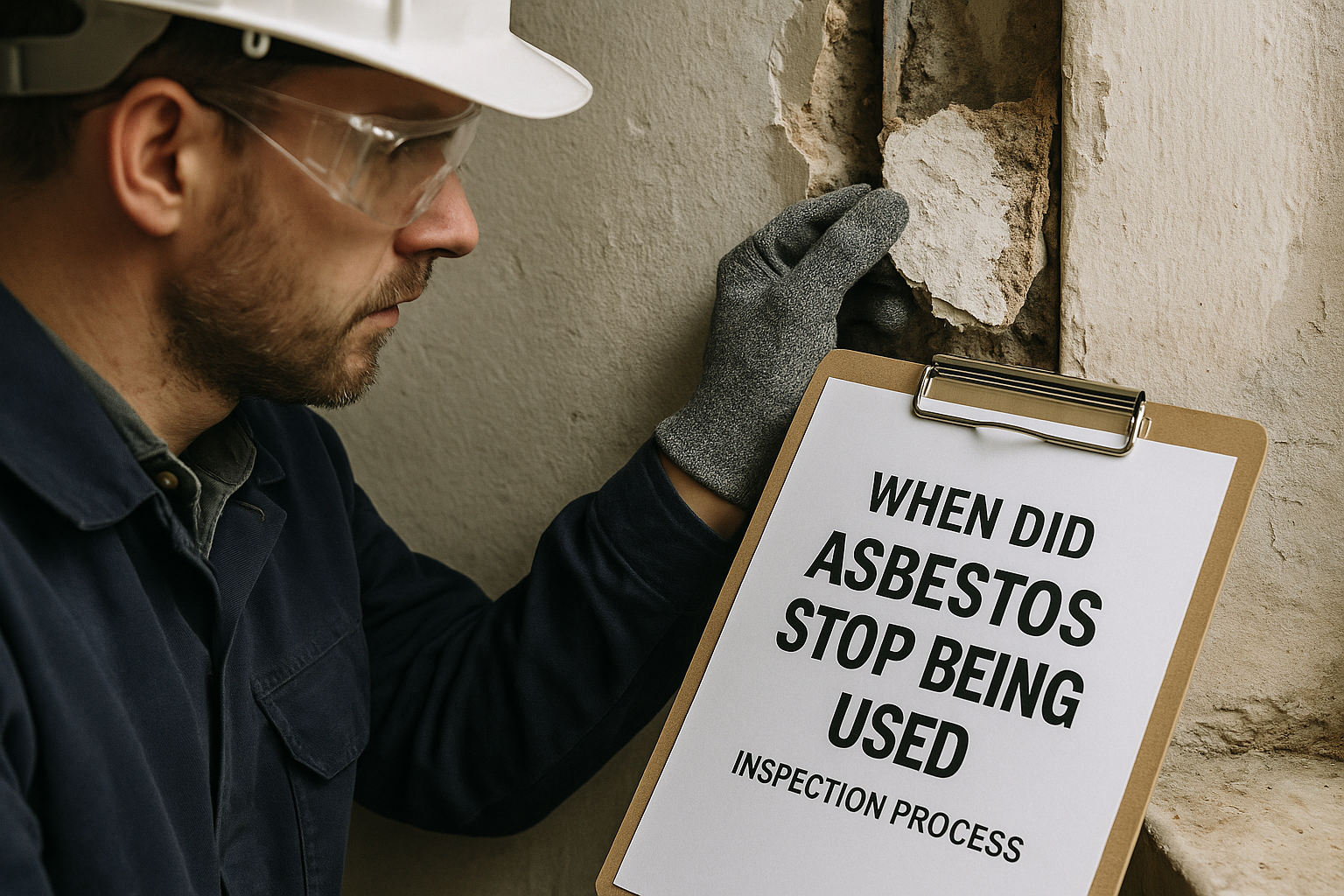
Once inhaled, those fibres can lodge deep in the lungs. The health effects may take decades to appear, which is one reason asbestos remains such a serious issue long after the ban.
Mesothelioma and asbestos related diseases were rising
One of the clearest reasons behind tighter controls and the eventual ban was the growing recognition that mesothelioma and asbestos related diseases were rising. Mesothelioma is strongly associated with asbestos exposure and usually develops many years after the original contact with fibres.
Other recognised asbestos-related conditions include:
- Asbestosis
- Lung cancer linked to asbestos exposure
- Pleural thickening
- Pleural plaques
This long delay between exposure and illness is exactly why the search term when did asbestos stop being used still matters. The ban stopped new use, but it did not remove asbestos already built into older properties.
Is my property or building likely to contain asbestos?
If your property was built or refurbished before 2000, asbestos is possible. That applies to homes, schools, offices, industrial units, retail premises, hospitals and mixed-use estates.
Some buildings are more likely to contain asbestos simply because of their age and construction history. Large estates with repeated refurbishments are especially tricky because asbestos can be hidden in one area and absent in another.
Buildings where asbestos is commonly found
- Post-war housing stock
- Schools and educational estates
- Hospitals and healthcare facilities
- Office blocks from the 1950s to 1990s
- Factories, warehouses and workshops
- Garages, outbuildings and plant structures
Educational settings deserve particular attention. Schools, colleges and wider facilities often combine older blocks, later extensions and decades of maintenance work. The same is true of many NHS properties and local authority estates.
If you are responsible for one of these buildings, do not rely on age alone. Check the records, review previous surveys and confirm whether the planned work is routine maintenance or intrusive refurbishment.
What UK regulations say about asbestos today
The answer to when did asbestos stop being used is only one part of the picture. The legal duty now is about managing asbestos that remains in place.
In the UK, asbestos management and asbestos work are governed by the Control of Asbestos Regulations. Survey standards are set out in HSG264, while HSE guidance explains how asbestos should be identified, assessed, managed and, where necessary, removed.
What dutyholders and property managers should do
For non-domestic premises, the duty to manage asbestos generally means you need to:
- Find out whether asbestos is present
- Record its location and condition
- Assess the risk of exposure
- Prepare and maintain an asbestos management plan
- Provide information to anyone who may disturb it
For domestic properties, the legal framework differs, but the safety principle is the same. Before refurbishment or demolition, asbestos must be assessed so tradespeople and occupants are not put at risk.
For routine occupation and planned maintenance, a professional management survey is usually the starting point. If the building is due for major strip-out or structural work, you will typically need a demolition survey or the equivalent intrusive survey for the planned works.
Are you asbestos aware? Practical steps that prevent mistakes
Most asbestos incidents do not happen because someone ignored the law on purpose. They happen because somebody drilled a panel, lifted a tile or opened a ceiling void without realising what was there.
That is why asbestos awareness matters. If your teams, contractors and facilities staff understand the warning signs and know where to find the right records, you reduce both health risks and project delays.
A simple asbestos-aware checklist
- Assume asbestos is possible in any pre-2000 building
- Check the asbestos register before maintenance starts
- Make sure survey information is accessible on site
- Stop work immediately if suspect materials are uncovered
- Arrange sampling instead of guessing
- Brief contractors before they start
- Update records after removal, repair or damage
Good asbestos management is not just about compliance paperwork. It is about making sure the right person has the right information before the first tool comes out.
Popular links, contact and links, and spending less time on paperwork
Many people researching asbestos history end up on pages full of popular links, contact and links sections, or website navigation that sends them in circles. Background reading has its place, especially if you want to understand how medical evidence developed, but property decisions need practical information.
If you want to spend less time on paperwork and more time making safe decisions, keep your process simple. Store survey reports, registers and plans in one place. Make them easy for site teams and contractors to access. Review them before work starts, not after a problem appears.
Useful links to prioritise internally
- Your asbestos survey reports
- The current asbestos register
- The asbestos management plan
- Relevant HSE guidance
- Emergency contacts for surveyors and licensed contractors
This is where clear contact routes matter. If a maintenance engineer finds damaged insulation board or suspects asbestos above a suspended ceiling, they should know exactly who to call and what record to check first.
If you need local support, Supernova can help with an asbestos survey London service, as well as an asbestos survey Manchester service and an asbestos survey Birmingham service.
Recent posts like this, faculties and the wider health picture
When people look up when did asbestos stop being used, they often also read recent posts like this on asbestos awareness, disease risk and building compliance. That broader context matters because asbestos is not just a construction issue. It is a long-running public health issue as well.
Research linked to university medicine departments and wider faculties has helped build the evidence connecting asbestos exposure with serious disease. That growing body of knowledge changed how asbestos was viewed. What was once treated as a useful building material became recognised as a major occupational and public health hazard.
For property managers, the lesson is straightforward: historical use and modern risk are closely linked. You do not need to become a medical expert, but you do need systems that stop people being exposed in the first place.
What this means for homes, schools, offices and estates today
Anyone asking when did asbestos stop being used is usually trying to judge risk in a real building. The safest rule is simple: if the property was built or refurbished before 2000, treat asbestos as a possibility until a suitable survey or test says otherwise.
Before any intrusive work starts:
- Check whether an asbestos survey already exists
- Confirm whether the survey type matches the planned work
- Review the asbestos register and management plan
- Arrange sampling or a new survey if gaps remain
- Stop work immediately if suspect materials are uncovered unexpectedly
These steps help prevent exposure, avoid project delays and keep your legal duties under control. They also protect contractors who might otherwise disturb hidden asbestos without warning.
If you need clear advice, fast turnaround and nationwide coverage, speak to Supernova Asbestos Surveys. We provide asbestos surveys, sampling and support for dutyholders, landlords, facilities teams and property managers across the UK. Call 020 4586 0680 or visit asbestos-surveys.org.uk to book a survey or discuss your building.
Frequently Asked Questions
When did asbestos stop being used in the UK?
All asbestos types were banned from importation, supply and new use in the UK in 1999. Earlier restrictions applied to some asbestos types before the final ban.
Can a house built before 2000 still contain asbestos?
Yes. Any house built or refurbished before 2000 may contain asbestos in materials such as textured coatings, floor tiles, insulation board, cement sheets or pipe insulation.
Is Artex likely to contain asbestos?
Some older textured coatings, including Artex, can contain asbestos. You cannot confirm this by sight, so sampling is the safest option before any work that could disturb the surface.
What survey do I need before building work starts?
For normal occupation and routine maintenance, a management survey is usually appropriate. Before intrusive refurbishment or demolition, a more intrusive survey is needed to identify asbestos in areas that will be disturbed.
What should I do if I find suspected asbestos during work?
Stop work immediately, keep people away from the area and arrange professional assessment. Do not cut, drill, sweep or remove the material until it has been properly identified and the next steps are clear.