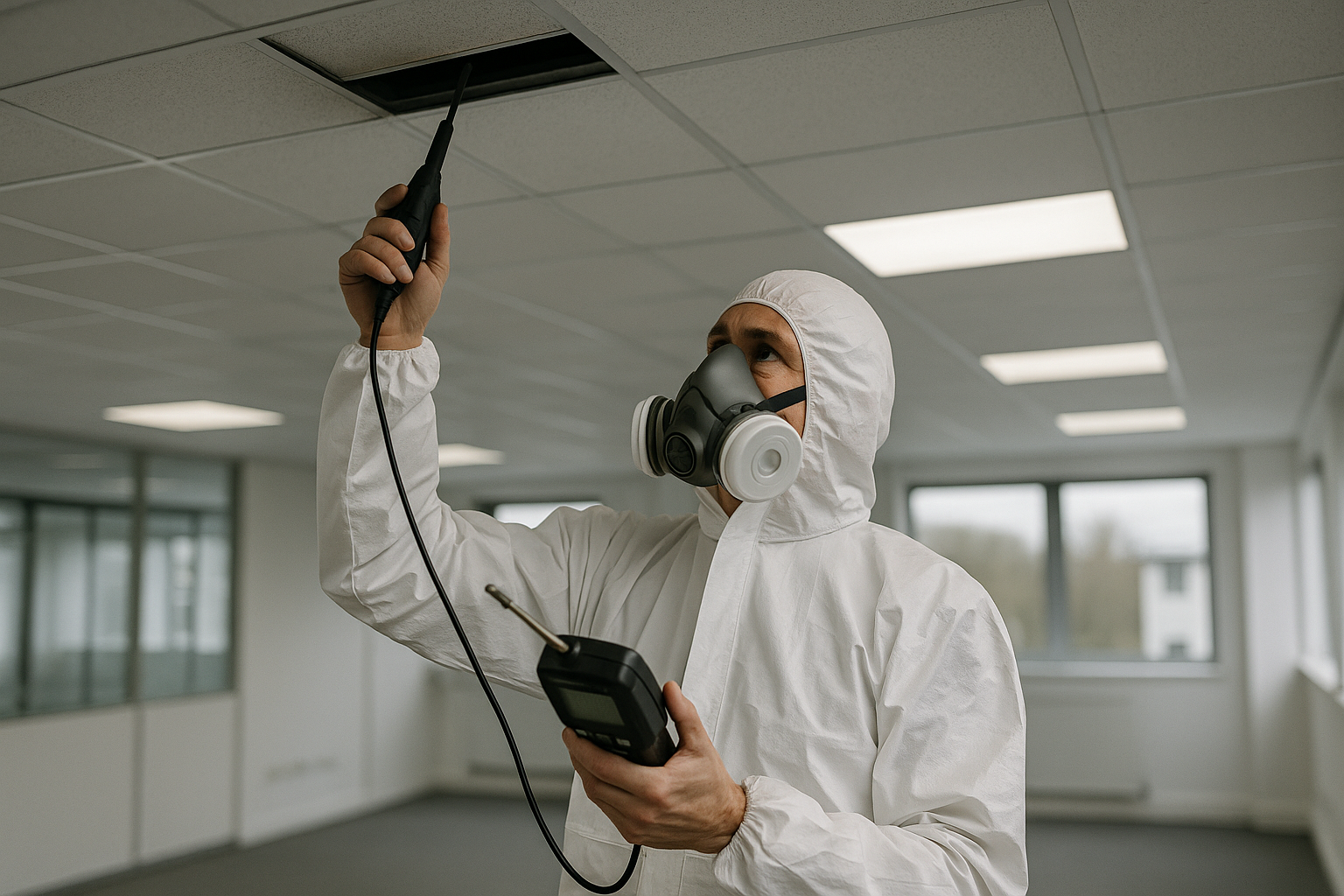
Refurbishment work has a habit of exposing whatever a building has been hiding for years. In premises built or altered before 2000, an asbestos refurbishment survey is often what stands between a well-planned project and a costly shutdown after hidden asbestos is disturbed.
For property managers, landlords, developers and contractors, this is not paperwork for the sake of it. An asbestos refurbishment survey is a targeted, intrusive inspection designed to identify asbestos-containing materials in the exact areas affected by planned works, in line with the Control of Asbestos Regulations, HSG264 and current HSE guidance.
What is an asbestos refurbishment survey?
An asbestos refurbishment survey is carried out before refurbishment, upgrade, strip-out or alteration works that will disturb the fabric of a building. The aim is simple: find asbestos before the work starts disturbing walls, ceilings, floors, risers, ducts, plant or hidden voids.
Unlike a routine inspection, this survey is intrusive. Surveyors may need to open up boxed-in services, lift floor coverings, access ceiling voids, inspect behind fixed panels and examine concealed building elements that would not be visible during normal occupation.
That matters because asbestos is often hidden in places such as:
- Partition walls and boxing
- Ceiling voids and service risers
- Floor tiles and bitumen adhesive
- Pipe lagging and thermal insulation
- Asbestos insulating board behind panels
- Cement sheets, flues and soffits
- Debris left behind from earlier works
If those materials are cut, drilled, broken or stripped out during refurbishment, asbestos fibres can be released. That can stop the project immediately, create risk for workers and occupants, and lead to expensive delays while emergency controls are put in place.
Why an asbestos refurbishment survey matters before intrusive works
Some asbestos-containing materials can remain in place during normal occupation if they are in good condition and unlikely to be disturbed. Refurbishment changes that completely. Once contractors begin drilling, chasing, stripping, opening up or removing finishes, hidden asbestos can quickly become a live issue.
An asbestos refurbishment survey gives the project team the information needed to plan properly. It shows what is present, where it is located and what action is needed before the next phase begins.
In practical terms, that helps you:
- Price works more accurately
- Arrange asbestos removal before the main programme starts
- Reduce the risk of unexpected site stoppages
- Plan access restrictions and sequencing
- Demonstrate reasonable steps to identify asbestos risk
- Protect contractors, maintenance staff and occupants
Leave the survey too late and the project is already on the back foot. The right time to arrange an asbestos refurbishment survey is when the scope of works is being defined, not when the contractor is due on site next week.
When do you need an asbestos refurbishment survey?
You need an asbestos refurbishment survey before any work that will disturb the building fabric in an area where asbestos could be present. It does not have to be a major redevelopment. Even fairly modest upgrades can require intrusive asbestos inspection.
Typical examples include:
- Office fit-outs and strip-outs
- Kitchen, bathroom and washroom replacements
- Electrical rewires and data cabling routes
- Heating, ventilation and air conditioning upgrades
- Window replacements affecting surrounding panels or soffits
- Retail unit alterations
- School holiday works
- Plant room upgrades
- Flooring replacement where underlying layers will be disturbed
- Opening up walls, ceilings, ducts or risers
If the work only affects one part of a building, the survey can usually be limited to that defined area. That keeps the inspection proportionate while still meeting the need to identify asbestos before disturbance.
Buildings where this survey is commonly required
Any non-domestic building built or refurbished before 2000 may need this type of survey before intrusive works. Common examples include offices, schools, shops, warehouses, healthcare premises, industrial sites and communal areas in residential blocks.
Domestic properties can also require an asbestos refurbishment survey where renovation work will disturb suspect materials. The key issue is not whether the building is domestic or commercial. It is whether the planned works will disturb parts of the structure where asbestos may be present.
Asbestos refurbishment survey vs management survey
This is one of the most common points of confusion. A management survey is not the same as an asbestos refurbishment survey, and one should never be used as a substitute for the other.
A routine asbestos management survey is intended for normal occupation and routine maintenance. It helps dutyholders locate and manage accessible asbestos-containing materials that could be disturbed during everyday use of the premises.
By contrast, an asbestos refurbishment survey is designed specifically for intrusive works. It goes beyond visible surfaces and focuses on the exact areas affected by the project.
Key differences
- Management survey: usually non-intrusive or only mildly intrusive, used during occupation
- Asbestos refurbishment survey: intrusive, used before refurbishment or alteration works
- Management survey purpose: support an asbestos register and ongoing management plan
- Refurbishment survey purpose: identify asbestos likely to be disturbed by planned works
If your building remains occupied and you need to understand day-to-day asbestos risks, a management survey may be the right starting point. If contractors are about to open up the structure, the correct survey is a refurbishment survey.
The practical rule is straightforward:
- Normal occupation and routine maintenance: management survey
- Intrusive refurbishment or alteration works: asbestos refurbishment survey
- Full or partial demolition: demolition survey
Asbestos refurbishment survey vs demolition survey
A refurbishment project and a demolition project are not assessed in the same way. The survey scope has to match the work being planned.
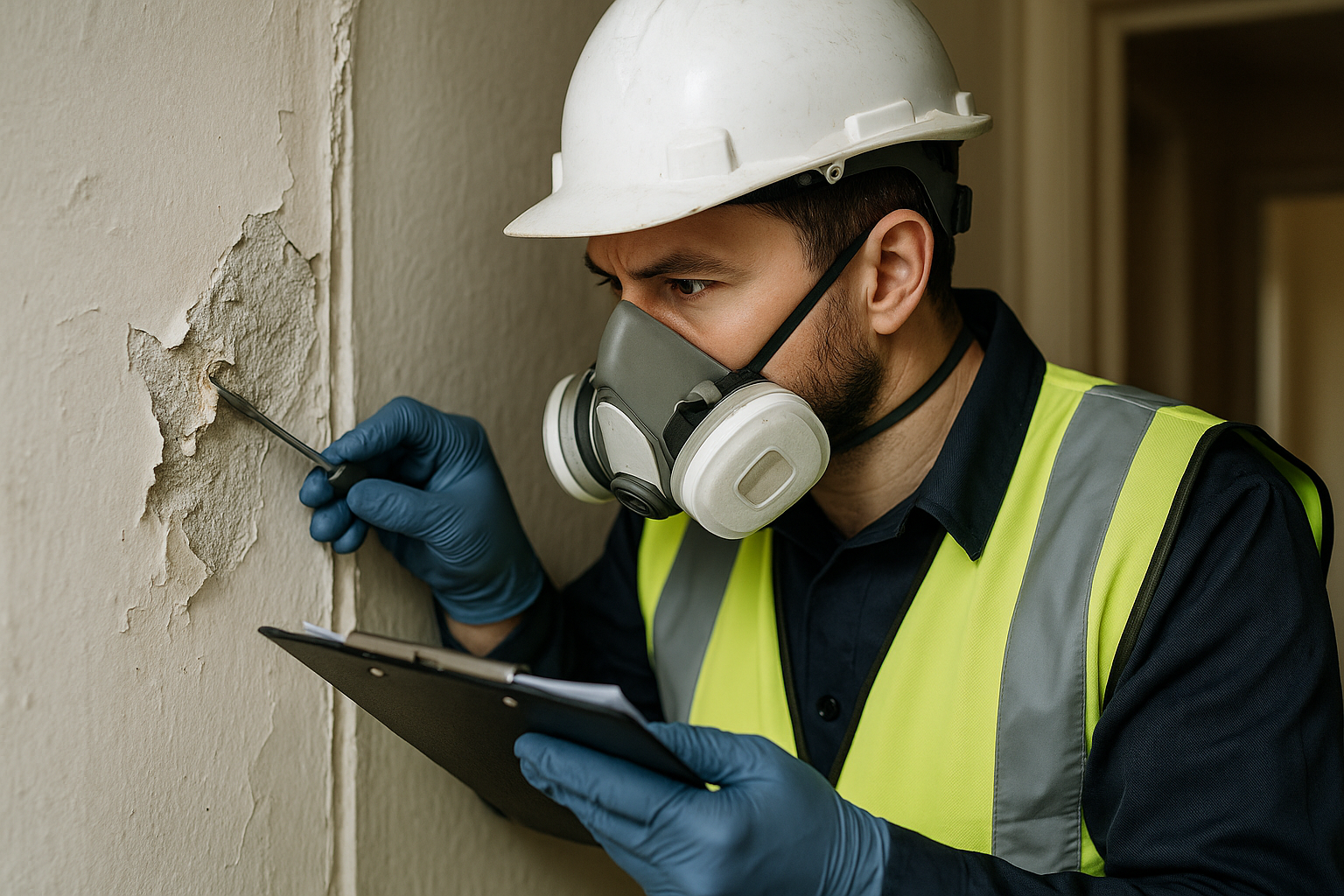
An asbestos refurbishment survey is used when part of a building is being upgraded, altered or stripped back. It focuses on the specific areas affected by the works. A demolition survey is broader and is intended to identify asbestos throughout the structure, or the part being demolished, before demolition proceeds.
Choosing the wrong survey can leave hidden asbestos in areas that contractors disturb later. Before booking any inspection, define whether the project involves:
- A targeted refurbishment in part of the building
- A full strip-out of a defined area
- Partial demolition
- Complete demolition of the structure
If there is any doubt, agree the scope before the survey starts. A clear brief avoids repeat visits, reduces delays and makes the final report far more useful.
What happens during an asbestos refurbishment survey?
Most clients want to know what surveyors will actually do on site. A well-run asbestos refurbishment survey follows a clear process and should be planned around the works, the building layout and the access available.
1. Scoping the survey
The first step is defining exactly what is being refurbished. Surveyors need to know which rooms, voids, service routes, structural elements and plant areas will be affected.
You can speed that up by providing:
- Floor plans or drawings
- A written scope of works
- Any previous asbestos reports
- Details of access restrictions
- Site contact information
- Permit or induction requirements
2. Intrusive inspection
This is what makes an asbestos refurbishment survey different from a routine visit. Surveyors inspect hidden areas and may need to remove access panels, lift floor finishes, open risers, access ceiling voids and examine areas behind fixed elements.
The aim is not to create unnecessary damage. The aim is to inspect all areas where the planned works could disturb asbestos-containing materials.
3. Sampling suspect materials
Where a material is suspected to contain asbestos, samples are taken safely for laboratory testing. Visual inspection alone is not enough to confirm whether a material contains asbestos.
Materials commonly sampled include:
- Asbestos insulating board
- Textured coatings
- Vinyl floor tiles
- Bitumen adhesive
- Pipe insulation and lagging
- Cement sheets and flues
- Ceiling tiles and partition boards
- Gaskets, rope seals and plant components
If you have a suspect material outside a full survey, Supernova can also arrange sample analysis for submitted samples.
4. Reporting the findings
Once inspection and testing are complete, the report should set out exactly what was found, where it was found and what needs to happen before the refurbishment starts.
A reliable report will usually include:
- Material descriptions
- Exact locations
- Sample references and laboratory results
- Photographs where useful
- Plans or marked-up drawings
- Inspection limitations
- Recommendations for next steps
5. Action before work begins
If asbestos is identified within the refurbishment area, it must be dealt with properly before the main works disturb it. Depending on the material, condition and planned task, that may involve isolation, temporary controls or licensed removal.
Where removal is required, using a specialist asbestos contractor for asbestos removal helps keep the project compliant and coordinated.
How to prepare for an asbestos refurbishment survey
A little preparation makes the survey faster, clearer and more useful. It also reduces the risk of missing areas that later become part of the works.
Before the survey date, take these steps:
- Define the scope clearly. Identify every room, void, riser, ceiling, floor build-up and service route affected by the works.
- Check whether the area can be vacated. Because the survey is intrusive, the inspection area often needs to be unoccupied.
- Arrange access. Unlock plant rooms, service cupboards, roof spaces and restricted areas in advance.
- Gather previous information. Existing asbestos reports, plans and refurbishment drawings all help.
- Tell the surveyor about constraints. If there are live services, fragile ceilings, security restrictions or sensitive occupants nearby, say so early.
One of the biggest causes of delay is incomplete scoping. If the project later expands into adjacent rooms or newly opened voids, the original asbestos refurbishment survey may no longer cover the full work area.
What a good asbestos refurbishment survey report should show
Not all reports are equally useful. A strong asbestos refurbishment survey report should give your project team enough detail to act without guesswork.
Does the scope match the planned works?
The report should clearly state which areas were surveyed. If your project includes toilets, risers, ceiling voids and floor build-ups, but the report only refers to visible room surfaces, the scope may be too narrow.
Are limitations clearly recorded?
HSG264 recognises that access limitations can occur, but they must be documented. Locked rooms, obstructed voids, unsafe access points or operational restrictions should all be recorded plainly.
Do not ignore limitations. If contractors will disturb an excluded area later, further inspection may be needed before work starts.
Are sample results easy to follow?
The report should link suspect materials to sample references and analytical outcomes. If a material has been presumed to contain asbestos rather than sampled, that should also be stated clearly.
Are locations specific enough for contractors?
Descriptions should be practical and precise. Contractors need room references, elevations where relevant, photographs and enough detail to identify the material on site.
Use this quick checklist before sign-off:
- Does the surveyed area match the refurbishment area?
- Were all relevant hidden spaces inspected?
- Are exclusions and limitations clear?
- Are sample results included?
- Do the recommendations explain what must happen before works begin?
If any answer is no, go back to the surveyor before the programme moves on.
Common mistakes that cause delays and compliance problems
Most asbestos-related project delays are avoidable. The same issues tend to come up again and again when survey scope, access or planning is rushed.
Using the wrong survey type
A management survey does not provide enough detail for intrusive refurbishment works. If the planned work will disturb concealed materials, you need an asbestos refurbishment survey, not a general record for routine occupation.
Scoping only the obvious areas
Clients often focus on the room being refurbished but forget the areas linked to it. Ceiling voids, duct runs, boxing, service risers, floor voids and adjacent plant spaces may all be affected once works begin.
Assuming previous reports are still enough
Older asbestos reports may not cover the current work area or may have been produced for a different purpose. Always check whether the existing information matches the planned scope of refurbishment.
Failing to allow for access
If keys, permits, escorts or shutdowns are needed, organise them early. A surveyor cannot inspect a locked riser or inaccessible roof void, and that limitation may leave a gap in the report.
Starting work before asbestos is dealt with
If asbestos is identified in the refurbishment area, action must be taken before the main works disturb it. Waiting until the contractor finds it mid-project is one of the fastest ways to lose time and budget.
Practical advice for property managers and project teams
If you manage buildings or oversee refurbishment programmes regularly, a few simple habits can save a lot of trouble.
- Build asbestos review into the earliest project planning stage
- Share drawings and scope notes with the surveyor before the visit
- Make sure contractors understand the survey findings before mobilisation
- Check whether exclusions in the report need follow-up inspection
- Keep asbestos information with the rest of the project health and safety file
- Do not assume one survey covers future phases unless the scope clearly says it does
Where projects span multiple sites, consistency matters. Using the same approach to scoping, access and reporting makes it easier to compare findings and programme remedial work across the estate.
Choosing the right asbestos survey provider
An asbestos refurbishment survey is only as useful as the planning behind it. You need a surveyor who understands building construction, project sequencing and the practical realities of refurbishment work.
Look for a provider that can:
- Scope the survey around the actual works, not generic room descriptions
- Carry out intrusive inspection safely and efficiently
- Provide clear reports with precise locations and limitations
- Arrange testing and support next steps where asbestos is found
- Work across single sites or multi-site property portfolios
If your project is location-specific, Supernova can help with regional support including asbestos survey London, asbestos survey Manchester and asbestos survey Birmingham.
For projects where the survey requirement is clear from the outset, you can also book an asbestos refurbishment survey directly.
Frequently Asked Questions
Is an asbestos refurbishment survey legally required?
Where refurbishment work will disturb the fabric of a building and asbestos may be present, the Control of Asbestos Regulations require reasonable steps to identify asbestos before work starts. In practice, that usually means arranging an asbestos refurbishment survey for the affected area.
Can the building stay occupied during the survey?
Often, the specific survey area needs to be vacant because the inspection is intrusive and may involve opening up building elements. Occupation in other unaffected parts of the building may still be possible, depending on the layout and the planned inspection.
How long does an asbestos refurbishment survey take?
That depends on the size of the area, the complexity of the building, the extent of intrusive access required and any restrictions on site. A small, clearly defined area may be completed quickly, while larger or more complex projects take longer and may need phased access.
What happens if asbestos is found?
If asbestos is identified in the refurbishment area, it must be managed before the main works disturb it. The next step may involve removal, encapsulation, isolation or additional controls, depending on the material and the planned task.
Can I rely on an old asbestos report instead of a new refurbishment survey?
Only if the existing report clearly covers the exact area and scope of the planned intrusive works. If it was produced for routine management, if access was limited, or if the project scope has changed, a new asbestos refurbishment survey is usually needed.
Planning refurbishment works without the right asbestos information is a risk you do not need to take. Supernova Asbestos Surveys carries out clear, practical surveys nationwide, with support for single properties, portfolios and time-sensitive projects. To book a survey or discuss the right scope for your site, call 020 4586 0680 or visit asbestos-surveys.org.uk.