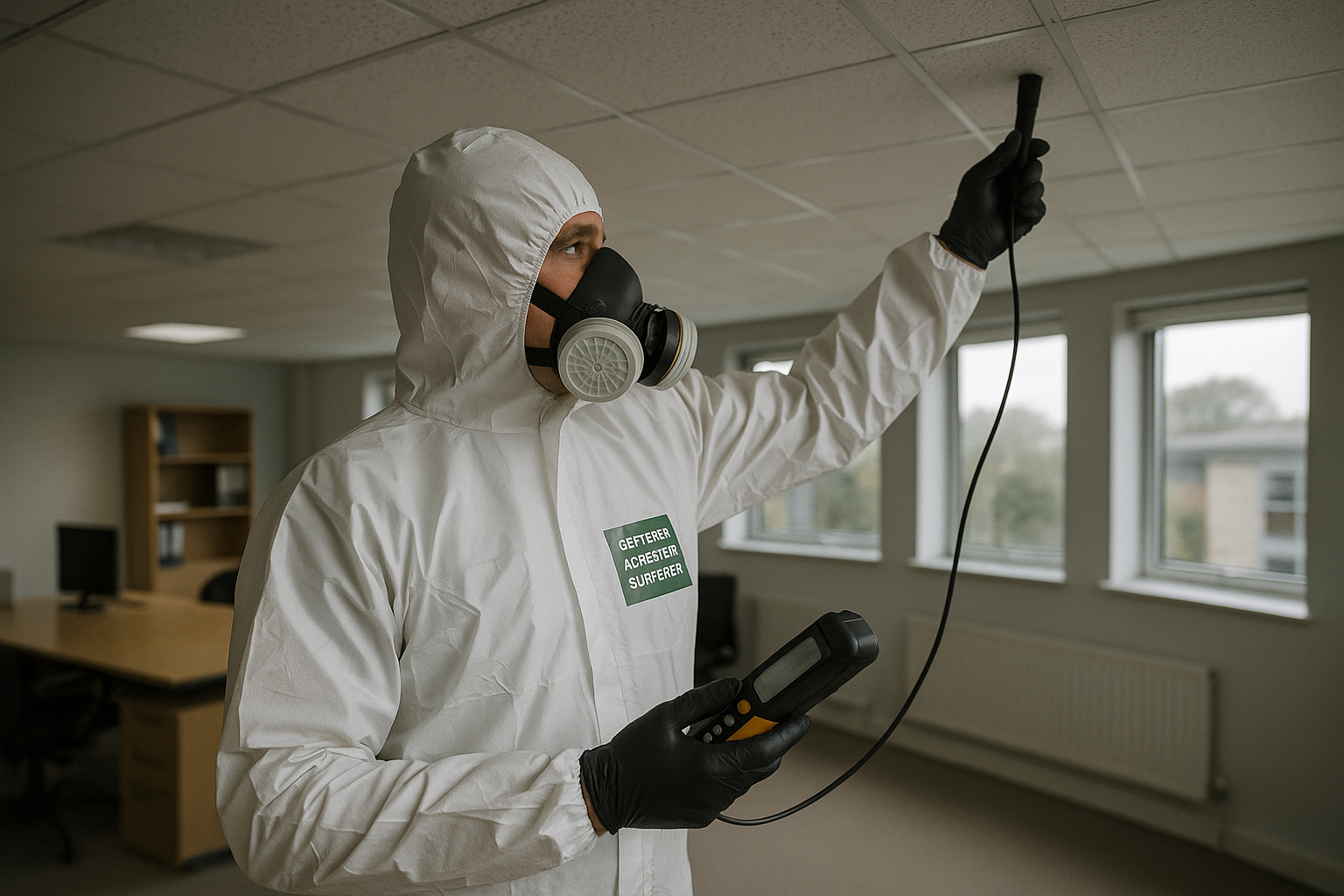
Hidden asbestos is one of those risks that stays quiet until a contractor drills into it, a ceiling tile breaks, or a refurbishment opens up an area nobody has checked for years. If you need an asbestos survey Kent property owners, duty holders and managing agents can rely on, the priority is simple: get the right survey, get clear findings, and make sure your building can be managed safely without delays or guesswork.
Kent has a wide mix of property types, from older schools and civic buildings to retail units, warehouses, hotels, offices and mixed-use blocks. Many premises across Maidstone, Canterbury, Ashford, Dartford, Medway, Tunbridge Wells and the wider county were built or altered when asbestos-containing materials were still commonly used, so accurate asbestos information remains essential.
A proper asbestos survey is not just a document for a file. It helps you meet legal duties, protect staff and contractors, plan maintenance properly, and avoid expensive disruption when asbestos is discovered after work has already started.
Why an asbestos survey Kent property owners trust matters
Asbestos was used in a wide range of building materials because it was durable, heat resistant and cheap. It can still be found in insulation board, cement sheets, textured coatings, floor tiles, pipe insulation, sprayed coatings, bitumen products and many other materials in older premises.
Under the Control of Asbestos Regulations, those responsible for non-domestic premises and the common parts of certain residential buildings have a duty to manage asbestos. HSE guidance and HSG264 make it clear that you need suitable, sufficient information about the location, amount and condition of asbestos-containing materials, or presumed asbestos-containing materials, so the risk can be controlled.
If your building has never had an asbestos survey, or the information is outdated, the risks quickly become practical rather than theoretical.
- Contractors may disturb asbestos during routine works
- Refurbishment projects can stop without warning
- Your asbestos register may be incomplete or unreliable
- Occupants and maintenance staff may be exposed unnecessarily
- Unexpected remedial work can increase project costs
A reliable asbestos survey Kent duty holders use should tell you what is present, where it is, what condition it is in, and what action is needed next.
Who needs an asbestos survey in Kent?
The duty to manage asbestos applies across a wide range of sectors. In practice, if you control maintenance, repairs, contractor access or building works, asbestos information is likely to be your responsibility.
This commonly includes:
- Commercial landlords
- Facilities managers
- Property management companies
- Schools, academies and colleges
- Healthcare providers
- Retail and leisure operators
- Industrial and warehouse businesses
- Local authorities
- Managing agents for residential blocks with communal areas
- Hospitality businesses such as hotels and pubs
Small premises are not exempt from the practical need for asbestos information. A single office suite, a parade shop unit or a compact warehouse can still contain asbestos in ceiling voids, risers, partitions or service areas.
Two mistakes come up again and again. The first is assuming earlier building work removed all asbestos. The second is relying on an old report that no longer reflects the current layout, use or condition of the premises.
Choosing the right type of asbestos survey Kent buildings need
Not every survey is designed for the same purpose. Choosing the wrong one can leave major gaps in your compliance position and cause delays when contractors ask for more intrusive information before starting work.
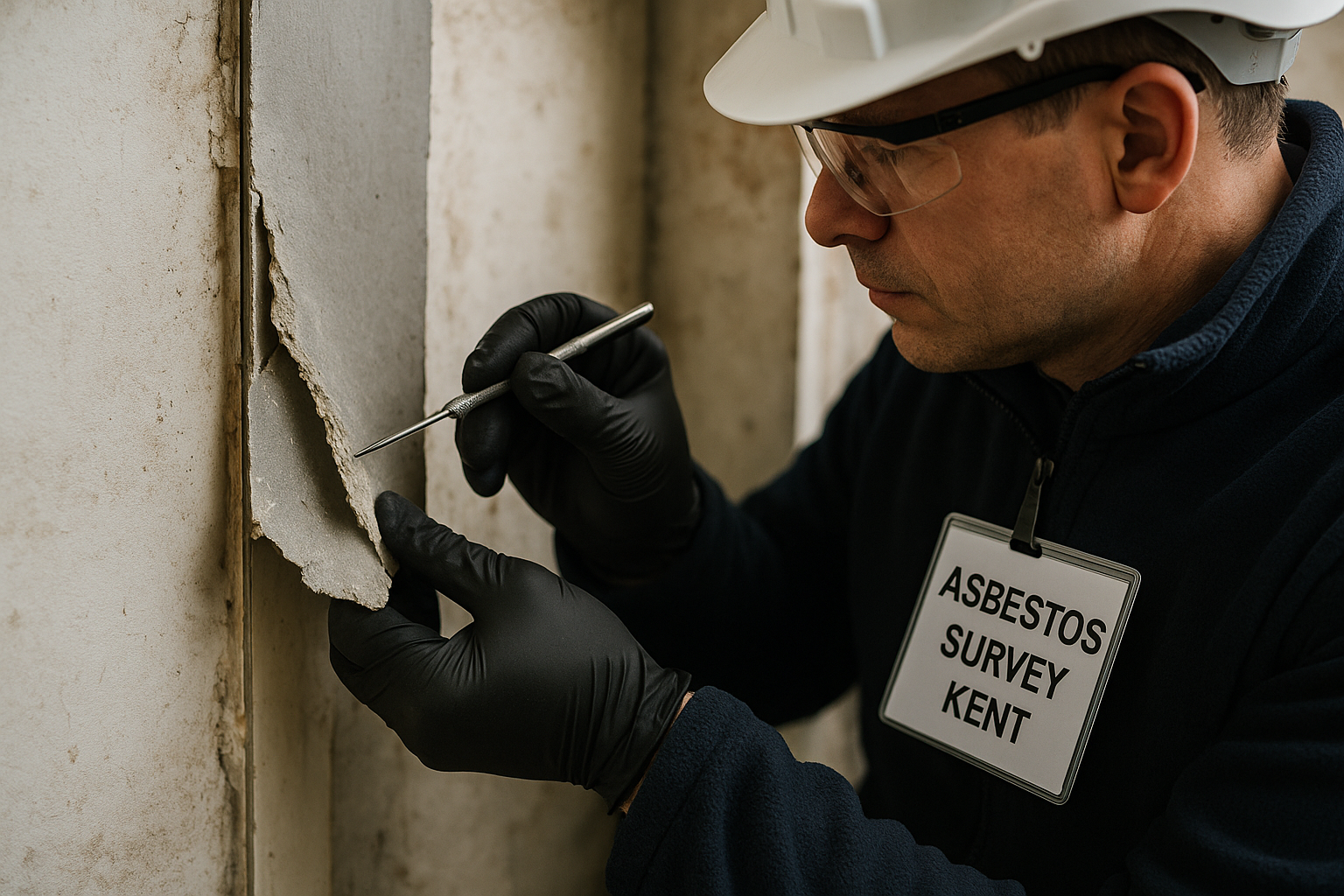
Management survey
For occupied premises in normal use, a management survey is usually the starting point. This survey is designed to locate, as far as reasonably practicable, asbestos-containing materials that could be disturbed during normal occupation, routine maintenance or foreseeable installation work.
An asbestos management survey helps you create or update your asbestos register and supports day-to-day asbestos management. It is commonly used for offices, schools, retail premises, hotels, warehouses and communal areas in residential buildings.
It is not a substitute for a more intrusive survey where refurbishment or demolition is planned.
Refurbishment survey
If intrusive work is planned, you will usually need a refurbishment survey. This type of survey targets the specific areas affected by the works and is used before upgrades, strip-outs, reconfiguration, kitchen replacements, ceiling removals or major services alterations.
Because the survey needs to identify asbestos in the areas that will actually be disturbed, it is more intrusive than a management survey. That may involve accessing voids, opening up boxed-in services and inspecting behind finishes where reasonably practicable.
Demolition survey
Where a building or structure is going to be demolished, a demolition survey is required. This is a fully intrusive survey intended to identify asbestos-containing materials throughout the structure, so they can be managed and removed appropriately before demolition proceeds.
This survey is not designed for occupied day-to-day use. It is designed for buildings that are due to be taken down.
Re-inspection survey
If asbestos-containing materials remain in place, they need to be monitored. A re-inspection survey checks known or presumed asbestos-containing materials, records their current condition and helps keep your asbestos register and management plan up to date.
This is especially useful for schools, multi-site portfolios, commercial properties with frequent contractor activity, and buildings where wear and tear may affect the condition of known materials.
What an asbestos survey in Kent actually involves
A professional asbestos survey Kent clients receive should follow the methodology set out in HSG264 and relevant HSE guidance. The process should be structured, practical and suited to the building and the work you are planning.
1. Pre-survey planning
The work starts before the surveyor arrives on site. Good planning includes understanding the building type, age, layout, use, previous asbestos information, access restrictions and the reason the survey is needed.
This matters because the survey scope has to match the real purpose of the report. If you need information for intrusive works, a day-to-day management survey will not be enough.
2. Site inspection
The surveyor inspects all accessible areas within the agreed scope. That may include plant rooms, service risers, roof voids, ceiling voids, storage rooms, external areas and circulation spaces.
The level of intrusion depends on the survey type. A management survey is generally less intrusive, while refurbishment and demolition surveys involve more extensive access into the building fabric.
3. Sampling and testing
Where suspect materials are found, samples may be taken safely and sent for laboratory testing. This confirms whether asbestos is present and, where identified, the asbestos type.
If you need standalone testing rather than a full survey, sample analysis can be arranged separately. That can be useful where a specific material needs checking before minor works or disposal decisions are made.
4. Assessment and reporting
The report should record the location, extent, product type and condition of each identified or presumed asbestos-containing material. It should also explain limitations, inaccessible areas and any assumptions made.
A useful asbestos report will typically include:
- A summary of findings
- The survey scope and limitations
- Area-by-area results
- Sample outcomes
- Material assessments
- Photographs where appropriate
- Location references or plans where available
- Recommendations for management, repair, encapsulation or removal
5. Next steps after the survey
The findings should feed directly into your asbestos register and management arrangements. If materials are in good condition and unlikely to be disturbed, they may remain in place and be managed.
If they are damaged or likely to be disturbed, remedial action may be needed. In some cases, that may mean repair, encapsulation or licensed or non-licensed asbestos removal, depending on the material and risk.
Common places asbestos is found in Kent properties
One reason an asbestos survey Kent building managers arrange is so valuable is that asbestos is not limited to one obvious product. It can appear in visible materials, hidden voids and areas that are only exposed during maintenance or refurbishment.
Common locations include:
- Ceiling tiles and ceiling void materials
- Asbestos insulating board in partitions, risers and soffits
- Pipe lagging and thermal insulation
- Textured coatings
- Floor tiles and bitumen adhesives
- Cement roofing sheets, gutters and downpipes
- Boiler rooms and plant areas
- Fire doors and service duct linings
- Lift shafts and service cupboards
- Garage roofs, outbuildings and industrial units
You cannot identify asbestos reliably by sight alone. Some asbestos-containing materials look identical to non-asbestos alternatives, which is why proper surveying and analysis are so important.
What affects the cost of an asbestos survey in Kent?
Price matters, but the cheapest quote is rarely the best value if the survey is too limited or the report does not support your legal duties or planned works. A low-cost survey that has to be repeated later usually costs more overall.
Several factors influence cost:
- The type of survey required
- The size and layout of the building
- The number of rooms, floors or separate blocks
- The age and construction of the premises
- Access issues and whether specialist equipment is needed
- The number of samples required
- Urgency of attendance and reporting
- Travel and site logistics
When comparing quotes, ask practical questions:
- Is the correct survey type included?
- Does the price include laboratory analysis?
- Are photographs and clear location details provided?
- What access assumptions have been made?
- Will the report be suitable for contractors and duty holders?
- How quickly will the final report be issued?
A good quote should be clear about scope, exclusions and turnaround. If anything is vague, ask before booking.
How quickly can an asbestos survey be arranged?
Urgency is common. Property transactions, contractor start dates, school holiday works and reactive maintenance can all create pressure for fast attendance and reporting.
A fast turnaround can be helpful, but it still needs to be accurate. The key question is not just how quickly someone can attend site, but whether the survey delivered will actually match the work you need to do.
Urgent surveys are often requested for:
- Pre-start contractor checks
- Insurance or compliance deadlines
- Property acquisitions and disposals
- Retail and hospitality refits
- School and college holiday works
- Unexpected maintenance issues
Before booking an urgent asbestos survey Kent service, check:
- Whether the turnaround covers attendance, reporting or both
- Whether sample analysis is included
- Whether access arrangements could delay the report
- Whether the report will suit the planned works
- How urgent findings will be communicated if a significant risk is identified
How to choose the right asbestos surveyor in Kent
Search rankings do not tell you whether a provider is right for your building. What matters is competence, clarity, reporting quality and whether the surveyor understands the practical needs of property management and compliance.
Look for a surveyor who works in line with the Control of Asbestos Regulations, HSG264 and HSE guidance. Reports should be clear enough for facilities teams, contractors and managing agents to use without second-guessing what the findings mean.
Questions worth asking before you appoint
- What survey type do you recommend for this job, and why?
- What information do you need before attending site?
- Will inaccessible areas be clearly identified?
- How are samples analysed?
- What turnaround can you realistically provide?
- Will the report help update the asbestos register?
- Can you support next steps if removal or re-inspection is needed?
You should also expect practical communication. If the surveyor cannot explain the difference between a management survey and a refurbishment survey in plain language, that is not a good sign.
Practical advice for managing asbestos after the survey
Getting the survey done is only the first step. The value comes from using the information properly.
Once you receive the report:
- Review the findings promptly
- Update your asbestos register
- Make sure contractors can access relevant asbestos information before they start work
- Arrange remedial action where materials are damaged or likely to be disturbed
- Plan future monitoring for any asbestos left in place
- Keep records organised and accessible
If your premises are part of a wider portfolio, standardise the process across all sites. That makes it far easier to track surveys, re-inspections and remedial works.
If you also manage buildings outside Kent, it can help to use the same provider across regions. For example, some organisations coordinate surveys across multiple locations such as asbestos survey London properties, asbestos survey Manchester sites and asbestos survey Birmingham portfolios to keep reporting consistent.
Why older surveys may no longer be enough
One of the most common issues with an asbestos survey Kent duty holders already have is that the report may no longer reflect the building as it stands today. Layout changes, partial refurbishments, new service installations and wear over time can all affect the reliability of older asbestos information.
You may need updated asbestos input if:
- The building layout has changed
- Areas were inaccessible during the earlier survey
- There has been damage, leaks or service work since the report was issued
- The survey purpose has changed from management to refurbishment or demolition
- Your asbestos register is incomplete or inconsistent
If there is any doubt, review the report against the work planned rather than assuming it will do.
Book a trusted asbestos survey Kent service
If you need a fast, reliable and properly scoped asbestos survey Kent service, Supernova Asbestos Surveys can help. We carry out management, refurbishment, demolition and re-inspection surveys nationwide, with clear reporting that supports legal compliance and practical decision-making.
To discuss your site, call 020 4586 0680 or visit asbestos-surveys.org.uk. Whether you manage a single property or a multi-site portfolio, Supernova can help you arrange the right survey without delay.
Frequently Asked Questions
Do I need an asbestos survey before refurbishment work in Kent?
Yes, if the work is intrusive, a management survey is usually not enough. You will normally need a refurbishment survey covering the specific areas affected by the planned works.
How long does an asbestos survey in Kent take?
That depends on the size, complexity and type of survey. A small management survey may be completed relatively quickly, while a larger or more intrusive refurbishment or demolition survey will take longer and may require more sampling.
Can asbestos be identified without taking samples?
Not reliably in many cases. Some materials can only be confirmed through laboratory analysis, although in certain situations materials may be presumed to contain asbestos if sampling is not practical or safe.
What happens if asbestos is found during the survey?
The material will be recorded in the report with its location, extent and condition. The next step may be to manage it in place, monitor it, repair it, encapsulate it or arrange asbestos removal, depending on the risk and whether the material will be disturbed.
How often should asbestos-containing materials be re-checked?
There is no single fixed interval that suits every building. Re-inspection should be based on the condition of the material, the likelihood of disturbance and the management arrangements in place, with reviews carried out often enough to keep records accurate and risks controlled.