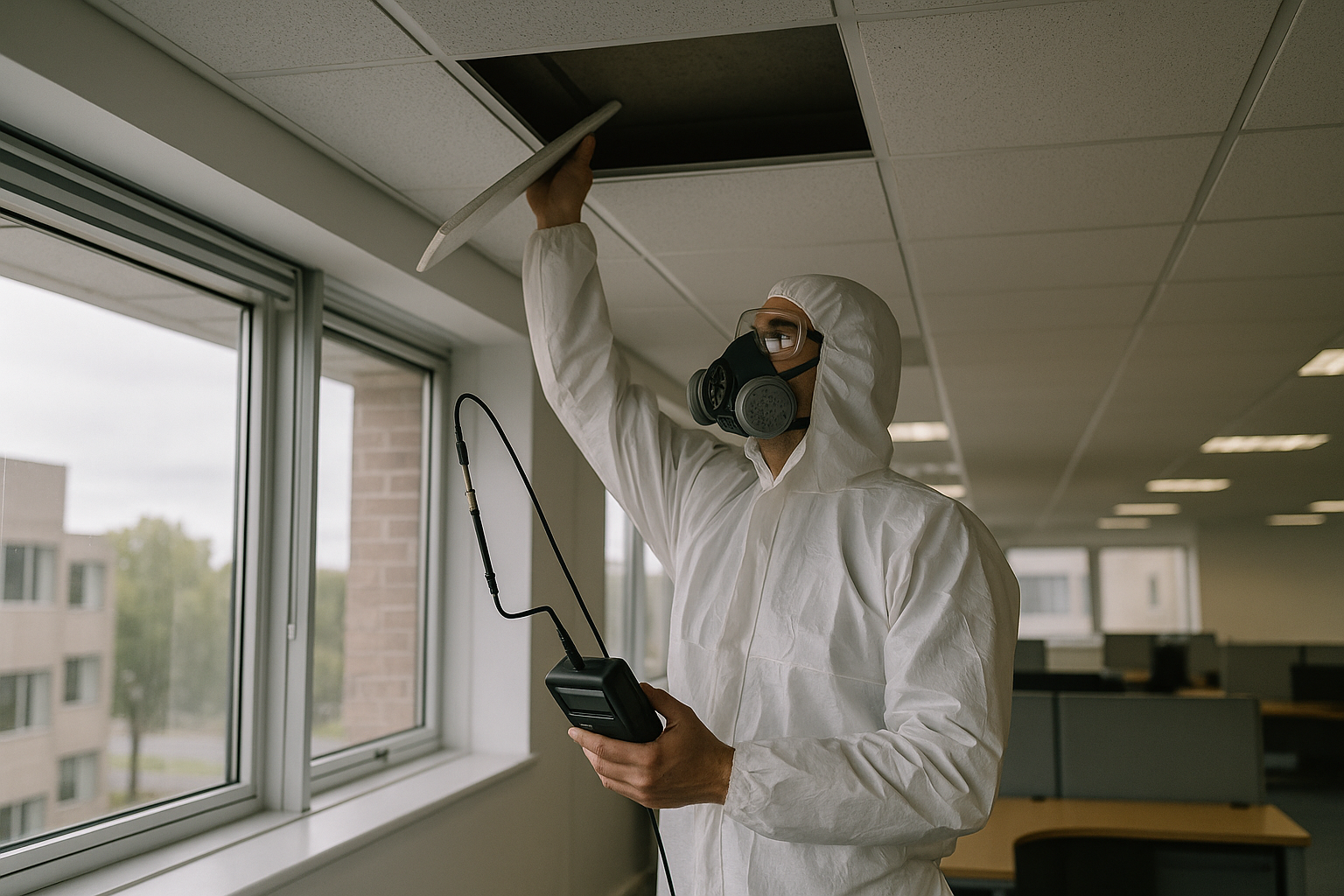
Open up an older building without proper asbestos information and a tidy refurbishment can become a costly site stoppage overnight. An asbestos refurbishment survey gives you the detail needed before ceilings, walls, floors and service routes are disturbed, so your contractors are not working blind.
For property managers, landlords, duty holders and project teams, this is not paperwork for its own sake. It is the practical step that helps you plan safely, meet your duties under the Control of Asbestos Regulations, and avoid finding hidden asbestos halfway through the job.
What is an asbestos refurbishment survey?
An asbestos refurbishment survey is an intrusive asbestos survey carried out before refurbishment, upgrade, alteration or partial strip-out works begin. Its purpose is to locate, so far as is reasonably practicable, any asbestos-containing materials in the areas affected by the planned works.
Unlike a routine inspection, this survey goes beyond visible surfaces. Surveyors may need to lift floor finishes, open boxing, inspect ceiling voids, access risers and ducts, and investigate behind wall linings or fixed panels.
The scope should match the actual work area. If only one suite, flat, plant room or section of a building is being refurbished, the survey can be limited to that area. If the project is wider, the survey must cover every part of the building fabric likely to be disturbed.
If you are planning intrusive works, a properly scoped asbestos refurbishment survey is usually the right starting point.
Why an asbestos refurbishment survey matters before intrusive works
Refurbishment work often exposes materials that are hidden during normal occupation. That is exactly where asbestos is commonly found in older premises.
Without the right survey, contractors may uncover suspect materials only after work has started. That can lead to immediate stoppages, emergency sampling, changes to programme, additional costs and potential exposure risk.
A well-planned asbestos refurbishment survey helps you:
- Identify asbestos before it is disturbed
- Plan removal or control measures in the right sequence
- Brief contractors accurately
- Reduce avoidable delays once strip-out starts
- Show that asbestos risks have been considered properly
For a property manager, that means fewer surprises. For a contractor, it means a clearer site picture. For the duty holder, it means decisions are based on evidence rather than assumptions.
When do you need an asbestos refurbishment survey?
You generally need an asbestos refurbishment survey whenever planned works will disturb the fabric of a building where asbestos could be present. If the premises were built or refurbished before the UK asbestos ban took full effect, asbestos must be considered.
The key question is simple: will the work involve opening up the structure or fixed finishes? If the answer is yes, a management survey will not usually be enough.
Typical projects that trigger a refurbishment survey
- Office fit-outs and CAT A or CAT B refurbishments
- Kitchen and bathroom replacements
- Rewiring, lighting upgrades and data cabling
- Heating, ventilation and air conditioning upgrades
- Boiler and pipework replacement
- Removing walls, partitions or fixed joinery
- Replacing ceilings or opening ceiling voids
- Flooring replacement where adhesives or levelling compounds may be disturbed
- Window replacement affecting surrounding panels or seals
- Roof repairs or replacement on older buildings
- Retail refits and lease-end strip-outs
- Structural alterations
If the work is purely decorative and does not disturb the building fabric, an asbestos refurbishment survey may not be required. If there is any doubt, review the scope before contractors attend site.
Refurbishment survey vs management survey
This is where many projects go wrong. A management survey is designed to help duty holders manage asbestos during normal occupation and routine maintenance. It is not intended to support destructive refurbishment works.
That distinction matters because a management survey is usually non-intrusive or only lightly intrusive. It will not usually identify all asbestos hidden within the building structure.
Why a management survey is not enough
Refurbishment works often disturb areas that are concealed in day-to-day use. These may include:
- Behind plasterboard or boxing
- Within ceiling voids
- Under vinyl tiles and bitumen adhesive
- Inside risers, ducts and service cupboards
- Around old pipe insulation and plant
- Within wall panels, soffits and insulation boards
If contractors are about to disturb those areas, the survey must reflect that risk. Relying on the wrong report is one of the quickest ways to halt a job once suspect materials are exposed.
Refurbishment survey vs demolition survey
Under HSG264, refurbishment and demolition surveys are often grouped together because both are fully intrusive. The difference is not the level of care required but the purpose and extent of the planned works.
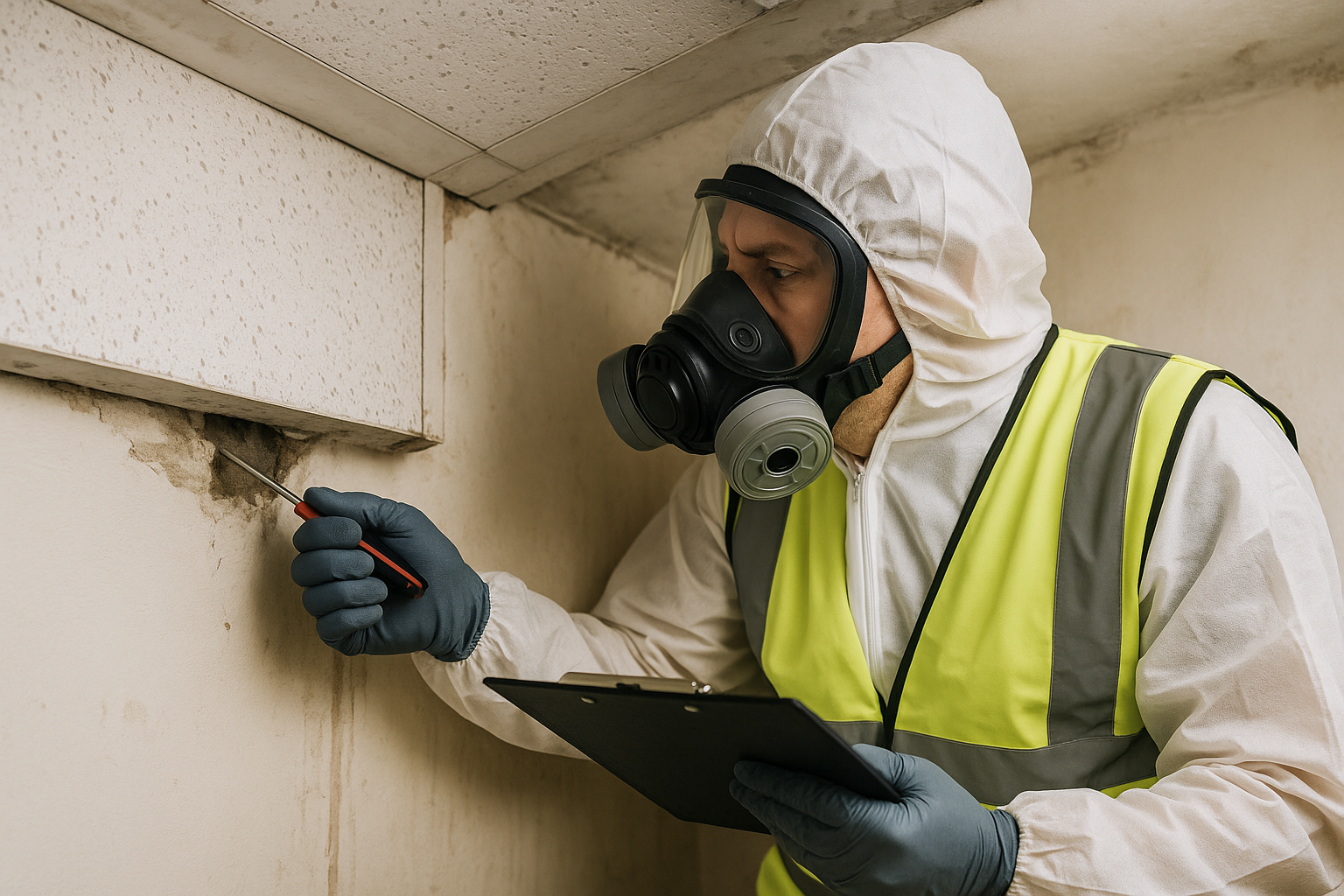
A demolition survey is required before a building, or part of it, is demolished. Its aim is to identify asbestos throughout the structure so it can be removed or otherwise managed before demolition starts.
A refurbishment survey is narrower. It focuses on the areas affected by planned alteration or upgrade works rather than the whole structure, unless the whole structure is being refurbished.
How to choose the right survey
- Define the work clearly.
- Identify whether the project is alteration, strip-out or demolition.
- Mark the exact areas that will be disturbed.
- Check whether existing asbestos information is relevant or outdated.
- Book the survey type that matches the actual project risk.
If your project is a full strip-out or complete removal of a structure, a demolition survey may be the correct route. If it is an upgrade or alteration to part of a property, a refurbishment survey is more likely to be appropriate.
What happens during an asbestos refurbishment survey?
A proper asbestos refurbishment survey follows the planned works, the building layout and the access available on site. It should never be treated as a generic checklist exercise.
1. Scoping the survey
The surveyor starts by understanding exactly what is planned and where. Drawings, specifications, photographs, previous asbestos records and access details all help shape the survey.
A good brief saves time and reduces limitations. “Second-floor office refurbishment including partition changes, ceiling replacement, new tea point and rewiring” is far more useful than “office works”.
2. Intrusive inspection
This is the stage that separates an asbestos refurbishment survey from routine asbestos inspections. Surveyors open up the building fabric to inspect hidden areas that may contain asbestos.
Depending on the project, this may involve:
- Lifting floor coverings
- Opening service risers and ducting
- Inspecting above suspended or fixed ceilings
- Removing small sections of wall lining
- Checking boxing, voids and enclosed plant areas
- Accessing service cupboards and behind fixed fittings
The area usually needs to be vacant. Intrusive inspection can be disruptive and may disturb suspect materials under controlled conditions.
3. Sampling and analysis
Where suspect materials are identified, samples are taken safely and sent for laboratory testing. Visual inspection alone is not enough where confirmation is needed, because many asbestos-containing materials look similar to non-asbestos products.
Common materials sampled during refurbishment work include:
- Asbestos insulating board
- Pipe lagging and insulation debris
- Textured coatings
- Floor tiles and bitumen adhesive
- Cement sheets and panels
- Gaskets, rope seals and insulation products
- Panels, cisterns and service duct materials
If you need stand-alone testing before wider works are planned, sample analysis can help confirm whether asbestos is present.
4. Reporting and recommendations
The report should set out what was found, where it was found and what this means for the planned works. It should also record limitations, inaccessible areas and recommendations for action before refurbishment starts.
A useful report will tell you:
- The location and extent of asbestos-containing materials
- The type of material identified
- Whether it sits within the work area
- What needs removing or controlling before contractors begin
- Whether further access or investigation is needed
How to arrange an asbestos refurbishment survey properly
HSE guidance is clear that survey information must be suitable for the planned work. That starts with defining the project properly, not just booking a survey at the last minute.
If the building was built or refurbished before 2000, asbestos should be considered from the outset. Leaving the survey until the week before strip-out is a common cause of avoidable delay.
Practical steps to take
- Define the works clearly
Identify exactly what is being removed, altered or installed. Include drawings, contractor specifications and room references where possible.
- Mark the affected areas
Be precise about which floors, rooms, units or service areas are included. Vague instructions often lead to survey limitations.
- Review existing asbestos information
Previous reports can help with planning, but they do not replace an intrusive survey where refurbishment is involved.
- Arrange access and vacant possession
The survey area usually needs to be unoccupied. Make sure locked rooms, risers, roof spaces and plant areas can be accessed.
- Allow time for sampling and reporting
Build in enough time for inspection, laboratory analysis and report review before the main contractor is due on site.
- Share the findings with contractors
The report must reach the people planning and carrying out the works, not sit unread in a project folder.
What materials are often found during refurbishment surveys?
Asbestos was used in a wide range of building products, particularly for insulation, fire resistance and durability. In refurbishment projects, some of the most common findings are hidden in places no one sees until the building is opened up.
Materials that may be identified during an asbestos refurbishment survey include:
- Asbestos insulating board in partitions, soffits, risers and ceiling panels
- Pipe lagging and thermal insulation
- Cement sheets, flues, gutters and roof panels
- Textured coatings on walls and ceilings
- Floor tiles and associated adhesive
- Insulation within service ducts and plant areas
- Toilet cisterns, panels and boxing
- Gaskets, seals and rope products in plant and heating systems
- Debris from previous works in ceiling voids or under floors
The risk depends on the type of material, its condition and whether the planned works will disturb it. A damaged insulation board in a work area needs a very different response from an intact cement sheet outside the scope of works.
How to check whether the survey report is fit for purpose
A survey only has value if the report can be relied on by the people delivering the project. Before work begins, review the document carefully rather than assuming everything is covered.
What to check in the report
- Scope: does it match the actual refurbishment area?
- Plans and room references: are locations clear enough for contractors to follow on site?
- Findings: are materials described accurately and linked to plans or photographs where needed?
- Limitations: were any areas inaccessible, locked, occupied or excluded?
- Recommendations: is it clear what must happen before works start?
If something is vague, ask questions straight away. A competent surveyor should be able to explain the findings in plain language and confirm whether any follow-up inspection is needed.
Red flags to look out for
- The project area is described too broadly
- Important voids or service routes were not accessed
- Room references do not match the building layout
- Recommendations are generic and not linked to the planned works
- There is no clear distinction between laboratory-confirmed and presumed materials
Checking the report early helps avoid a common problem: discovering during strip-out that the survey did not fully cover the work area.
What happens if the survey finds asbestos?
Finding asbestos does not automatically stop the project. It means the next steps need to be planned properly before refurbishment proceeds.
The action required depends on the material, its condition and whether the planned works will disturb it. In many refurbishment projects, asbestos within the work area will need to be removed before the main contractor starts.
What to do next
- Review the findings with the surveyor or asbestos consultant.
- Identify exactly which materials are inside the work area.
- Check whether any areas need further access or investigation.
- Obtain quotations for any required asbestos removal.
- Build time into the programme for removal, cleaning and any necessary clearance.
- Do not allow refurbishment works to proceed until asbestos risks have been addressed.
Trying to work around unidentified or unplanned asbestos is where projects begin to unravel. Good survey information lets you sequence the work properly and brief every trade on site.
Legal duties, HSG264 and HSE guidance
The legal framework is clear. Under the Control of Asbestos Regulations, asbestos risks must be identified and managed so that people are not exposed. Where refurbishment work is planned, survey information must be suitable for that work.
HSG264 sets out the purpose and expectations for asbestos surveys, including refurbishment and demolition surveys. HSE guidance also makes clear that the survey type must match the intended activity. A report prepared for normal occupation is not a substitute for a fully intrusive survey where the fabric of the building will be disturbed.
For duty holders and project teams, the practical points are straightforward:
- Do not assume old reports are enough for new intrusive works
- Make sure the survey scope matches the actual project scope
- Ensure the area is suitably accessed and, where necessary, vacated
- Share the report with designers, contractors and anyone planning the work
- Act on the findings before refurbishment begins
This is not just about compliance on paper. It is about preventing exposure, avoiding disruption and keeping the project under control.
Practical advice for property managers and project teams
If you manage multiple sites, standardising your approach makes a real difference. The best time to think about an asbestos refurbishment survey is during project planning, not after the contractor has mobilised.
Useful steps that save time later
- Ask for a clear scope of works before booking the survey
- Provide floor plans and photographs where possible
- Confirm who will arrange keys, permits and access to restricted areas
- Tell the surveyor if parts of the building are still occupied
- Allow contingency if follow-up access is needed
- Review the report with the contractor before strip-out starts
If your portfolio includes sites in the capital, our asbestos survey London service can support refurbishment planning across commercial and residential properties. For regional projects, we also provide asbestos survey Manchester and asbestos survey Birmingham coverage.
The principle is the same wherever the property is located: define the works clearly, get the right survey, and use the findings properly.
Frequently Asked Questions
Is an asbestos refurbishment survey destructive?
Yes, it is intrusive and can involve opening up parts of the building fabric. That is why the survey area usually needs to be vacant or carefully controlled during the inspection.
Can I rely on an old asbestos report for refurbishment works?
Not usually. Existing reports may help with planning, but if the new works will disturb the building fabric, the survey information must be suitable for that specific project and area.
Does every refurbishment project need an asbestos refurbishment survey?
No. If the work is purely decorative and does not disturb the fabric of the building, it may not be required. If walls, ceilings, floors, fixed fittings or service routes will be opened up, it is usually needed.
What is the difference between a refurbishment survey and a demolition survey?
A refurbishment survey covers the areas affected by planned upgrade or alteration works. A demolition survey is intended for full demolition or major strip-out and aims to identify asbestos throughout the structure being demolished.
How quickly should the survey be arranged?
As early as possible in project planning. Booking late can delay the programme, especially if asbestos is found and removal works need to be arranged before the main refurbishment starts.
If you are planning intrusive works and need clear, reliable asbestos information, Supernova Asbestos Surveys can help. We carry out tailored refurbishment surveys nationwide, with practical reporting that supports real projects. Call 020 4586 0680 or visit asbestos-surveys.org.uk to arrange your survey.