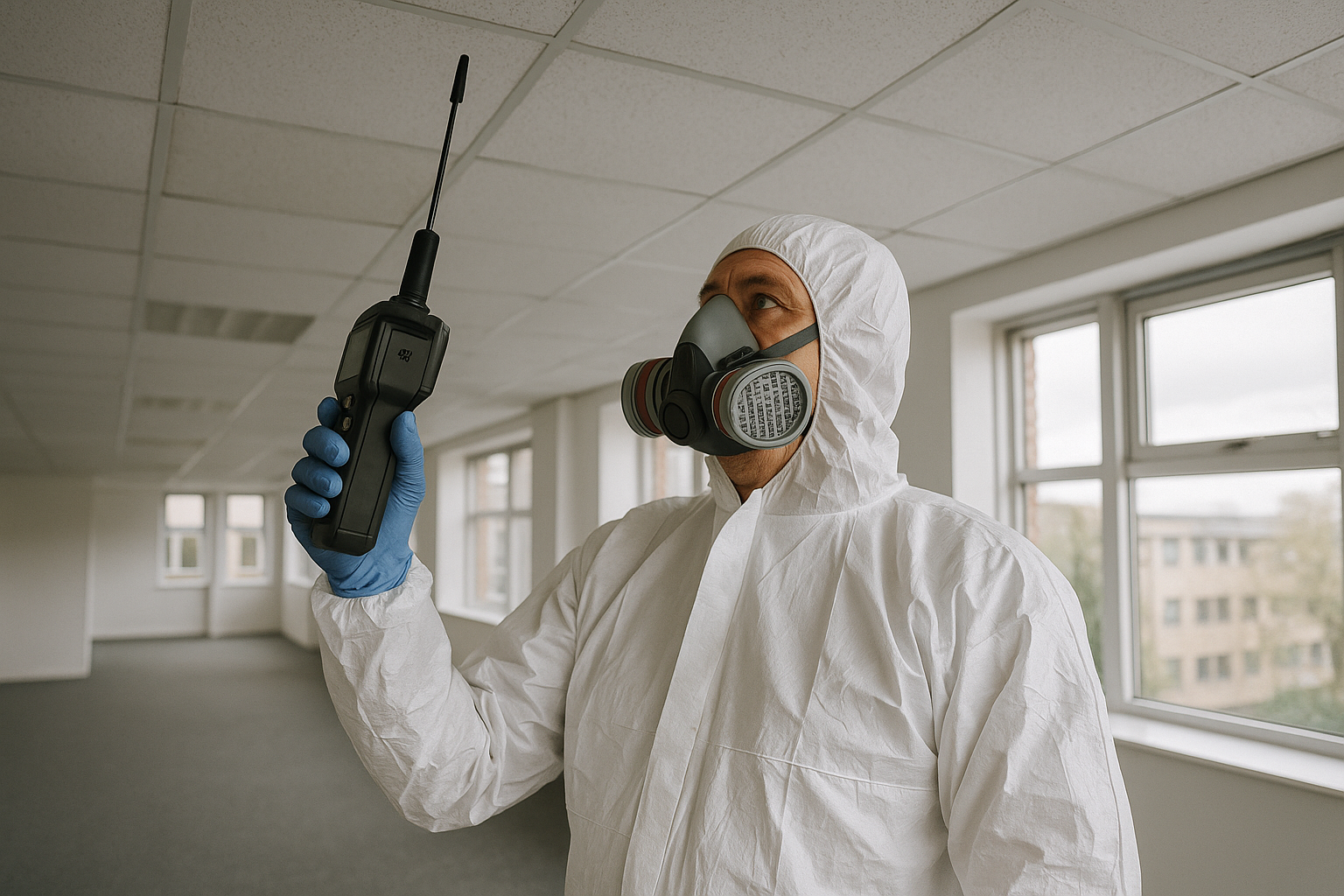
One hidden panel behind a riser door or one overlooked ceiling tile can stop works instantly. If you need an asbestos survey Cardiff property managers can rely on, the goal is simple: identify the risk properly before maintenance, refurbishment or demolition puts people and projects in danger.
Cardiff has a broad mix of offices, schools, retail units, industrial buildings, public premises and converted properties. Many were built or altered when asbestos-containing materials were widely used, so assuming a building is asbestos-free is never a safe position.
For landlords, dutyholders, facilities managers and agents, an asbestos survey is not paperwork for its own sake. It is the basis for legal compliance, safe occupation, contractor control and sensible planning.
Why an asbestos survey Cardiff property owners arrange matters
Asbestos is still present in many non-domestic buildings across Cardiff. It often appears in ordinary-looking materials, which is why visual assumptions are risky.
Common asbestos-containing materials include insulation board, cement sheets, pipe lagging, sprayed coatings, textured coatings, ceiling tiles, floor tiles, bitumen adhesives and insulation around plant. Some materials are relatively low risk when intact and left alone, while others can release fibres more easily if damaged.
A suitable asbestos survey Cardiff dutyholders commission helps you:
- Locate suspected or confirmed asbestos-containing materials
- Assess their condition and likelihood of disturbance
- Decide whether to manage, seal, repair or remove them
- Brief contractors properly before work starts
- Reduce delays, unexpected costs and safety failures
If a contractor drills, strips out or cuts into asbestos without the right information, the consequences can include contaminated work areas, halted projects and enforcement attention. A proper survey avoids that avoidable mess.
Your legal duties under the Control of Asbestos Regulations
Under the Control of Asbestos Regulations, those responsible for non-domestic premises have a duty to manage asbestos. That duty commonly falls on owners, landlords, managing agents, facilities managers and tenants with repairing obligations.
In practice, you need to take reasonable steps to find out whether asbestos is present, assess the risk and keep information up to date. You must also make sure anyone liable to disturb asbestos can access that information before they start work.
That usually means having:
- A suitable asbestos survey where required
- An asbestos register
- A written asbestos management plan
- Regular review of known materials
- Clear communication with contractors and maintenance teams
HSG264 and wider HSE guidance set out how asbestos surveys should be planned, undertaken and reported. If your records are old, vague or silent on key areas, they may not support safe management.
Practical step: if you cannot confidently answer “what asbestos is in this building, where is it, and who has been told?”, your records probably need attention.
Which asbestos survey Cardiff buildings may need
Not every building needs the same type of survey. The right choice depends on how the property is used and whether any work will disturb the building fabric.
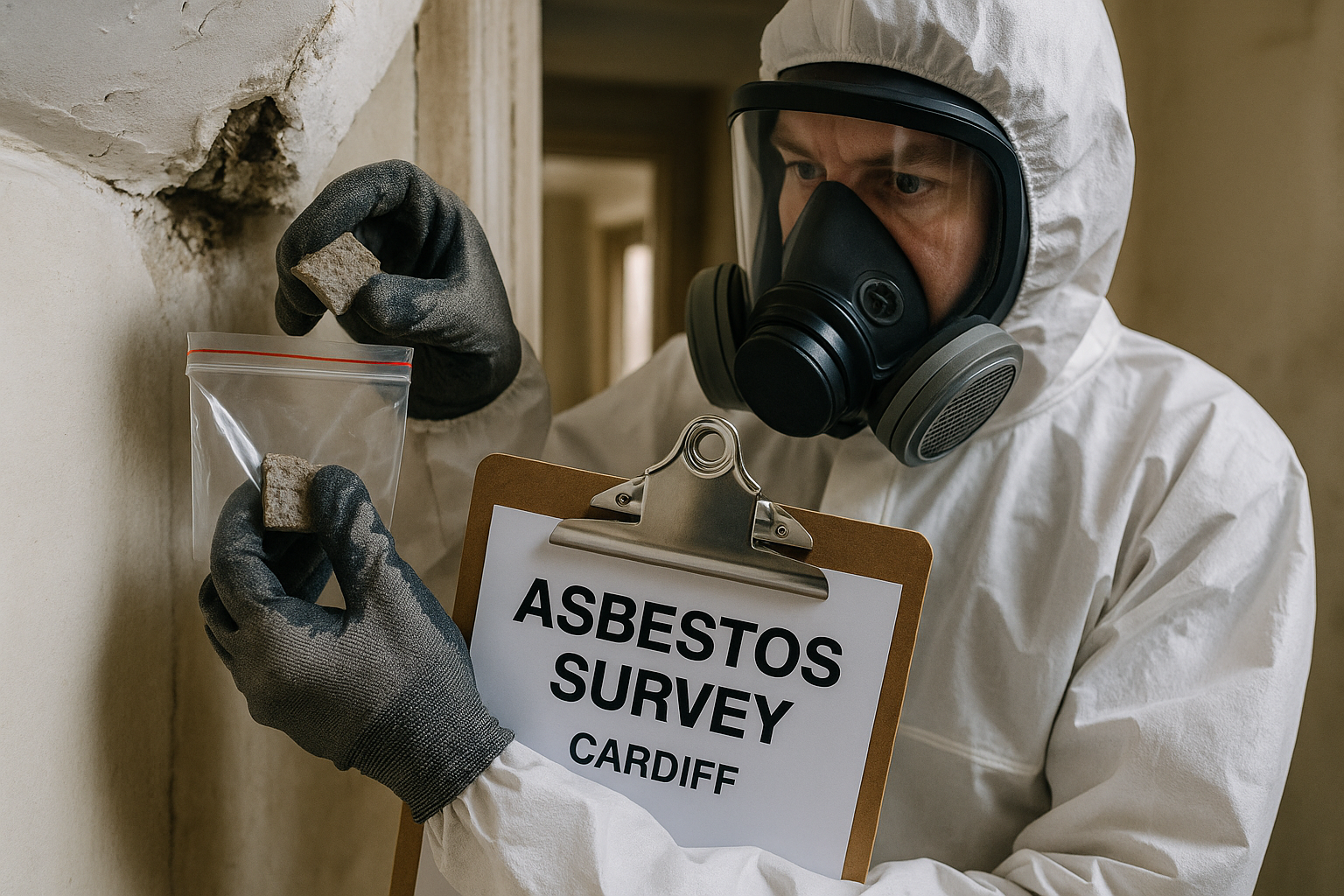
Management survey
A management survey is the standard survey for occupied buildings during normal use and routine maintenance. It aims to locate, as far as reasonably practicable, asbestos-containing materials that could be disturbed during everyday occupation or minor works.
This is often the right option if:
- You have taken on a building and need baseline asbestos information
- Your current records are missing, outdated or unclear
- You need an asbestos register for ongoing compliance
- The premises are occupied and no major intrusive works are planned
If you need a formal asbestos management survey, the scope should reflect the layout, access arrangements and likely maintenance activities in the property. A generic approach is rarely good enough.
Refurbishment survey
A refurbishment survey is required before work that will disturb the building structure or hidden voids. This survey is more intrusive because the surveyor needs to inspect inside walls, ceilings, floor voids, service risers and other concealed areas affected by the planned works.
You may need this before:
- Office fit-outs and reconfigurations
- Electrical rewiring
- Heating, ventilation or plumbing upgrades
- Kitchen and toilet refurbishments
- Ceiling replacement
- Structural alterations
If the works affect only part of the building, the survey can often be limited to that area. That keeps the process practical while still meeting the legal requirement.
Demolition survey
A demolition survey is needed before a building, or part of it, is demolished. This is the most intrusive survey type and is intended to identify asbestos throughout the structure, including hidden and hard-to-reach areas.
No demolition or major strip-out should begin until asbestos risks have been identified and addressed. For site managers and principal contractors, this is one of the key pre-construction checks that should never be left until the last minute.
Re-inspection survey
If asbestos-containing materials have already been identified and left in place, they need to be checked at suitable intervals. A re-inspection survey reviews known materials to confirm whether their condition has changed and whether the register and management plan remain accurate.
Many dutyholders review annually, but the right frequency depends on the material, location and chance of disturbance. Areas with regular maintenance traffic often need closer monitoring than locked, low-access spaces.
What happens during an asbestos survey in Cardiff
A professional asbestos survey Cardiff service should be clear, systematic and easy to act on. The point is not to produce a thick report that sits on a shelf. The point is to give you usable information.
1. Pre-survey planning
Before the visit, the surveyor should gather key details about the building. That includes age, use, available plans, previous asbestos information, access restrictions and the reason the survey is needed.
This matters because the scope must match the task. If you are planning intrusive works, a management survey will not be enough.
2. Site inspection
The surveyor inspects the accessible areas relevant to the survey type. For management surveys, that usually includes rooms, corridors, plant spaces, service cupboards, risers, lofts, basements and other accessible parts of the premises.
For refurbishment and demolition surveys, the inspection is more intrusive. Openings may be made into building elements so hidden materials can be checked properly.
3. Sampling and laboratory analysis
Where a material is suspected to contain asbestos, the surveyor may take a sample under controlled conditions. The sample is then analysed by a UKAS-accredited laboratory.
If you only need one or two materials checked, standalone asbestos testing can sometimes be a practical option. For wider compliance, contractor management or project planning, a full survey is usually the better route.
4. Reporting and register information
The final report should identify suspected or confirmed asbestos-containing materials, their location, extent, condition and risk of disturbance. It should also include material assessments, sample results, photographs where useful and practical recommendations.
A good report helps you brief contractors, update your register and prioritise action. If the report is vague, missing plans or unclear about access limitations, push back and get clarity before relying on it.
Where asbestos is commonly found in Cardiff properties
An asbestos survey Cardiff buildings often reveals materials in places people walk past every day. The exact locations depend on age, use and past refurbishment, but some patterns appear again and again.
Common locations include:
- Asbestos insulating board in partition walls, risers, soffits and fire breaks
- Pipe lagging and thermal insulation in plant rooms and boiler areas
- Textured coatings on walls and ceilings
- Vinyl floor tiles and the adhesive beneath them
- Cement sheets on roofs, outbuildings, wall cladding, gutters and downpipes
- Ceiling tiles and backing panels
- Service duct panels and older toilet cisterns
- Sprayed coatings on structural steel or concrete
- Gaskets, rope seals and insulation around older plant and equipment
The material itself is only part of the risk picture. You also need to consider condition, accessibility, occupancy, maintenance activity and whether work is planned nearby.
Practical step: ask your maintenance team where they regularly access voids, risers, plant areas and service cupboards. These are often the places where asbestos becomes a live management issue.
When targeted asbestos testing is enough
Sometimes a full asbestos survey Cardiff inspection is not what you need. If there is one suspect material and you simply need to know whether it contains asbestos, targeted testing can be the proportionate option.
This can work well when:
- A contractor needs to drill through one board or coating
- You want to check a single garage roof sheet
- You are assessing one type of floor tile before localised work
- You need quick clarity on a small number of suspect materials
For arranged sample collection and analysis, you can book asbestos testing where a full survey is unnecessary. If you prefer to collect a sample yourself, an asbestos testing kit can be convenient for straightforward situations.
Some clients simply want a quick, low-cost option for a single material, in which case a testing kit may be useful. That said, self-sampling is not suitable for every material. Higher-risk products, damaged insulation and any situation involving significant disturbance should be left to trained professionals.
If there is any doubt, ask before sampling. A poor sample method can create unnecessary exposure and unreliable results.
What to do if asbestos is found
Finding asbestos does not automatically mean a building must close or that every material has to be stripped out. In many cases, the safest option is to leave the material in place and manage it properly.
The right response depends on the type of material, its condition, where it is located and whether anyone is likely to disturb it.
Typical options include:
- Leave in place and monitor if the material is in good condition and unlikely to be disturbed
- Encapsulate or seal if extra protection is needed without full removal
- Repair where minor damage can be stabilised safely
- Remove where the material is damaged, higher risk or affected by planned works
If removal is needed, it must be handled correctly and, where required, by a licensed contractor. Supernova can also help arrange appropriate asbestos removal so you are not left coordinating separate providers with conflicting information.
Practical step: do not let contractors make informal site decisions about suspect materials. Pause the work, verify the information and document the next action.
How to choose the right asbestos survey provider in Cardiff
Choosing on price alone is a false economy. A poor survey can leave hidden asbestos in the path of contractors, which often costs far more than getting the inspection right first time.
Look for a provider that can demonstrate:
- UKAS accreditation for asbestos surveying and relevant analytical work
- Surveyors with suitable qualifications and practical experience
- Clear, usable reports rather than vague summaries
- Strong understanding of HSG264 and HSE guidance
- Sensible scoping, access planning and communication
- Support with follow-up actions where asbestos is identified
Before booking, ask direct questions:
- Which survey type do you recommend, and why?
- What areas are included in the scope, and what is excluded?
- Will samples be taken during the visit if needed?
- How quickly will the report be issued?
- Can you support next steps if asbestos is found?
A good surveyor should be able to explain the process plainly. If the answers are vague, overconfident or evasive, keep looking.
Common mistakes Cardiff dutyholders should avoid
Most asbestos problems are not caused by the material itself. They are caused by poor information, poor planning or poor communication.
Common mistakes include:
- Assuming a building has no asbestos because previous works were done
- Relying on an old report that does not cover current areas of work
- Using a management survey when refurbishment works are planned
- Failing to share asbestos information with contractors before they start
- Ignoring inaccessible areas noted in the report
- Leaving known asbestos in place without review or re-inspection
If a report lists exclusions, treat them as unfinished business. An inaccessible area is not cleared simply because it was not inspected.
Practical advice before booking an asbestos survey Cardiff service
If you want the survey to run smoothly and deliver useful results, a little preparation helps.
Before the surveyor arrives:
- Gather any previous asbestos reports, plans and refurbishment records
- Confirm why you need the survey: occupation, maintenance, refurbishment or demolition
- Arrange access to locked rooms, risers, plant areas and roof spaces
- Tell the surveyor about any fragile surfaces, permits or site rules
- Identify any deadlines linked to works or contractor mobilisation
After you receive the report:
- Review any recommended actions promptly
- Update your asbestos register and management plan
- Share relevant information with contractors and maintenance staff
- Schedule any remedial works or re-inspections
- Keep records accessible rather than buried in old compliance files
The better your internal process, the more value you get from the survey.
Why local building knowledge helps
Cardiff includes everything from older civic buildings and schools to industrial estates, commercial units and mixed-use conversions. That variety matters because asbestos risk is shaped by construction type, refurbishment history and how the premises are used now.
A surveyor familiar with these building types is more likely to scope the inspection properly, focus on realistic areas of concern and flag the practical issues that affect management. That is especially useful where buildings have been altered over time and records are incomplete.
For property managers with portfolios, consistency also matters. Using one experienced provider across multiple sites makes registers, reports and follow-up actions easier to manage.
Book an asbestos survey Cardiff property managers can act on
If you need clear advice, a legally suitable survey and a report that helps you make decisions, Supernova Asbestos Surveys can help. We carry out management, refurbishment, demolition, re-inspection and testing services across Cardiff and nationwide.
Call 020 4586 0680 to discuss your building, or visit asbestos-surveys.org.uk to arrange the right survey. Whether you need a single asbestos survey Cardiff inspection or support across a wider property portfolio, Supernova will help you get the scope right and the next steps under control.
Frequently Asked Questions
Do I need an asbestos survey before refurbishment works in Cardiff?
Yes, if the works will disturb the fabric of the building, you will usually need a refurbishment survey. A management survey is not designed for intrusive works and should not be relied on for strip-out, rewiring, fit-outs or structural alterations.
How often should asbestos be re-inspected?
There is no single interval that suits every building. Re-inspection should be carried out at suitable intervals based on material type, condition, location and the likelihood of disturbance. Many dutyholders review annually, but higher-risk areas may need more frequent checks.
Can asbestos be left in place if it is found?
Yes, often it can. If the material is in good condition and unlikely to be disturbed, managing it in place may be the safest option. The survey findings and your management plan should guide that decision.
Is asbestos testing enough, or do I need a full survey?
If you only need one or two suspect materials identified, targeted testing may be enough. If you need legal compliance information for occupation, maintenance, refurbishment or demolition, a full survey is usually the correct option.
What should I do if contractors discover a suspect material during work?
Stop the work in that area straight away and prevent further disturbance. The material should then be assessed properly, usually through surveyor attendance or testing, before any work resumes.