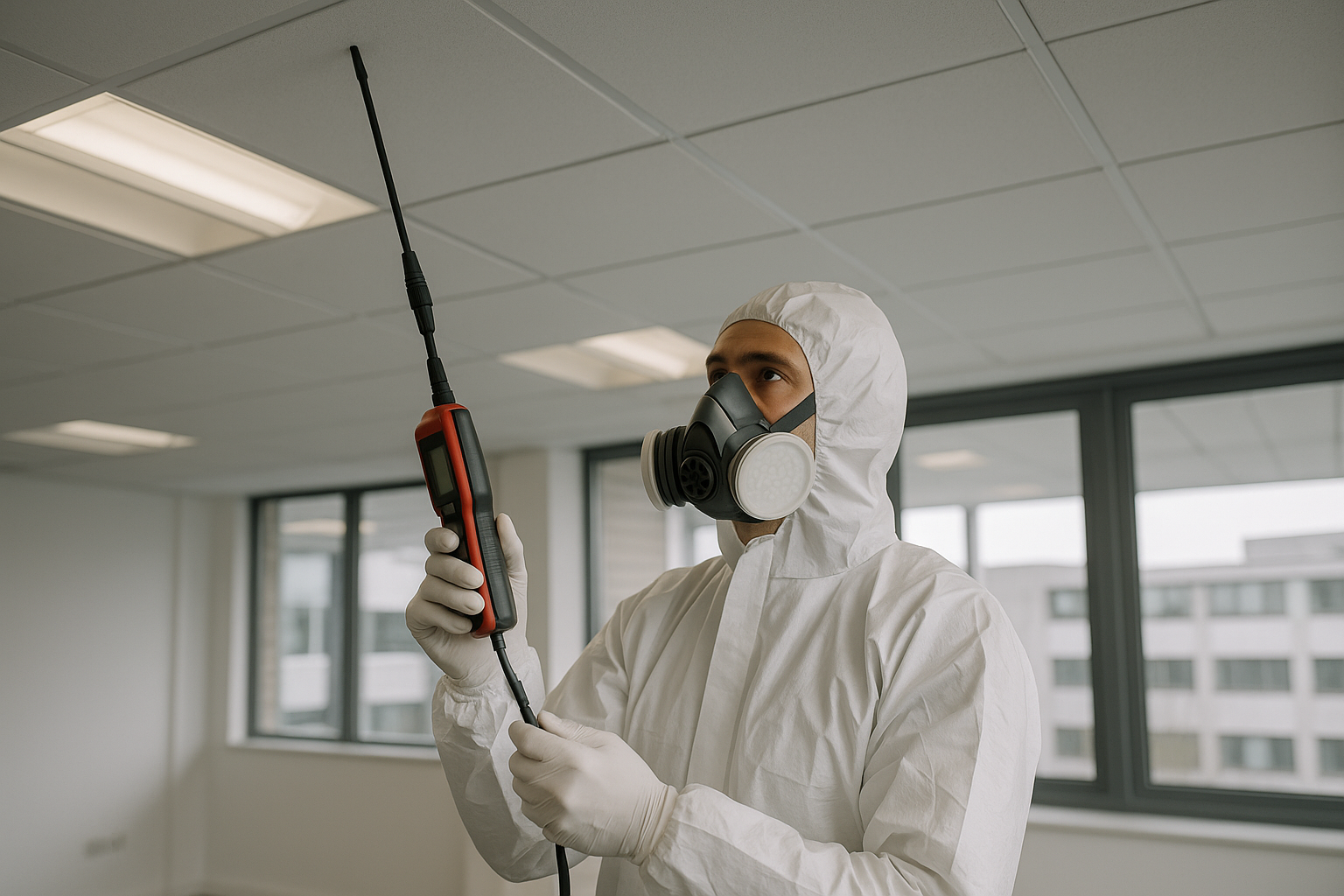
Asbestos Surveys London: What Every Property Owner and Manager Needs to Know
London’s buildings hold secrets. Behind suspended ceilings, inside service risers, beneath floor tiles and above partition walls, asbestos-containing materials are still present in thousands of commercial and residential properties across the capital. If you own, manage or maintain an older building, asbestos surveys London are not optional paperwork — they are the foundation of legal compliance and the first line of protection for everyone who uses your premises.
This post covers everything you need to understand about commissioning the right survey, meeting your legal duties and acting on the findings in a way that actually protects people.
Why Asbestos Surveys London Are Still Essential
London has an enormous stock of buildings constructed or significantly altered during the decades when asbestos was widely used across the construction industry. Offices, schools, retail units, warehouses, hospitals, communal areas of residential blocks and older houses can all contain asbestos in some form.
Common locations include:
- Sprayed coatings on structural steelwork and concrete
- Insulating board used in fire protection and partitioning
- Pipe lagging and boiler insulation
- Textured decorative coatings on ceilings and walls
- Cement products including roof sheets, soffits and gutters
- Floor tiles and associated adhesives
- Ceiling tiles in suspended grid systems
- Gaskets and seals in plant and mechanical systems
In many cases, asbestos in good condition and left undisturbed poses a low immediate risk. The danger escalates when materials are damaged, deteriorating or disturbed by maintenance, repairs, tenant fit-outs or demolition work. Once fibres become airborne, the consequences for health can be serious and long-term.
A properly conducted survey gives you the information you need before anyone picks up a drill or a crowbar.
Your Legal Duties Under the Control of Asbestos Regulations
If you are responsible for a non-domestic property — or the communal parts of a residential building — you are likely to have duties under the Control of Asbestos Regulations. The duty to manage asbestos requires you to take reasonable steps to find out whether asbestos is present, assess the risk it poses and put a management plan in place.
This duty applies to a broad range of dutyholders, including:
- Commercial landlords and freeholders
- Facilities managers and building managers
- Managing agents acting on behalf of landlords
- Housing associations and registered social landlords
- Schools, academies and further education establishments
- Local authorities and public sector property teams
- NHS and healthcare estate managers
- Retail and industrial occupiers with control of premises
HSE guidance under HSG264 is clear: you cannot manage what you have not identified. An asbestos survey carried out by a competent surveyor is the standard starting point for building an asbestos register and management plan.
If you already have a survey report, check whether it is still current. Ask whether inaccessible areas were excluded, and whether subsequent works have changed the building fabric. An outdated or incomplete report can be almost as problematic as having no information at all.
Types of Asbestos Surveys London Property Owners May Need
One of the most common and costly mistakes is ordering the wrong type of survey. Different circumstances require different approaches, and using the wrong one can leave dangerous gaps in your information.
Management Survey
A management survey is the standard survey for buildings in normal occupation. Its purpose is to locate, as far as reasonably practicable, asbestos-containing materials that could be damaged or disturbed during everyday use, routine maintenance or minor works.
This type of survey is suitable for offices, shops, schools, communal areas and occupied industrial premises where no major intrusive work is planned. If you need an asbestos management survey, the focus is on helping you manage asbestos in place rather than opening up the entire building fabric.
Refurbishment Survey
If you are altering any part of a building, you will usually need a refurbishment survey before works begin. This is a more intrusive inspection designed to locate asbestos within the specific area affected by the planned works.
Surveyors may need to inspect behind walls, above ceilings, inside risers and beneath floor finishes. This survey must be completed before contractors start — not halfway through the job when someone uncovers suspect board or lagging and work has to stop.
Demolition Survey
Where a structure is due for full or partial demolition, a demolition survey is required. This is the most intrusive survey type and aims to identify all asbestos-containing materials so they can be safely dealt with before demolition proceeds.
For vacant sites and strip-outs, this is critical. A management survey is not sufficient for demolition work — the scope, depth and access requirements are fundamentally different.
Re-Inspection Survey
Once asbestos has been identified and left in place, it must be monitored. A re-inspection survey reviews known asbestos-containing materials to check whether their condition has changed and whether your management plan still reflects the current situation on site.
Re-inspection is particularly important in busy buildings where wear, water ingress, access works or tenant activity may have affected previously recorded materials since the last survey.
Why London Buildings Create Extra Asbestos Challenges
Asbestos surveys London projects frequently involve more complexity than a straightforward modern building elsewhere in the country. The capital’s building stock is older, denser and more heavily altered over time.
Older Properties With Layers of Alteration
Victorian, Edwardian and mid-century buildings have often been refurbished multiple times. New finishes can conceal older asbestos materials, and previous works may have disturbed some areas while leaving others completely untouched.
A ceiling that looks modern may hide older insulating board above it. A service cupboard may contain original pipe insulation behind later upgrades. Assumptions in these buildings are genuinely risky.
Mixed-Use and Occupied Premises
Many London buildings combine retail, office and residential uses within the same structure. Survey access must be planned carefully around tenants, staff, visitors and operational schedules.
In occupied sites, the right surveyor balances safety, access and disruption without cutting corners on coverage. Clear communication before the visit makes a significant practical difference to what can be achieved.
Listed and Heritage Buildings
Historic and listed properties can contain asbestos added during later alterations, sometimes hidden behind or beneath protected heritage features. Survey work may need to account for access restrictions, fragile finishes and coordination with conservation requirements.
Even where heritage features are protected, asbestos duties do not disappear. The survey strategy simply needs to be planned carefully and documented properly.
Complex Plant and Services
London commercial buildings often have decades of layered mechanical and electrical systems. Plant rooms, risers, ducts, boiler areas and service voids are among the most common asbestos locations — and also the areas where contractors are most likely to disturb hidden materials.
If your building has ageing services, asbestos surveys London inspections should give particular attention to those areas before any maintenance or upgrade work is commissioned.
What Happens During an Asbestos Survey
If you have never commissioned a survey before, the process is straightforward when handled by an experienced team.
Step 1: Pre-Survey Information Gathering
The surveyor will ask for any existing asbestos records, building plans, previous reports and details of any proposed works. This helps define the scope and identify known risk areas before anyone arrives on site.
You should flag access issues, tenant restrictions, locked rooms, roof access arrangements and any recent water damage or physical damage to the building fabric. The more information you provide upfront, the more targeted and effective the survey will be.
Step 2: Site Inspection
The surveyor carries out a systematic inspection of the relevant areas. Suspect materials are identified visually, their condition is recorded and photographs are taken for inclusion in the report. Any limitations on access are also recorded clearly.
If an area cannot be accessed, the report should state that explicitly rather than treating it as inspected. Unexplored areas are a known risk and should be flagged for follow-up.
Step 3: Sampling and Testing
Where materials need laboratory confirmation, samples are taken safely and sent for asbestos testing. This stage is essential because many non-asbestos materials look similar to asbestos-containing products and cannot be distinguished by visual inspection alone.
If you only need to check a specific suspect material rather than commission a full survey, standalone sample analysis can be a practical option. For situations where a single item needs checking before small-scale decisions are made, an asbestos testing kit provides a straightforward starting point — a testing kit allows you to collect a sample safely and have it analysed by an accredited laboratory.
Step 4: Report and Recommendations
The final report should be clear, detailed and practically usable. A strong asbestos survey report typically includes:
- Room-by-room or area-by-area findings
- Descriptions of materials identified or presumed to contain asbestos
- Condition assessments for each material
- Photographs of identified materials and their locations
- Sample results where applicable
- Material risk assessments
- Recommended actions — management, monitoring, repair or removal
- Any access limitations or exclusions clearly noted
This report then feeds directly into your asbestos register and management arrangements.
What to Do After Your Asbestos Survey
A survey is only useful if you act on the findings. Once the report is in your hands, the next steps are practical and specific.
- Review the report carefully and raise any queries with the surveyor before filing it away
- Create or update your asbestos register based on the findings
- Prepare or revise your asbestos management plan to reflect current conditions
- Ensure maintenance teams and contractors are told where asbestos is located before any work starts
- Arrange re-inspection at suitable intervals for materials left in place
- Plan remedial works or removal where the risk level requires it
If asbestos is in good condition and unlikely to be disturbed, management in place is often the right decision. If it is damaged, deteriorating or in the path of planned works, removal becomes necessary. In that case, use a competent contractor for asbestos removal and make sure the scope of works is based directly on the survey findings — not guesswork.
Common Mistakes Property Managers Should Avoid
Most asbestos incidents are not caused by the material itself. They happen because information was missing, ignored or out of date. These are the errors that come up repeatedly:
- Assuming a building is asbestos-free because it looks modern — cosmetic upgrades do not remove what is underneath
- Relying on an old survey after refurbishment or layout changes — the building fabric may have changed significantly
- Ordering a management survey when intrusive works are planned — this leaves the work area inadequately assessed
- Failing to share the asbestos register with contractors — this is both a legal failing and a practical safety risk
- Ignoring inaccessible areas noted in the report — these exclusions need to be followed up, not forgotten
- Leaving damaged materials without review — deteriorating asbestos does not improve on its own
- Choosing the cheapest survey without checking surveyor competence — a poor quality report creates a false sense of security
Before any maintenance job, ask one straightforward question internally: has the asbestos information for this specific area been checked and shared with the people doing the work? That single check prevents a significant number of avoidable incidents.
How Often Should Asbestos Be Reviewed?
There is no universal timetable that applies to every building, but identified asbestos-containing materials should be monitored and re-inspected at appropriate intervals. The frequency depends on the condition of the material, its location, how accessible it is and how likely it is to be disturbed during normal building use.
Higher-risk or more exposed materials warrant closer and more frequent monitoring. Lower-risk materials in stable, undisturbed locations may need less frequent review — but they must remain on the register and be checked as part of ongoing management.
You should also review your asbestos information when any of the following occur:
- Water damage or physical impact has affected the building
- Tenants have carried out unauthorised alterations
- The use of the building has changed
- Maintenance teams report deterioration or damage to known materials
- Refurbishment or demolition is being planned
- Significant time has passed since the last formal inspection
Asbestos management is not a one-off exercise. It is an ongoing responsibility that runs alongside the life of the building.
Choosing a Competent Surveyor for Asbestos Surveys London
The quality of an asbestos survey depends entirely on the competence of the person carrying it out. HSG264 sets out what competence looks like in practice, and dutyholders are expected to satisfy themselves that their surveyor meets the required standard.
When selecting a surveyor, look for:
- Relevant qualifications and demonstrable experience in asbestos surveying
- Membership of or certification through a recognised accreditation body
- Clear, detailed sample reports that show the quality of their output
- Transparent scope of work and pricing before the survey begins
- Willingness to discuss access challenges and survey limitations openly
- A laboratory accredited to the appropriate standard for sample analysis
A good surveyor will also tell you clearly what they could not access and why, rather than glossing over limitations in the report. Gaps in coverage need to be managed, not hidden.
Supernova Asbestos Surveys has completed over 50,000 surveys across the UK, with extensive experience of London’s varied and complex building stock. Our surveyors understand the practical challenges of occupied commercial premises, heritage buildings, mixed-use developments and complex plant environments across every London borough.
Whether you need a straightforward management survey for an occupied office, a refurbishment survey before a fit-out, a demolition survey for a site clearance or a re-inspection of materials already on your register, our team delivers clear, actionable reports that support your compliance obligations and protect the people in your buildings.
Call us on 020 4586 0680 or visit asbestos-surveys.org.uk to discuss your requirements or book a survey.
Frequently Asked Questions
Do I legally need an asbestos survey for my London commercial property?
If you have control of a non-domestic property, or the communal areas of a residential building, you are likely to have a duty to manage asbestos under the Control of Asbestos Regulations. This means you must take reasonable steps to determine whether asbestos is present and manage the risk. An asbestos survey carried out in line with HSG264 is the standard method for meeting this requirement. Failing to carry out a survey does not remove your legal duty — it simply means you are not meeting it.
How long does an asbestos survey take in London?
The duration depends on the size, complexity and type of property being surveyed. A small commercial unit may take a few hours, while a large multi-floor office building or complex industrial site could take a full day or more. Access arrangements, occupied areas and the number of suspect materials identified can all affect the time required. Your surveyor should give you a realistic estimate based on the scope before the visit.
What is the difference between a management survey and a refurbishment survey?
A management survey is designed for buildings in normal use. It locates asbestos-containing materials that could be disturbed during routine activities and supports ongoing management. A refurbishment survey is required before any work that will disturb the building fabric — it is more intrusive and focuses specifically on the area where works are planned. Using a management survey when refurbishment work is planned is a common and potentially serious mistake.
Can I take my own asbestos samples instead of commissioning a full survey?
For a limited number of suspect materials, taking your own samples using an asbestos testing kit and having them analysed through an accredited laboratory is a practical option. However, this approach does not replace a full survey for buildings where a comprehensive assessment is needed for compliance purposes. Sample testing is most useful when you need to confirm the status of a specific material before making a small-scale decision.
How often should asbestos be re-inspected once it has been identified?
There is no fixed statutory interval, but HSE guidance indicates that asbestos-containing materials left in place should be monitored regularly. The appropriate frequency depends on the condition of the material, its location and how likely it is to be disturbed. Many dutyholders carry out annual re-inspections as a baseline, with more frequent checks for materials in higher-risk locations. Your asbestos management plan should specify the re-inspection intervals for each material on your register.