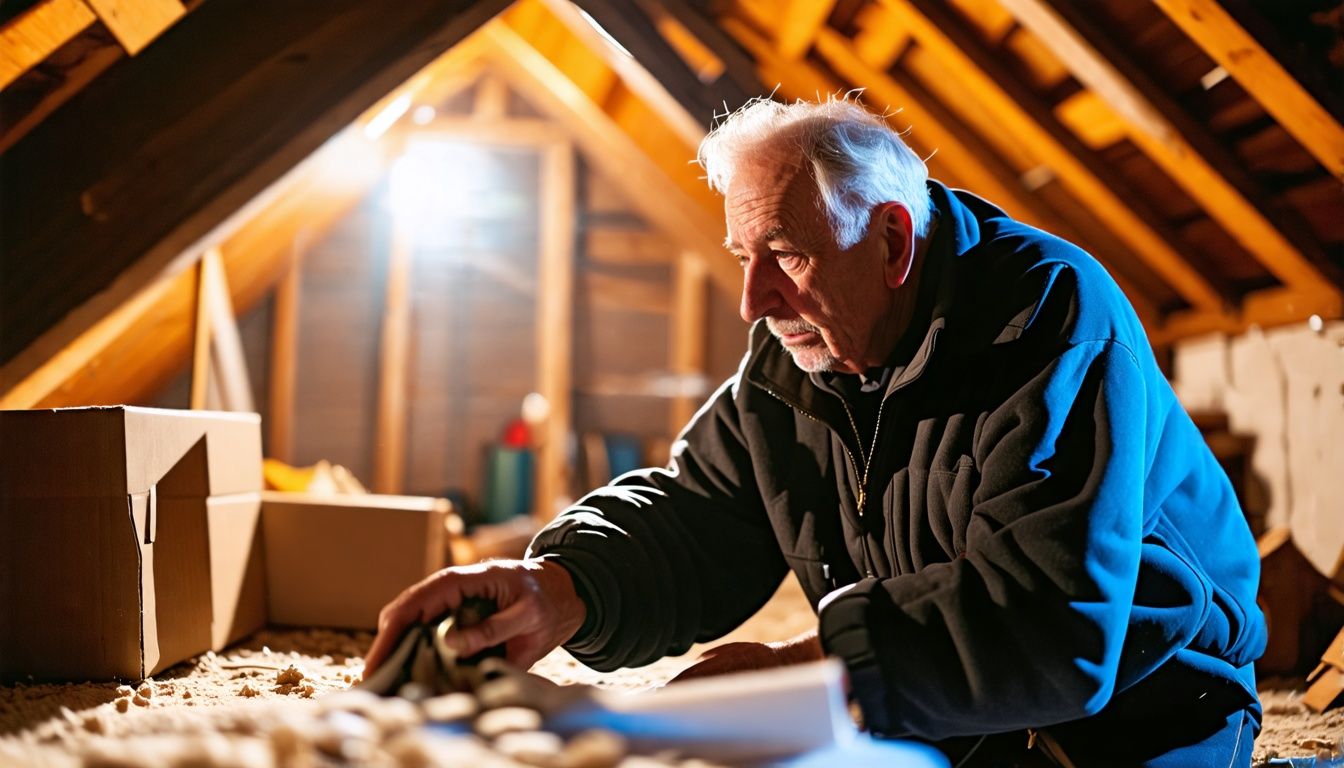
Does Your Home Contain Asbestos? Here’s How to Find Out
If your property was built before 2000, asbestos is not a remote possibility — it is a realistic likelihood. The UK used asbestos extensively across construction throughout the twentieth century, and it was not fully banned until 1999. Knowing how to identify asbestos in older homes is one of the most practical things any homeowner, landlord, or renovator can do before picking up a tool or calling in a contractor.
The material itself is not automatically dangerous. Disturbing it without knowing it is there, however, absolutely can be.
Where Asbestos Hides in Older Properties
Asbestos was not confined to one or two niche applications — it was everywhere. Its heat resistance, durability, and low cost made it the default choice for dozens of building products across several decades. That versatility is precisely what makes it so difficult to track down now.
Asbestos-containing materials (ACMs) can appear in almost every part of a domestic property, often in places you would not immediately think to check. The most frequently encountered locations include:
- Textured coatings — Artex and similar wall and ceiling finishes applied before the mid-1980s frequently contain chrysotile (white asbestos)
- Floor tiles and adhesives — Vinyl floor tiles, particularly the older 9-inch square format, and the black mastic adhesive beneath them
- Pipe and boiler lagging — Insulation wrapped around hot water pipes, boilers, and heating systems
- Ceiling tiles — Commonly found in kitchens, bathrooms, and utility rooms from the 1960s through to the 1980s
- Roof materials — Corrugated asbestos cement sheeting on garages, outbuildings, and extensions
- Soffit boards and fascias — Flat asbestos cement panels fitted under roof eaves
- Insulating board — Used in partition walls, around fireplaces, and as fire protection panels in airing cupboards
- Guttering and downpipes — Asbestos cement was widely used for external drainage systems
- Toilet cisterns and window sills — Less obvious, but asbestos cement was used for moulded fittings throughout the home
The sheer range of applications means a pre-2000 property could contain ACMs in multiple rooms and in multiple forms. A thorough approach is always warranted.
Visual Warning Signs Worth Knowing
You cannot confirm asbestos by sight alone — laboratory analysis is the only way to be certain. That said, there are visual indicators that should prompt caution and further investigation.
Look for materials that appear fibrous or layered, have a grey or off-white colour, or show the characteristic dimpled surface of textured coatings. Corrugated cement sheets on older outbuildings are almost always asbestos cement. Older airing cupboards with flat grey panels around the hot water cylinder are another strong indicator.
The condition of any suspect material matters enormously. ACMs that are intact, well-bonded, and undamaged pose far less risk than materials that are crumbling, damaged, or deteriorating. Friable (crumbly) asbestos — where fibres can become airborne with minimal disturbance — should be treated as an urgent concern and assessed by a professional without delay.
Age of the Property as a Starting Point
The construction date of a property gives you an immediate risk indicator. Homes built between the 1950s and 1980s carry the highest likelihood of containing multiple ACMs, as this was the period of peak asbestos use in UK construction. Properties built in the 1990s may still contain ACMs, particularly in textured coatings and floor tiles, since the ban was not implemented until 1999.
Properties built after 2000 are extremely unlikely to contain asbestos, though materials salvaged from older buildings during renovation work are a rare exception worth bearing in mind.
How to Identify Asbestos in Older Homes: Your Testing Options
Suspicion is not enough. You need confirmed results before making decisions about renovation, sale, or removal. There are two main routes available to homeowners in the UK.
Professional Asbestos Surveys
A professional survey carried out by a qualified asbestos surveyor is the most thorough and legally defensible option. Surveyors inspect the property, take bulk samples from suspect materials, and send those samples to a UKAS-accredited laboratory for analysis.
The type of survey you need depends on your circumstances:
- A management survey is the standard survey for occupied properties. It identifies ACMs that could be disturbed during everyday activities and routine maintenance, and provides a risk assessment with recommendations for managing them safely over time.
- A refurbishment survey is required before any significant renovation, extension, or structural alteration. It is more intrusive than a management survey and is designed to locate all ACMs that could be disturbed by the planned work — including those hidden within the building fabric.
- A demolition survey goes further still and is required before any demolition work begins. It involves a fully intrusive inspection of the entire structure to identify every ACM present, regardless of location or accessibility.
- A re-inspection survey allows you to monitor the condition of known ACMs over time and update your asbestos register accordingly. This is particularly important for landlords managing properties with known ACMs.
If you are unsure which type of survey applies to your situation, call Supernova Asbestos Surveys on 020 4586 0680 and we will advise you directly.
DIY Asbestos Testing Kits
For homeowners who want a lower-cost initial check on a specific material, an asbestos testing kit is available directly from our website. These kits allow you to take a small sample yourself and send it to a certified laboratory for analysis.
A testing kit is a practical option if you want to check a textured ceiling before redecoration, for example, without commissioning a full survey. However, they do have limitations — they test one material at a time, and collecting samples from damaged or friable ACMs carries risk if not done correctly.
Always follow the kit instructions precisely. If there is any doubt about the condition of the material, call a professional rather than attempting sampling yourself. For a broader overview of your options, our dedicated asbestos testing page sets out everything available to you.
Laboratory Analysis Methods
Once samples reach the laboratory, they are typically analysed using polarised light microscopy (PLM), which identifies asbestos fibre types under a microscope. For more complex or ambiguous samples, transmission electron microscopy (TEM) or X-ray diffraction (XRD) may be used.
Air monitoring — measuring airborne fibre concentrations — is used during and after removal work to confirm that an area is safe before reoccupation. This is a mandatory part of the four-stage clearance procedure required after licensable asbestos removal work.
The Health Risks: What Asbestos Actually Does
Asbestos fibres are microscopic. When ACMs are disturbed, those fibres become airborne and can be inhaled without any awareness whatsoever. Once lodged in the lungs, the body cannot expel them.
The diseases linked to asbestos exposure are serious, often fatal, and have no cure:
- Mesothelioma — A cancer of the lining of the lungs or abdomen, almost exclusively caused by asbestos exposure. Symptoms typically emerge 20 to 50 years after exposure.
- Asbestos-related lung cancer — Caused by the same mechanism as mesothelioma and particularly prevalent in those who also smoked.
- Asbestosis — Scarring of the lung tissue resulting from prolonged exposure, causing progressive breathlessness with no available cure.
- Pleural plaques and thickening — Non-cancerous changes to the lung lining that indicate significant past exposure and can impair breathing over time.
The long latency period between exposure and diagnosis — sometimes several decades — means people often fail to connect their illness with past asbestos contact. There is no known safe threshold for asbestos fibre inhalation.
Legal Obligations for Homeowners and Landlords
The legal framework governing asbestos in the UK is built primarily around the Control of Asbestos Regulations. What applies to you depends on your situation.
Owner-Occupiers
If you own and live in your home, you are not legally required to commission an asbestos survey or maintain a formal asbestos register. However, you do have a legal duty not to cause harm to others — including tradespeople working in your property.
Before any contractor carries out work that might disturb building materials, you should either have the relevant areas surveyed or make contractors aware of any known or suspected ACMs. Ignoring this is not just a legal risk — it is a moral one. Tradespeople working without knowledge of asbestos are being put in genuine danger.
Landlords and Duty Holders
If you rent out a property, you have specific statutory duties. The Control of Asbestos Regulations place a duty on those who manage non-domestic premises to actively manage asbestos risk. For residential landlords, obligations are embedded in broader health and safety law and the implied duty to maintain properties in a safe condition.
In practice, landlords should:
- Commission a management survey to identify any ACMs present
- Maintain a written asbestos register recording the location, type, condition, and risk rating of each ACM
- Develop an asbestos management plan setting out how each ACM will be monitored and managed
- Inform tenants, contractors, and maintenance staff about ACMs before any work is carried out
- Arrange periodic re-inspection surveys to monitor the condition of known ACMs
- Commission a refurbishment and demolition survey before any significant works take place
Failure to manage asbestos correctly can result in prosecution, substantial fines, and civil liability. The Health and Safety Executive takes asbestos enforcement seriously, and rightly so.
Leave It or Remove It? Managing Asbestos Safely
This is one of the most common questions homeowners ask — and the answer is not always removal. In many cases, leaving ACMs in place and managing them is the safer course of action.
When to Leave Asbestos in Place
If ACMs are in good condition, well-bonded, and not going to be disturbed, leaving them in place is often the lower-risk option. Removal always carries the risk of fibre release during the process itself.
A qualified surveyor will assess each ACM and advise whether the risk of disturbance in situ is lower than the risk of removal. Where ACMs are left in place, they should be clearly recorded in your asbestos register and inspected periodically to monitor their condition. If condition deteriorates, the risk profile changes and action may become necessary.
When Removal Becomes Necessary
Removal is necessary when:
- ACMs are in poor condition and pose an imminent risk of fibre release
- Planned renovation or demolition work would disturb the ACMs
- The ACMs are in a location where they cannot be adequately protected or managed in situ
Professional asbestos removal in the UK is tightly regulated. Licensed contractors — those holding a licence issued by the Health and Safety Executive — must carry out work involving the most hazardous ACMs, including asbestos insulation, insulating board, and sprayed coatings.
Some lower-risk work, such as removal of asbestos cement products, may be carried out by trained but unlicensed workers, though many reputable contractors hold a full licence regardless. Never attempt to remove insulation, lagging, or insulating board yourself. The risks are severe, the legal requirements are clear, and the consequences of getting it wrong are potentially catastrophic.
What Professional Removal Involves
A licensed asbestos removal contractor will carry out a pre-removal risk assessment and method statement, seal off the work area using plastic sheeting, and create a negative pressure enclosure where required. Workers use appropriate PPE including full disposable coveralls and FFP3 respiratory protection throughout.
All waste is double-bagged in labelled, heavy-duty polythene bags and disposed of at a licensed hazardous waste facility. A thorough clean-down and visual inspection follows, and for licensable work, a mandatory four-stage air clearance procedure must be completed before containment is removed and the area reoccupied.
Asbestos and Property Transactions
Whether you are buying or selling a property built before 2000, asbestos should be on your radar. Sellers are not legally obliged to commission a survey before listing, but failing to disclose known ACMs can create significant legal and financial complications further down the line.
Buyers should factor asbestos into their due diligence. If a survey has not been carried out, it is worth commissioning one — or at minimum requesting that the seller provides information about any known ACMs. The cost of an asbestos survey is modest relative to the cost of discovering a significant ACM problem after completion.
For those based in the capital, our asbestos survey London service covers properties across the city and surrounding areas, with fast turnaround and UKAS-accredited laboratory analysis as standard.
Practical Steps to Take Right Now
If you own or manage a pre-2000 property and have not yet considered asbestos, here is a straightforward action plan:
- Establish the build date — If the property was built before 2000, treat ACMs as a possibility until proven otherwise.
- Walk the property with fresh eyes — Look for the materials listed above, particularly in older rooms, outbuildings, and service areas.
- Do not disturb suspect materials — If something looks like it could be an ACM, do not drill, sand, cut, or break it until it has been tested.
- Commission a survey or use a testing kit — Choose the appropriate route based on your circumstances and the extent of the work planned.
- Act on the results — Follow surveyor recommendations. If ACMs are identified, record them, monitor them, and manage them according to their risk rating.
- Brief your contractors — Before any maintenance or renovation work begins, share what you know about ACMs in the property.
HSE guidance (HSG264) provides the technical framework underpinning all professional asbestos surveying in the UK and is the standard against which all surveys are assessed.
Frequently Asked Questions
How can I tell if my ceiling contains asbestos without touching it?
You cannot confirm asbestos by visual inspection alone, but there are indicators worth noting. Textured coatings with a stippled or swirled pattern applied before the mid-1980s are a strong candidate for chrysotile asbestos. The only way to confirm is through laboratory analysis of a sample. If you want to check before redecorating, an asbestos testing service or a DIY testing kit can provide a confirmed result without the need for a full survey.
Is asbestos dangerous if it is left undisturbed?
ACMs that are in good condition and are not being disturbed pose a very low risk. Asbestos fibres only become a health hazard when they are released into the air and inhaled. The risk arises when ACMs are drilled, cut, sanded, or damaged. If a material is intact and in a location where it will not be disturbed, leaving it in place and monitoring its condition is often the recommended approach.
Do I need a survey before renovating my home?
Yes — if your property was built before 2000, a refurbishment survey should be carried out before any significant renovation work begins. This applies even if you believe the property is unlikely to contain asbestos. The survey identifies any ACMs in the areas to be worked on, so contractors can either avoid them or arrange for safe removal before work proceeds.
Can I remove asbestos myself?
For the most hazardous materials — including asbestos insulation, insulating board, and sprayed coatings — removal must be carried out by a licensed contractor. Attempting to remove these materials yourself is illegal and extremely dangerous. Some lower-risk materials, such as intact asbestos cement, can be handled by trained but unlicensed workers under strict conditions, but professional removal is always the safer and more legally sound option.
What should I do if I find damaged asbestos in my home?
Do not attempt to clean it up, repair it, or remove it yourself. Keep the area clear of people, particularly children, and avoid doing anything that might disturb the material further. Contact a qualified asbestos surveyor as soon as possible. They will assess the condition of the ACM and advise on the appropriate course of action, which may include encapsulation, sealing, or licensed removal depending on the severity of the damage.
Get Expert Help From Supernova Asbestos Surveys
Supernova Asbestos Surveys has completed over 50,000 surveys across the UK. Whether you need a management survey for a rented property, a refurbishment survey ahead of building work, or straightforward advice on a suspect material, our team is ready to help.
Call us on 020 4586 0680 or visit asbestos-surveys.org.uk to book a survey, order a testing kit, or speak to one of our qualified surveyors about your specific situation. We cover properties across the UK, with specialist teams operating throughout London and the surrounding regions.