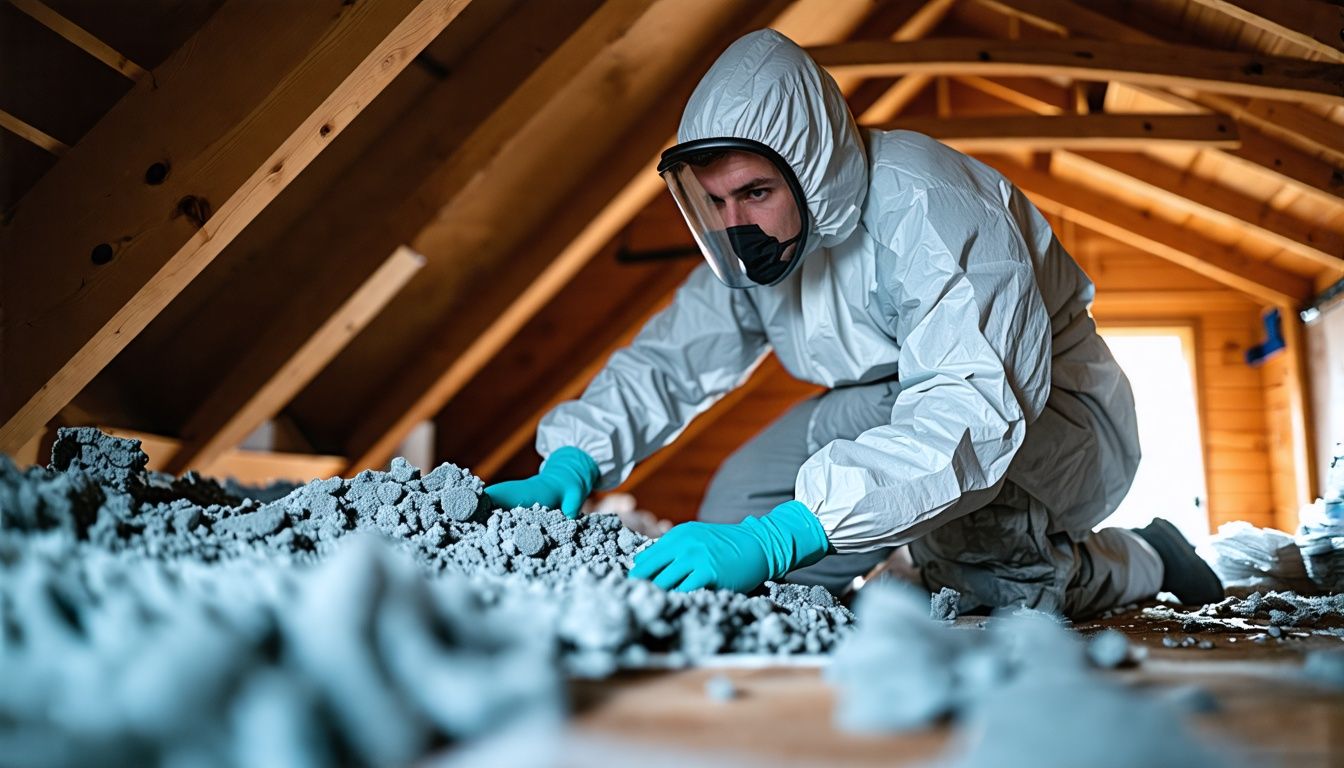
Asbestos PPE: The Right Equipment, Standards and Regulations for Removal Work
Asbestos fibres are invisible to the naked eye. Inhale enough of them, and the consequences — mesothelioma, asbestosis, lung cancer — can take decades to develop but are irreversible when they do. That is why asbestos PPE is not optional during removal work. It is a legal requirement, and getting it wrong puts lives at risk.
Whether you are a dutyholder, site manager, or contractor, understanding what PPE is required, why it matters, and how to use it correctly is essential before any disturbance of asbestos-containing materials (ACMs) begins.
Why Asbestos PPE Is a Legal Requirement, Not a Suggestion
Asbestos-related diseases remain one of the UK’s leading causes of occupational death. The fibres responsible are microscopic — standard dust masks offer no meaningful protection, and a single poorly fitted respirator can render an entire protective system useless.
Under the Control of Asbestos Regulations, employers and self-employed contractors have a statutory duty to provide suitable PPE for anyone who may be exposed to asbestos fibres. This is enforced by the Health and Safety Executive (HSE), and failure to comply can result in prosecution, improvement notices, and prohibition orders.
PPE is always the last line of defence, used alongside engineering controls such as enclosures, negative pressure units, and wet suppression. But when those controls are in place and fibres could still be present, the right asbestos PPE is what stands between a worker and a life-altering diagnosis.
Respiratory Protective Equipment (RPE): The Most Critical Element of Asbestos PPE
No other piece of asbestos PPE matters more during removal work than respiratory protection. Asbestos fibres enter the body through inhalation — protecting the airways is the single most important thing you can do.
Types of Respirator Used in Asbestos Work
Not all masks are equal, and many widely available dust masks offer no protection against asbestos whatsoever. The HSE specifies that RPE used in asbestos work must achieve a minimum assigned protection factor (APF) appropriate to the level of exposure. In practice, this means selecting from the following options:
- FFP3 disposable filtering facepieces — suitable only for very low-risk, short-duration tasks involving non-licensed asbestos work. These are the absolute minimum standard and must carry CE or UKCA marking.
- Half-face respirators with P3 filters — suitable for non-licensed asbestos work where exposure is higher. The P3 filter captures the fine fibres that FFP3 masks are borderline on.
- Full-face respirators with P3 filters — required for most licensed asbestos removal work. These provide an APF of 20 and also protect the eyes and face from fibre contact.
- Powered air-purifying respirators (PAPRs) with P3 filters — suitable where comfort or extended wear is a concern. A powered unit reduces breathing resistance significantly during prolonged work.
- Airline-fed respirators — used in the highest-risk environments, particularly where asbestos concentrations are very high or enclosed spaces are involved. These provide a continuous supply of clean air independent of the surrounding environment.
Fit Testing Is Not Optional
A respirator that does not seal properly to the face is effectively useless. All tight-fitting RPE — disposable, half-face, or full-face — must be fit tested before use by a competent person, and records must be kept.
There are two recognised methods:
- Qualitative fit testing — uses the wearer’s sense of taste or smell to detect leakage. Suitable for disposable and half-face respirators.
- Quantitative fit testing — uses instrumentation to measure actual leakage. Required for full-face respirators.
If a worker’s facial shape changes — significant weight loss or gain, dental work, scarring — they must be retested. Workers with beards cannot achieve an adequate seal on tight-fitting RPE and must be provided with a loose-fitting alternative such as a powered hood or visor.
Protective Coveralls: Preventing Secondary Fibre Transfer
Asbestos fibres settle on clothing and surfaces. Without full-body protection, fibres can be transferred to clean areas, vehicles, homes, and families — a process known as secondary exposure, which has historically caused illness in the relatives of asbestos workers.
What Type of Coverall to Use
For all asbestos work, workers should wear disposable Type 5 coveralls as a minimum. These are designed to resist penetration by dry particles and are classified under EN ISO 13982-1. Ensure the suits specifically state suitability for use with asbestos and carry appropriate UKCA or CE marking.
Key features to check before use:
- Elasticated hood, wrists, and ankles to minimise gaps
- Full-length front zip with a flap cover to prevent fibre ingress
- Robust seams — ideally stitched and taped
- Correct sizing — too tight restricts movement; too loose creates excess material that can snag or leave gaps
Coveralls should be put on in a clean area before entering the work zone, and removed — or “doffed” — carefully in the decontamination unit before leaving. Incorrect removal is one of the most common ways fibres are spread to clean areas.
Disposable Means Disposable
Coveralls used during asbestos removal must be treated as contaminated waste after each use. Attempting to clean and reuse them is not just ineffective — it actively risks spreading fibres. Bag them immediately after removal and dispose of them as asbestos waste in line with current regulations.
Gloves, Footwear, and Eye Protection
Gloves
Gloves protect against direct skin contact with ACMs and prevent fibre transfer from hands to face. While asbestos fibres cannot penetrate intact skin, gloves remain an essential part of the overall barrier system and must be worn throughout the work.
Disposable nitrile or neoprene gloves are the standard choice — they are resistant to tearing, provide adequate dexterity for handling tools, and can be disposed of as asbestos waste after use. Latex gloves are not recommended due to allergy risks.
Gloves should be taped to the coverall cuff to eliminate any gap at the wrist, inspected before use, and changed immediately if torn or punctured.
Footwear
Footwear requirements depend on the nature of the work. In most asbestos removal scenarios, workers should wear either:
- Dedicated on-site boots that remain within the work zone and are decontaminated before the worker leaves, or
- Disposable boot covers worn over regular safety footwear, which are then removed and bagged as contaminated waste
Where there is a risk of falling objects or sharp materials, steel-toecap safety boots are required. Coverall legs should be pulled over the top of boot covers and taped to prevent fibre ingress at the ankle. Never allow boots worn in a contaminated area to be taken into clean zones, vehicles, or off-site locations without thorough decontamination.
Eye and Face Protection
For most licensed asbestos removal work using a full-face respirator, eye protection is built in. Where a half-face respirator is used, safety goggles must be worn to prevent fibre contact with the eyes.
Standard safety spectacles are not adequate. Goggles must be close-fitting and indirect-vented to prevent airborne fibres from reaching the eyes.
Donning and Doffing: Getting the Sequence Right
The order in which asbestos PPE is put on and taken off is just as important as the equipment itself. A worker who fits their respirator after their coveralls, or removes their gloves before their suit, can undo all the protection the equipment provides.
Donning Order (Putting PPE On)
- Put on disposable undersuit if required
- Don coverall — ensure fit is correct before zipping up
- Fit respirator and perform a seal check
- Put on gloves and tape to coverall cuffs
- Apply boot covers and tape to coverall legs
- If using a full-face respirator, ensure the hood is pulled over correctly
Doffing Order (Taking PPE Off) — In the Decontamination Unit
- Vacuum down the coverall using an H-class vacuum (never use compressed air)
- Remove boot covers carefully, rolling outward to contain fibres
- Remove gloves, rolling outward
- Unzip and remove coverall, rolling it inward to contain contamination
- Place all disposable items in a labelled, sealed asbestos waste bag
- Remove respirator last — this is the final barrier
- Shower before leaving the decontamination unit
This sequence should be trained, rehearsed, and supervised — particularly for workers new to asbestos removal. The decontamination unit itself must be a three-stage unit with dirty, shower, and clean zones.
Disposing of Contaminated Asbestos PPE
Contaminated PPE is classified as asbestos waste and must be disposed of in line with the Control of Asbestos Regulations and the Environmental Protection Act. This means:
- Double-bagging in heavy-duty polythene bags clearly labelled with the appropriate asbestos hazard warning
- Transporting waste using a registered waste carrier
- Disposing of at a licensed facility authorised to accept asbestos waste
- Retaining consignment notes and disposal records
Never dispose of asbestos-contaminated PPE in general waste skips or domestic bins. Doing so is a criminal offence under UK waste legislation.
Training, Records, and Employer Responsibilities
Under the Control of Asbestos Regulations, employers must ensure that anyone liable to be exposed to asbestos receives adequate training before starting work. This is not a recommendation — it is a legal obligation.
Training must cover:
- The risks associated with asbestos exposure and related diseases
- The correct selection, fitting, use, and maintenance of PPE
- Decontamination procedures
- Emergency procedures if PPE is compromised
Training records, fit test results, and PPE inspection logs should all be documented and retained. In the event of an HSE inspection or enforcement action, these records demonstrate compliance and due diligence.
For licensed asbestos removal work, operatives must hold a valid licence issued by the HSE, and supervisors must hold appropriate qualifications. PPE provision is part of the wider licensed contractor obligation — it cannot be left to individual workers to organise themselves.
When Asbestos PPE Alone Is Not Enough
PPE is a critical safety measure, but it should never be the only one. The hierarchy of controls requires that exposure is eliminated or reduced at source before PPE is considered. Relying solely on PPE without adequate engineering controls in place is not compliant with HSE guidance and creates a false sense of security.
In practice, engineering controls for asbestos work include:
- Wetting ACMs before disturbance to suppress fibre release
- Using negative pressure enclosures to contain fibres during removal
- H-class vacuuming rather than dry sweeping
- Minimising the number of workers present in the contaminated area
Asbestos PPE worn over inadequate engineering controls offers incomplete protection. The two must work together as part of a coherent safe system of work. If you need professional asbestos removal carried out to the correct standard, using a licensed contractor with proper PPE protocols in place is non-negotiable.
Before Any Removal Work Begins: Know What You Are Dealing With
Before selecting PPE or planning removal, you need to know exactly what type of asbestos is present, the condition of the material, and the extent of contamination. That starts with a professional survey — not an assumption.
A management survey is the starting point for most occupied buildings, identifying the location and condition of ACMs so they can be managed safely without disturbance. This determines the level of risk and informs decisions about whether any removal is necessary at all.
Where work is planned, a refurbishment survey is required before any intrusive work begins. It locates all ACMs in the areas to be worked on, including those hidden within the fabric of the building, so that the correct PPE and removal strategy can be planned in advance.
For properties being demolished entirely, a demolition survey is a legal requirement. This is the most thorough type of survey, covering the whole structure to ensure all asbestos is identified and removed before demolition proceeds.
Supernova Asbestos Surveys provides all three survey types across the UK, including asbestos survey London, asbestos survey Manchester, and asbestos survey Birmingham — giving you the information you need before any work begins.
Asbestos PPE: Common Mistakes That Put Workers at Risk
Even experienced workers can fall into habits that compromise their protection. These are the errors that come up most frequently on site and in HSE enforcement cases:
- Using an FFP2 or surgical mask — neither offers any meaningful protection against asbestos fibres. Only FFP3 or higher is appropriate, and even FFP3 is limited to low-risk, short-duration tasks.
- Skipping the seal check — a respirator that fits on paper but leaks in practice is worse than useless because the wearer believes they are protected.
- Removing PPE outside the decontamination unit — fibres on the outside of the suit are transferred to clean areas the moment the worker steps out of the enclosure without doffing correctly.
- Reusing disposable items — coveralls, gloves, and boot covers used in asbestos work are single-use. There are no exceptions.
- Not taping joints — the gap between glove and cuff, or boot cover and coverall leg, is a direct route for fibre ingress. Tape every junction.
- Wearing facial hair with tight-fitting RPE — even stubble is sufficient to break the face seal. Workers must be clean-shaven or use a loose-fitting alternative.
These mistakes are preventable with proper training, supervision, and a culture that treats PPE compliance as non-negotiable rather than inconvenient.
HSG264 and the Wider Regulatory Framework
The HSE’s guidance document HSG264 — Asbestos: The Survey Guide — sets out the framework for identifying asbestos before work begins, but it sits within a broader regulatory picture that governs how work is then carried out.
The Control of Asbestos Regulations establishes the overarching legal duties: the duty to manage, the licensing regime for high-risk work, the requirement for adequate training, and the obligation to provide suitable RPE and PPE. These regulations apply to all employers and self-employed persons who carry out work that may expose them or others to asbestos.
The Personal Protective Equipment at Work Regulations also apply — requiring that PPE is suitable for the purpose, properly maintained, stored correctly, and provided to workers free of charge. PPE must not be a cost passed on to the operative.
Where licensed work is involved, the HSE’s licensing requirements add further obligations around notification, supervision, and medical surveillance. Asbestos PPE is one component of a tightly regulated system — not a standalone solution.
Get the Survey Done Before Work Starts
No responsible contractor should begin removal work without a current, accurate survey in hand. The survey tells you what you are dealing with — the type of asbestos, its condition, its location, and the risk it presents. Without that information, selecting the correct PPE is guesswork, and guesswork with asbestos has serious consequences.
Supernova Asbestos Surveys has completed over 50,000 surveys across the UK. Our UKAS-accredited surveyors provide fast, accurate results with clear recommendations — so you can plan removal work with confidence and ensure the right asbestos PPE and controls are in place from the start.
Call us on 020 4586 0680 or visit asbestos-surveys.org.uk to book your survey today.
Frequently Asked Questions
What PPE is required for asbestos removal work?
As a minimum, workers must wear a suitable respirator (FFP3 or higher, depending on the type and level of work), disposable Type 5 coveralls, nitrile or neoprene gloves, and appropriate footwear or disposable boot covers. For licensed removal work, a full-face respirator with P3 filters is typically required, along with safety goggles if the respirator does not cover the eyes. All PPE must be fit tested, correctly donned and doffed, and disposed of as asbestos waste after use.
Can I use a standard dust mask when working with asbestos?
No. Standard dust masks, surgical masks, and FFP1 or FFP2 respirators do not provide adequate protection against asbestos fibres. The HSE requires a minimum of FFP3 for very low-risk, short-duration non-licensed tasks, and higher-rated RPE for all other asbestos work. Using an inadequate mask while believing you are protected is one of the most dangerous mistakes a worker can make.
What happens to PPE after asbestos removal work?
All PPE used during asbestos removal — coveralls, gloves, boot covers, and any other disposable items — must be treated as asbestos-contaminated waste. Items must be double-bagged in heavy-duty polythene bags, clearly labelled with asbestos hazard warnings, and disposed of through a licensed waste carrier at a facility authorised to accept asbestos waste. Disposing of contaminated PPE in general waste is a criminal offence.
Do I need a fit test for my asbestos respirator?
Yes. All tight-fitting RPE used in asbestos work must be fit tested before first use, and retested if the wearer’s facial shape changes. Qualitative fit testing is acceptable for disposable and half-face respirators; quantitative testing is required for full-face units. Records of fit tests must be retained. Workers with beards cannot achieve an adequate seal on tight-fitting respirators and must use a loose-fitting alternative such as a powered hood.
Is a survey required before asbestos removal begins?
Yes. A professional asbestos survey is required before any removal or intrusive work takes place. For planned refurbishment, a refurbishment survey must be carried out to locate all ACMs in the affected area. For full demolition, a demolition survey is a legal requirement. Attempting removal without a current survey risks disturbing unidentified ACMs without adequate controls or PPE in place.