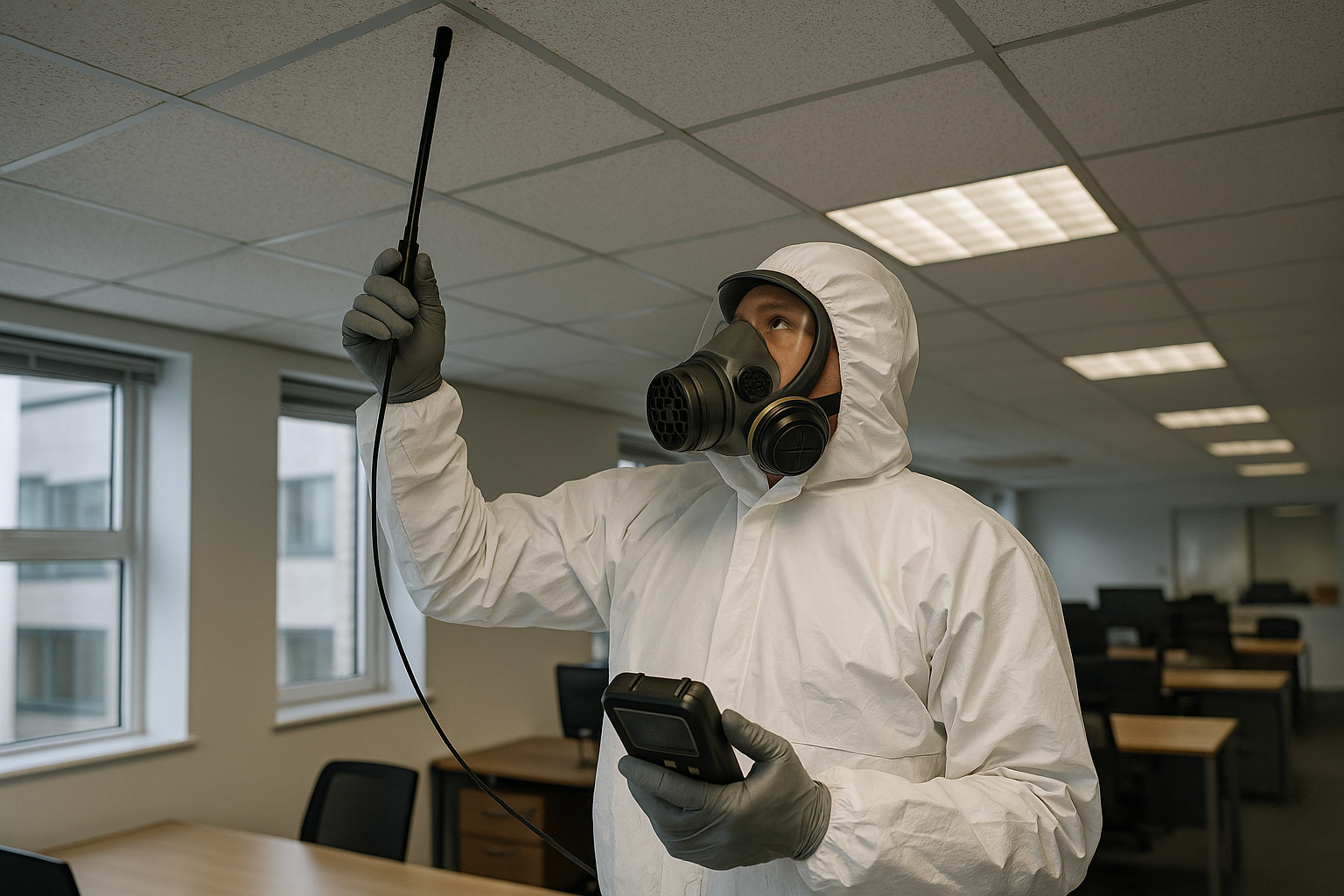
Lift an old carpet, peel back a layer of vinyl, and asbestos tiles are still one of the most common surprises found in UK properties. They can sit undisturbed for decades, but once refurbishment starts, a simple flooring job can turn into a health risk and a compliance problem very quickly.
For landlords, facilities teams and property managers, the right response is not guesswork. If you uncover older floor finishes, brittle square tiles or black adhesive, stop work and treat the area as suspect until sampling or a professional survey confirms what you are dealing with under the Control of Asbestos Regulations, HSG264 and current HSE guidance.
Written by Mark Carter
What are asbestos tiles?
Asbestos tiles are floor coverings manufactured with asbestos fibres bound into the tile itself. In the UK, the most common forms were vinyl asbestos tiles and bitumen or asphalt-based tiles, both widely used because they were durable, low-cost and easy to maintain.
They are generally considered lower risk than highly friable asbestos materials such as lagging or loose insulation. That does not mean they are harmless. If asbestos tiles are drilled, sanded, snapped, scraped or lifted carelessly, fibres can be released.
The tile is not always the only issue. Older black bituminous adhesive beneath asbestos tiles may also contain asbestos, and removal work often disturbs this adhesive more aggressively than the tile surface itself.
Common types of asbestos floor coverings
- Vinyl asbestos tiles – hard-wearing, often semi-flexible, commonly used in homes, schools, offices and shops
- Bitumen or asphalt tiles – usually darker, more brittle and often found in older institutional or commercial buildings
- Associated adhesive residues – black mastic or cutback adhesive that may also contain asbestos
If you need an early indication before work starts, a testing kit can help confirm whether suspect flooring contains asbestos. For larger projects, communal areas or non-domestic premises, a survey is usually the better option.
What do asbestos floor tiles look like?
One reason asbestos tiles catch people out is that they do not have one single appearance. Some look plain and industrial, while others look no different from ordinary old floor tiles.
You cannot confirm asbestos by appearance alone, but there are visual clues that should make you pause. The age of the flooring, the tile size, the colour, the finish and the presence of black tile adhesive can all suggest a higher likelihood that the material contains asbestos.
Typical sizes, colours and finishes
Many asbestos tiles were made for function rather than style. They often have a practical, muted appearance rather than the decorative finish you would expect from modern flooring.
- 9-inch square tiles
- 12-inch square tiles
- Plain, speckled or lightly marbled surfaces
- Matte or slightly waxy finishes
- Muted colours such as beige, cream, grey, brown, black, maroon and dark green
Older bitumen tiles are often very dark brown or black and can become brittle with age. If tiles are chipped, lifting or cracked, the chance of fibre release during disturbance is higher.
Black tile adhesive
Black tile adhesive is a major warning sign. If a loose edge or damaged section reveals a black bituminous mastic underneath, treat the whole floor build-up with caution.
This black adhesive may contain asbestos in its own right. Do not scrape it back to see what is underneath. Scraping, grinding and aggressive cleaning are exactly the kind of actions that can release fibres and spread contamination across the room.
How do you identify asbestos floor tiles?
The key point is simple: you cannot identify asbestos tiles with certainty just by looking at them. Visual clues can tell you when to stop work, but only laboratory analysis of a sample or a suitable asbestos survey can confirm whether asbestos is present.
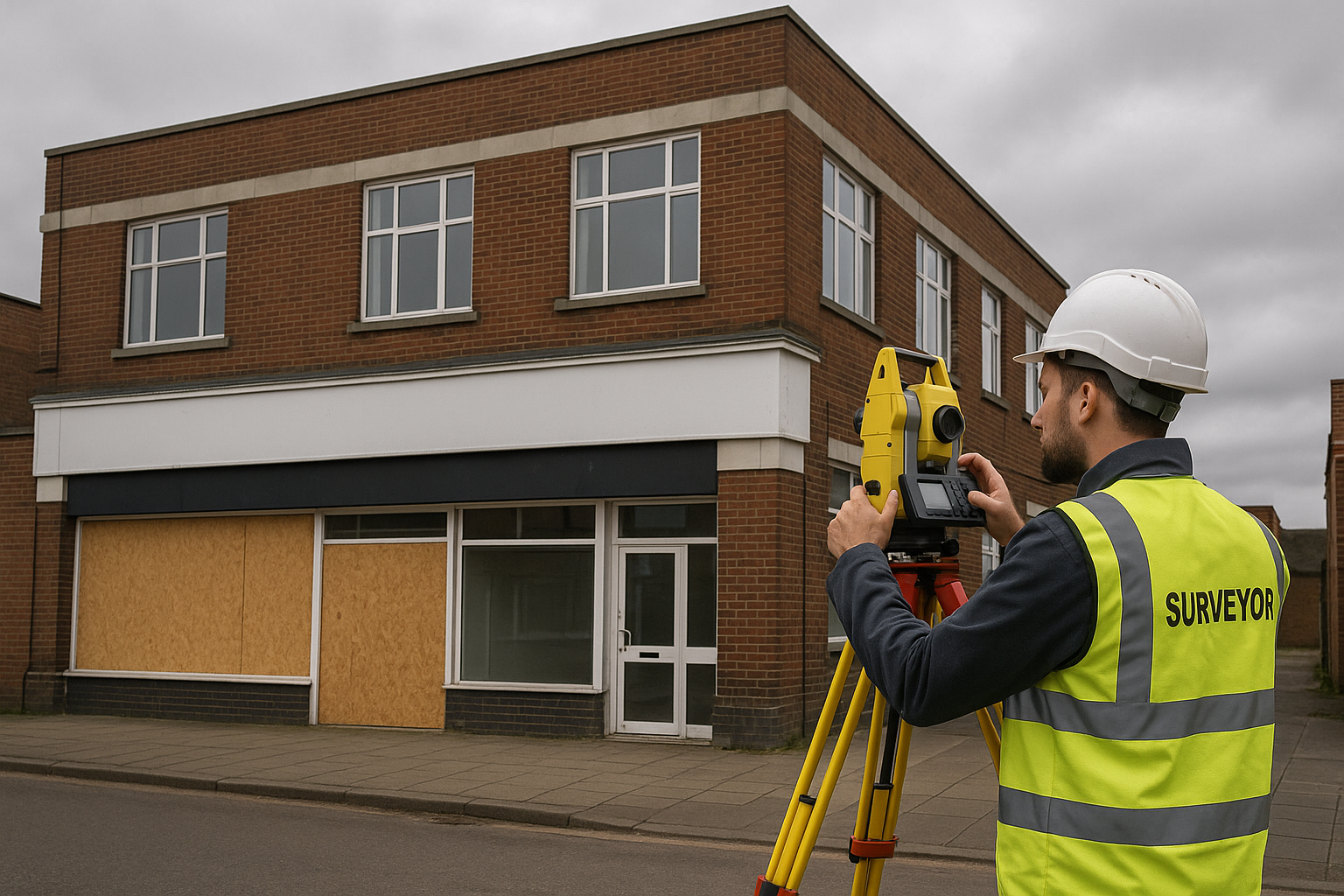
That said, there are sensible ways to assess the likelihood before you disturb anything. The age of the property, the age of the floor covering, tile shape and colour, and the presence of black adhesive all help build a risk picture.
The age of the property
The age of the property is one of the strongest indicators. If the building was constructed or refurbished during the decades when asbestos-containing flooring products were commonly installed, there is a realistic chance that older floor finishes may contain asbestos.
This applies to houses, flats, schools, hospitals, offices, shops, factories and public buildings. It is also common to find asbestos tiles hidden beneath carpet, laminate, timber overlays, sheet vinyl or newer commercial floor finishes.
Do not assume a room is free from asbestos just because it looks modern. Floor coverings are often layered, and older asbestos tiles may still be sitting below the visible surface.
Safe ways to identify suspect asbestos tiles
If you suspect asbestos tiles, use a controlled process rather than trial and error. The biggest problems usually start when someone breaks a corner off a tile, scrapes the backing or pulls up a loose section to have a look.
- Stop any work that could disturb the floor
- Keep people out of the area if tiles are already damaged
- Photograph the flooring and note the room location and condition
- Check existing asbestos records if the building has them
- Arrange sampling or a survey before contractors continue
For occupied non-domestic premises, checking existing records is especially useful. If you already have a management survey, review the asbestos register before any maintenance or minor works begin.
If a project involves refurbishment, a survey is usually the more practical route because it looks beyond the floor tiles and considers other asbestos-containing materials that may be disturbed by the same works.
Where are asbestos tiles commonly found?
Asbestos tiles were used wherever durability mattered. They coped well with heavy foot traffic, were easy to clean and were seen as a practical solution in both domestic and commercial settings.
Because of that, they still turn up in a wide range of buildings across the UK. In many cases, they have simply been covered over rather than removed.
Common locations in homes
- Kitchens
- Hallways
- Bathrooms and WCs
- Utility rooms
- Porches
- Basements and cellars
- Under carpets in living rooms and bedrooms
Common locations in commercial and public buildings
- School classrooms and corridors
- Hospital wards and service areas
- Office kitchens, stores and back rooms
- Retail stockrooms
- Factories and workshops
- Communal areas in blocks of flats
- Caretaker rooms and plant access routes
Property managers often discover asbestos tiles during strip-outs, tenancy changes, leak investigations and improvement works. The surprise is rarely that the tiles exist. It is that they have been hidden for years beneath newer finishes.
Are asbestos tiles dangerous?
Asbestos tiles can be dangerous, but the level of risk depends heavily on their condition and on what is happening around them. Intact tiles in good condition are generally lower risk because the fibres are bound into the material.
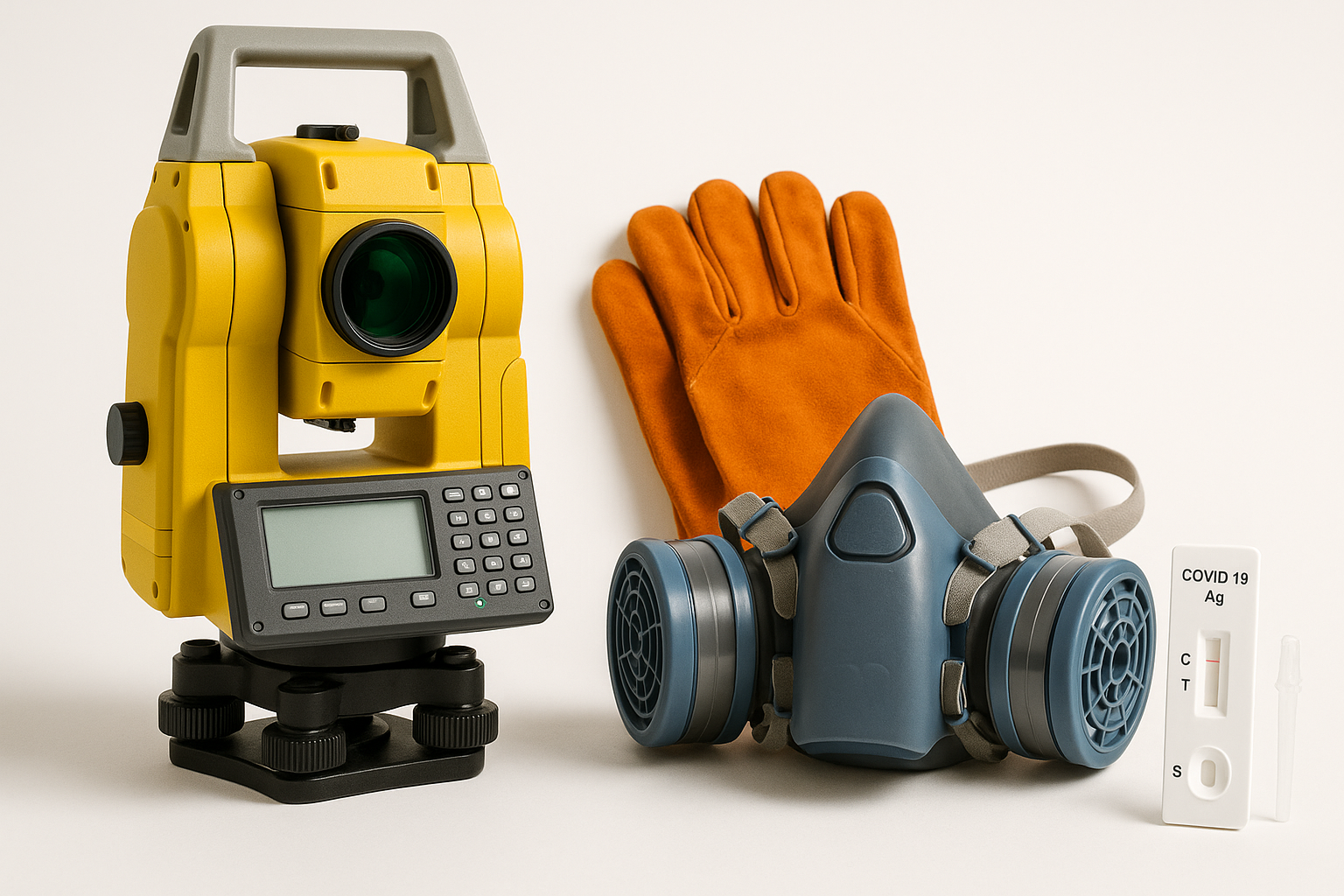
The risk rises when asbestos tiles are damaged or disturbed. Cracking, sanding, scraping, drilling, snapping, grinding or aggressive lifting can release fibres into the air. Once fibres become airborne, they can be inhaled, which is where the health risk begins.
When asbestos tiles are lower risk
- The tiles are intact and firmly bonded
- They are sealed or covered by another floor finish
- No intrusive work is planned
- The material is recorded and managed properly
When the risk increases
- Tiles are cracked, loose, broken or badly worn
- Adhesive is exposed and being scraped
- Mechanical sanding or grinding is planned
- Contractors may disturb the floor without realising
- There has already been poor DIY removal
- Water damage has loosened the installation
A common mistake is hearing that asbestos tiles are low risk and taking that to mean they are safe for casual DIY work. HSE guidance does not support that assumption. Any asbestos-containing material needs to be assessed based on its condition, the likelihood of disturbance and the work method involved.
When to remove asbestos floor tiles
Removal is not always the first or best option. In many situations, asbestos tiles can remain in place safely if they are in good condition and unlikely to be disturbed.
Management, encapsulation or covering them with a suitable new floor finish may be the right answer. Removal becomes more likely when the flooring is damaged, deteriorating or incompatible with planned works.
Removal is more likely when
- Tiles are broken, lifting or crumbling
- The adhesive or subfloor needs to be accessed
- Refurbishment or demolition will disturb the area
- The floor is causing repeated maintenance problems
- Water damage has loosened the installation
- A change of use requires intrusive works
- Previous poor removal has left debris behind
Management in place may be suitable when
- The tiles are intact and stable
- They are covered by a suitable floor finish
- No intrusive work is planned
- The asbestos is recorded in the building’s asbestos information
- Occupants and contractors can be protected from accidental disturbance
For non-domestic properties, that decision should sit within your asbestos management arrangements. For refurbishment projects, a suitable survey should identify the full extent of the material before specifications are finalised and contractors are appointed.
Do not remove asbestos tiles simply because they are there. Remove them because their condition or the planned work makes removal the safest and most practical option.
Do you need a licence to remove asbestos floor tiles?
This is one of the most common questions around asbestos tiles, and the answer needs care. Not all work involving asbestos floor tiles requires a licensed asbestos contractor, but that does not mean removal is straightforward or suitable for untrained people.
Whether a licence is needed depends on the type of material, its condition, the work method, the scale of the task and whether associated adhesive is involved. Some work with floor tiles may fall under non-licensed work or notifiable non-licensed work under the Control of Asbestos Regulations.
That classification is task-specific. It can change quickly if the tiles are badly damaged, if the adhesive needs aggressive removal, or if the chosen method is likely to create dust.
What affects whether licensed work is required?
- The condition of the tiles
- Whether the material is firmly bound or deteriorated
- The likely level of fibre release
- Whether the method involves breakage, abrasion or scraping
- The extent of contamination already present
- The competence of the people carrying out the work
In practice, property owners and managers should not try to self-classify complex asbestos tasks based on internet summaries or forum comments. The safer route is to get competent advice before any flooring is lifted.
If removal is necessary, specialist asbestos removal services can assess the job properly, choose the correct control measures and make sure waste is handled lawfully.
Why should you employ experts for the identification and removal of asbestos floor tiles?
Expert help is not about making a simple job sound complicated. It is about reducing risk, avoiding unnecessary disturbance and making sure decisions are based on evidence rather than assumptions.
Professionals know that asbestos tiles are rarely just about the tile. They look at the floor build-up, the adhesive, the condition of the material, the surrounding environment and the scope of the planned work.
What experts do better
- Identify likely asbestos-containing materials without disturbing them unnecessarily
- Take samples in a controlled way
- Assess whether the material can remain in place
- Decide whether the work is likely to fall into licensed, notifiable or non-licensed categories
- Specify the right control measures, PPE and cleaning approach
- Prevent contamination spreading into occupied parts of the building
- Document findings clearly for compliance and contractor management
For property managers, this matters because flooring work often links to wider refurbishment. A contractor replacing a kitchen, rewiring a room or fitting partitions can easily disturb asbestos tiles if the issue has not been identified early.
Professional input also helps avoid false alarms. Not every old tile contains asbestos, and not every black adhesive does either. Testing and surveying give you a defensible basis for action.
Cleanup and disposal
Cleanup and disposal are where many asbestos tile jobs go wrong. Even where the tiles themselves are relatively low risk, poor handling after removal can spread debris and contamination across the property.
If asbestos tiles have been disturbed, avoid dry sweeping, household vacuuming or brushing debris into bags. Those methods can re-suspend fibres and make a localised problem much wider.
Practical rules for cleanup
- Stop work immediately if tiles break or dust is created
- Keep people out of the area
- Do not use standard vacuums or dry sweeping methods
- Do not scrape black adhesive aggressively
- Use competent asbestos professionals where contamination is possible
- Make sure waste is packaged, labelled and disposed of correctly
Asbestos waste cannot simply go into general skips or routine site waste streams. Disposal must follow the relevant legal requirements for hazardous waste handling and transport.
If there has already been accidental disturbance, the sensible next step is to isolate the area and get advice before anyone attempts to tidy up. Quick DIY cleaning often makes the situation worse.
Home improvement communities and online advice: what to trust
Home improvement communities can be useful for sharing experiences, but they are not a substitute for asbestos advice based on UK regulations and site-specific facts. Flooring threads often contain a mix of sensible caution, outdated assumptions and risky shortcuts.
You will see people say old floor tiles are always safe if kept damp, that black adhesive definitely means asbestos, or that lifting a few tiles is fine if you wear a mask. None of those statements is reliable enough to base a real decision on.
Use online advice carefully
- Treat forums as anecdotal, not authoritative
- Do not rely on photographs alone for identification
- Check advice against HSE guidance and competent survey recommendations
- Remember that domestic DIY discussions often ignore non-domestic legal duties
- Be wary of anyone treating adhesive removal as a simple scraping job
Home improvement communities can help you understand what others have found under old flooring. They should not decide your next step. Sampling, surveying and competent removal advice are what protect people and keep projects compliant.
What to do if you uncover asbestos tiles during refurbishment
Finding suspect asbestos tiles mid-project is common, especially during fit-outs, void works and domestic upgrades. The key is to avoid turning a manageable discovery into a contamination issue.
- Stop work in the affected area
- Prevent further disturbance by staff or contractors
- Keep access restricted if tiles are damaged
- Record the location and condition with photos
- Arrange testing or a suitable asbestos survey
- Review the wider scope of work before restarting
If you are managing sites in the capital, a local asbestos survey London service can help establish whether flooring and related materials need to be addressed before works continue.
The same applies regionally. Whether you need an asbestos survey Manchester inspection for a commercial unit or an asbestos survey Birmingham assessment before refurbishment, early identification saves time and reduces disruption.
Practical advice for landlords, dutyholders and property managers
Asbestos tiles are often manageable if they are identified early and dealt with properly. Problems usually arise when old flooring is treated like ordinary waste or when contractors start lifting finishes before asbestos information has been checked.
- Review asbestos records before flooring, kitchen or M&E works begin
- Assume older concealed flooring may be suspect until proven otherwise
- Brief contractors not to disturb old tiles or adhesive without clearance
- Build sampling or survey time into project programmes
- Do not specify grinding or aggressive adhesive removal until the material is confirmed
- Keep clear records of findings, actions and waste arrangements
These steps are simple, but they prevent the most common mistakes. They also help you show that asbestos risk has been considered properly, which matters from both a safety and a compliance perspective.
Frequently Asked Questions
How do I know if old floor tiles contain asbestos?
You cannot confirm asbestos tiles by sight alone. Age, size, colour and black adhesive can raise suspicion, but only laboratory testing or a suitable asbestos survey can confirm whether asbestos is present.
Can asbestos floor tiles be left in place?
Yes, in many cases asbestos tiles can remain in place if they are intact, stable and unlikely to be disturbed. They should be managed properly and considered before any future maintenance or refurbishment work.
Is black adhesive under old tiles always asbestos?
No. Black tile adhesive is a warning sign, not proof. Some older bituminous adhesives contain asbestos, but you need testing or professional assessment to confirm it.
Can I remove asbestos tiles myself?
Some work with asbestos floor tiles may not require a licensed contractor, but that does not make it suitable for casual DIY removal. The legal category depends on the condition of the material, the method and the likelihood of fibre release. Competent advice should come first.
What should I do if a contractor has already broken asbestos tiles?
Stop work, keep people out of the area and avoid sweeping or vacuuming the debris with standard equipment. Arrange professional advice so the area can be assessed, cleaned and managed correctly.
If you have uncovered asbestos tiles in a home, office, school, shop or communal area, Supernova Asbestos Surveys can help you confirm the risk and plan the right next step. We provide surveys, sampling and support for safe asbestos management and removal across the UK. Call 020 4586 0680 or visit asbestos-surveys.org.uk to book a survey or speak to our team.