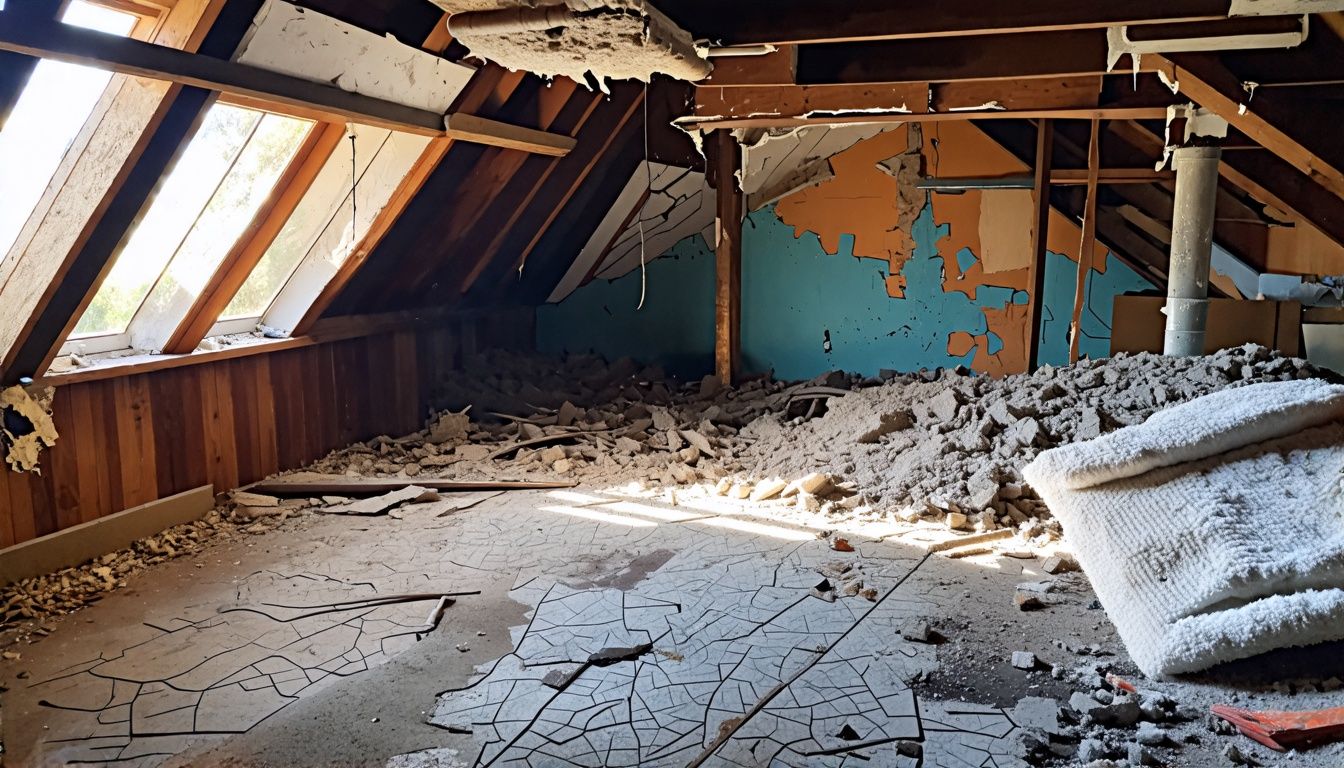
When Is an Asbestos Report Required for Flats? What Landlords and Leaseholders Must Know
If your block of flats was built before 2000, there is a very real chance it contains asbestos-containing materials (ACMs). That is not alarmism — it reflects how routinely asbestos was woven into UK residential construction throughout the 20th century. The question most landlords, managing agents, and leaseholders face is not whether asbestos might be present, but whether they know about it and whether it is being managed correctly.
Understanding when an asbestos report is required for flats is the starting point for getting that right. Whether you manage a single buy-to-let flat or an entire residential block, the legal and practical obligations around asbestos are more specific than many property owners realise. Get them wrong and you risk regulatory action, civil liability, and — most critically — harm to the people living and working in your building.
Why Flats Are Particularly at Risk From Asbestos
Asbestos was not fully banned in the UK until 1999. For decades before that, it was a standard construction material used widely in residential buildings — not just factories and offices. Blocks of flats built or refurbished between the 1950s and the late 1990s are especially likely to contain ACMs.
In a flat, asbestos can appear in both the individual dwelling and the communal areas of the building. Common locations include:
- Textured coatings such as Artex on ceilings and walls
- Floor tiles and the adhesive used beneath them
- Ceiling tiles in communal corridors and stairwells
- Pipe lagging and insulation around communal heating systems
- Insulating board used in fire doors and partitions
- Soffit boards, fascias, and roof tiles
- Behind electrical panels and in plant rooms
- Window putty and rope seals in older heating systems
Many of these materials are not immediately dangerous if they are in good condition and left undisturbed. The risk rises sharply when materials deteriorate, are damaged, or are disturbed — for example, during routine maintenance, refurbishment, or DIY work by residents.
The Legal Framework: Who Has a Duty to Manage Asbestos in Flats
The Control of Asbestos Regulations place a duty to manage asbestos on those responsible for non-domestic premises. Crucially, the communal areas of a residential block fall within this definition. That means corridors, stairwells, plant rooms, lift shafts, roof spaces, and external areas are subject to the same legal duties as a commercial property.
The individual flats themselves are treated as domestic premises, which means private homeowners living in their own flat are not subject to a statutory duty to commission a survey. However, landlords who let individual flats have a duty to manage asbestos in those properties.
Anyone — homeowner or landlord — who engages contractors to carry out work must inform them of any known ACMs before work begins. Failing to do so is a serious legal and ethical matter, regardless of whether you believed the risk to be low.
Who Is Responsible in a Block of Flats?
Responsibility for the communal areas typically falls to whoever manages the building — this might be a freeholder, a residents’ management company, a managing agent, or a local authority. If you are in any doubt about where your responsibilities begin and end, the HSE’s guidance document HSG264 provides a clear framework for identifying duty holders.
In practical terms, if you have any role in managing a pre-2000 residential block — even informally — you should treat the duty to manage as applying to you. The consequences of getting it wrong are significant.
The Homes (Fitness for Human Habitation) Act
For landlords letting individual flats, the Homes (Fitness for Human Habitation) Act adds another layer of obligation. This legislation requires that rented properties are fit for habitation at the start of a tenancy and remain so throughout.
Asbestos in poor or deteriorating condition can be classed as a serious hazard under this Act. Tenants have the right to take landlords to court if the property poses a risk to their health or safety. A well-documented, up-to-date asbestos management survey is your most effective protection against such a claim.
When Is an Asbestos Report Required for Flats? The Key Trigger Points
There is no single moment at which an asbestos report becomes mandatory — it depends on the circumstances. Here are the most common situations where a report is either legally required or strongly advisable.
Managing a Residential Block
If you are responsible for the communal areas of a pre-2000 block of flats, a management survey is a legal requirement. This survey identifies the location, type, and condition of ACMs in those communal spaces and forms the basis of your asbestos management plan. Without it, you cannot fulfil your duty to manage.
Letting a Flat
If you are a landlord letting a flat in a pre-2000 building, you have a duty to manage asbestos within that property. This means identifying whether ACMs are present, assessing their condition, and ensuring contractors are informed before carrying out any maintenance or repair work.
A management survey for the flat itself — separate from any survey of the communal areas — provides the documentation you need. It is also your strongest defence if a tenant later raises a health and safety concern.
Before Renovation or Refurbishment Work
If you are planning any renovation work in a flat — a kitchen refit, bathroom replacement, removal of a partition wall, or any other work that involves breaking into the fabric of the building — a refurbishment survey is required before work begins. This is a more intrusive survey, focused on the areas that will be affected by the works, and it must be completed before contractors start.
This applies to landlords commissioning work and, in practice, to leaseholders undertaking works within their own flat — particularly if contractors are involved. Sending a builder in to strip out a bathroom without first checking for asbestos is not just risky; it may be unlawful.
Before Demolition or Major Structural Work
If any part of the building is to be demolished or subject to major structural alteration, a demolition survey is a legal requirement before work can proceed. This is the most intrusive type of survey and aims to locate all ACMs throughout the affected areas of the building. No responsible contractor should begin demolition without one in place.
Buying or Selling a Flat
There is no legal requirement to commission an asbestos survey when buying or selling a flat, but there are strong practical reasons to do so. The standard homebuyer’s survey rarely addresses asbestos in any meaningful detail — a surveyor may flag that ACMs could be present, but will not tell you where, what type, or what condition they are in.
As a buyer, commissioning an independent management survey before exchange gives you the full picture. You will know what is present, whether it needs managing or removing, and what the likely costs are — information that has direct value in any price negotiation.
As a seller, you are not legally obliged to commission a survey, but you are expected to disclose material information you are aware of. If you know ACMs are present and fail to mention it, you may face legal consequences after completion. Having a current survey ready when your flat goes to market demonstrates transparency and can speed up a sale.
Types of Asbestos Survey Explained
Choosing the right type of survey matters. Each serves a different purpose, and using the wrong one can leave you exposed — legally and practically.
Management Survey
The standard survey for occupied properties. A management survey identifies the location, type, and condition of ACMs that might be disturbed during normal occupation or routine maintenance. It is non-intrusive — the surveyor will not break into walls or lift floorboards unnecessarily.
This is the baseline document most landlords and building managers need, and it forms the foundation of an asbestos management plan. If you are unsure where to start, this is almost always the right first step.
Refurbishment Survey
Required before any renovation work. More intrusive than a management survey, it focuses on the specific areas that will be affected by the proposed works. It must be completed before contractors begin. A refurbishment survey protects you, your contractor, and anyone living in or near the property.
Demolition Survey
Required before any structural demolition. This is the most thorough type of survey and aims to locate all ACMs throughout the property or affected area. It is a legal requirement before demolition work can proceed and should be treated as non-negotiable.
Re-inspection Survey
If you already have an asbestos management plan in place, regular re-inspection surveys are needed to assess whether the condition of known ACMs has changed. For landlords managing older housing stock, re-inspections are typically carried out every 12 months, or sooner if the condition of materials changes or maintenance work is carried out.
Skipping re-inspections is a common mistake. An ACM that was stable two years ago may have deteriorated — and without a re-inspection, you will not know until it becomes a problem.
What a Professional Asbestos Report Should Contain
Not all asbestos reports are created equal. A professional report for a flat or residential block should include:
- A site plan or photographs clearly showing the location of all identified or suspected ACMs
- Material assessments for each ACM, including type of asbestos (where confirmed by sampling), condition, and accessibility
- A risk priority rating for each material
- Laboratory analysis results where bulk samples were taken
- Recommendations on whether materials should be managed in situ, monitored, repaired, encapsulated, or removed
- A management plan outlining required actions and timescales
Reports should be produced by a competent, qualified surveyor — ideally one holding the British Occupational Hygiene Society (BOHS) P402 qualification, which is the industry-recognised standard for building surveyors working with asbestos.
At Supernova Asbestos Surveys, all our surveyors are fully qualified and our reports meet the standards required for regulatory compliance, property transactions, and contractor briefings.
What Happens If Asbestos Is Found in Your Flat?
Finding asbestos in a report is not a crisis — it is information. The majority of ACMs identified in residential surveys are in stable condition and do not require immediate removal. The appropriate response depends entirely on the type, location, and condition of the material.
Your options will typically fall into one of three categories:
- Monitor and manage — if the material is in good condition and unlikely to be disturbed, it can be left in place and inspected periodically
- Encapsulate or seal — damaged or accessible ACMs can sometimes be treated with specialist sealant to prevent fibre release
- Remove — if material is heavily deteriorated, in a high-risk location, or work is planned that will disturb it, asbestos removal by a licensed contractor is the appropriate course of action
Asbestos removal in domestic and residential properties must be carried out by a contractor licensed by the Health and Safety Executive (HSE) — particularly for higher-risk materials such as sprayed coatings, lagging, or insulating board. Supernova Asbestos Surveys can advise on the appropriate course of action and connect you with licensed removal specialists.
Can You Test for Asbestos in a Flat Yourself?
If you have spotted a suspicious material in your flat and want a quick answer before deciding on next steps, asbestos testing is available in several forms.
For a specific material you are concerned about, an asbestos testing kit allows you to take a small sample yourself using the provided equipment and send it to an accredited laboratory for analysis. Results typically come back within a few days. This can be a cost-effective first step if you want to confirm whether a specific material contains asbestos.
However, a testing kit is not a substitute for a full management survey. It only tells you about the one sample you have submitted — not about the broader picture across the property. If you already have a sample and simply need it analysed, our sample analysis service provides fast, accredited results from a UK laboratory without the need to purchase a full kit.
For anything beyond a single material check, a professional survey carried out by a qualified surveyor is the appropriate route.
Practical Steps for Landlords and Managing Agents
If you are responsible for a pre-2000 flat or residential block and have not yet addressed asbestos, here is a straightforward sequence to follow:
- Establish who the duty holder is — clarify whether responsibility sits with you, a freeholder, a managing agent, or a residents’ management company
- Commission a management survey for the communal areas if one does not already exist — this is a legal requirement for pre-2000 blocks
- Commission a management survey for individual flats you let, particularly if they are in older buildings
- Create or update your asbestos management plan based on the survey findings — this should include actions, timescales, and responsibilities
- Brief all contractors on the findings before any maintenance or repair work begins
- Schedule re-inspections at appropriate intervals — annually as a minimum for most residential settings
- Commission a refurbishment survey before any renovation work begins, no matter how minor it appears
This is not a one-off exercise. Asbestos management is an ongoing responsibility, not a box to tick once and forget.
Frequently Asked Questions
Is an asbestos survey a legal requirement when selling a flat?
There is no legal obligation to commission an asbestos survey before selling a flat. However, sellers are expected to disclose material information they are aware of, including the presence of ACMs. Having a current survey in place demonstrates transparency, can reassure buyers, and may help avoid disputes after completion.
Do communal areas in a block of flats require an asbestos survey?
Yes. Under the Control of Asbestos Regulations, the communal areas of a residential block — including corridors, stairwells, plant rooms, and roof spaces — are classified as non-domestic premises. The duty holder responsible for managing the building is legally required to have a management survey in place for these areas if the building was constructed before 2000.
What is the difference between a management survey and a refurbishment survey for flats?
A management survey is a non-intrusive inspection used to identify ACMs that could be disturbed during normal occupation or routine maintenance. A refurbishment survey is more intrusive and is required before any renovation or building work begins. It focuses on the specific areas to be worked on and must be completed before contractors start. Using a management survey in place of a refurbishment survey when renovation work is planned is a common and potentially costly mistake.
How often does an asbestos report need to be updated for a residential block?
Once a management survey and asbestos management plan are in place, re-inspection surveys should be carried out at least annually to check whether the condition of known ACMs has changed. Re-inspections should also be triggered after any maintenance work, accidental damage, or change in the use of an area. The management plan itself should be reviewed and updated following each re-inspection.
Can a landlord be prosecuted for not having an asbestos survey?
Yes. Landlords and duty holders who fail to manage asbestos in line with the Control of Asbestos Regulations can face enforcement action by the HSE, including improvement notices, prohibition notices, and prosecution. Separately, landlords may face civil claims from tenants under the Homes (Fitness for Human Habitation) Act if asbestos in poor condition poses a health risk. The legal and financial consequences of non-compliance are considerably greater than the cost of a survey.
Get Your Asbestos Report From Supernova Asbestos Surveys
Supernova Asbestos Surveys has completed over 50,000 surveys across the UK, working with landlords, managing agents, leaseholders, and property managers at every scale. Our fully qualified surveyors produce reports that meet HSE standards and stand up to scrutiny — whether for regulatory compliance, property transactions, or contractor briefings.
Whether you need a management survey for a residential block, a refurbishment survey before renovation work, or straightforward advice on your obligations, we are here to help.
Call us on 020 4586 0680 or visit asbestos-surveys.org.uk to request a quote or speak to a member of our team.