
One missed detail on a proposal form can turn asbestos insurance from a routine renewal into a dispute over cover, exclusions and unpaid costs. If you manage a building built or refurbished before 2000, asbestos is not just a compliance issue. It can affect premiums, policy wording, claims handling and whether an insurer is willing to take the risk at all.
For landlords, property managers, facilities teams and business owners, the real challenge is uncertainty. Insurers do not like unknown asbestos, poor records or vague answers. They respond far better when asbestos has been identified, recorded and managed properly under the Control of Asbestos Regulations, supported by HSG264 survey standards and relevant HSE guidance.
Why asbestos insurance is a complicated risk
Asbestos creates a very different insurance problem from many other building hazards. A leak or broken window is usually obvious and immediate. Asbestos can sit in a building for years without incident, then become a major issue during maintenance, refurbishment, water damage or a fire.
That long risk timeline matters. Exposure may not be discovered straight away, and illness claims can arise many years after fibres were inhaled. Insurers therefore look closely at how a dutyholder has identified asbestos-containing materials, how those materials are managed, and what evidence exists if a claim is made later.
In practice, asbestos can influence:
- Buildings insurance premiums and excesses
- Public liability and employer liability terms
- Contamination exclusions
- Claims following fire, flood or accidental disturbance
- Underwriting questions at renewal
- The quality of evidence needed after an incident
The key point is simple: insurers are not only asking whether asbestos is present. They want to know whether it is known, documented, monitored and controlled.
What insurers want to know before offering asbestos insurance
Underwriters need a clear picture of the property and the way it is managed. A building with known asbestos that is properly controlled is often seen as a better risk than a building where nobody has checked.
If you are arranging or renewing asbestos insurance, expect questions such as:
- Was the building constructed or altered before 2000?
- Has asbestos been identified on site?
- Do you hold a current asbestos register?
- Has a suitable survey been carried out?
- Is there an asbestos management plan?
- Have any asbestos materials been damaged, disturbed or removed?
- Are contractors given asbestos information before starting work?
- Have there been any previous asbestos incidents or claims?
If you cannot answer these clearly, insurers may increase the premium, apply conditions, add exclusions or decline cover. Good documentation does not guarantee a perfect policy, but it gives an underwriter confidence that the risk is being taken seriously.
Why survey evidence matters to insurers
A professional survey gives insurers something solid to assess. It shows that reasonable steps have been taken to locate and assess asbestos-containing materials in line with HSG264.
For occupied non-domestic premises, the usual starting point is a management survey. This helps identify accessible materials so they can be recorded and managed safely during normal occupation.
If an insurer asks whether you have suitable asbestos information, a current survey report, register and management plan will usually carry far more weight than a verbal assurance that the building has been checked.
Does standard insurance cover asbestos?
This is where many property owners get caught out. Standard insurance policies may respond to some asbestos-related losses, but they rarely cover every asbestos cost you might face. You should never assume asbestos insurance is automatically included just because you have buildings, public liability or employer liability cover in place.

Buildings insurance and asbestos
Buildings insurance may respond if asbestos contamination follows an insured event such as a fire, escape of water or storm damage. If asbestos-containing materials are damaged and contamination forms part of the insured loss, the policy may contribute to clean-up, decontamination or reinstatement costs.
That does not mean every asbestos cost is covered. Insurers often distinguish between:
- Damage caused directly by an insured peril
- Pre-existing asbestos that was already present and simply needed management
- Planned removal or improvement works
If asbestos was already in poor condition before the event, expect close scrutiny of policy wording and evidence.
Public liability and employer liability
If a visitor, contractor or member of the public alleges exposure, public liability insurance may become relevant. If an employee alleges exposure, employer liability insurance is usually the policy examined.
These claims are often complex because the alleged exposure may have happened years earlier. Survey reports, registers, contractor briefings and maintenance records can all become key evidence when liability is being investigated.
Planned asbestos removal is usually not insured
One of the most common misunderstandings is the belief that insurers will pay to remove asbestos simply because it exists. In most cases, planned removal is treated as a maintenance, compliance or project cost rather than an insured event.
If removal is needed as part of a project, budget for it. Where works are required, professional asbestos removal should be arranged through competent specialists and based on proper survey and analytical information.
When asbestos insurance claims and disputes usually arise
Most asbestos-related insurance problems do not begin with a dramatic discovery. They usually start with routine work, poor records or assumptions that someone else has already checked.
1. Accidental disturbance during maintenance or fit-out
A contractor drills into asbestos insulating board above a ceiling. An electrician cuts through a panel. A plumber opens a riser without checking the register first. Work stops, the area is isolated, and urgent clean-up may follow.
At that point, insurers will want to know whether the asbestos had been identified, whether the contractor had the right information and whether the work should have been preceded by a survey. Before intrusive work starts, the correct step is usually a refurbishment survey for the affected area.
2. Fire or flood affecting asbestos-containing materials
Fire can break up asbestos materials and spread contamination through smoke movement, debris and fire-fighting activity. Flooding can damage asbestos-containing materials and complicate access, clean-up and reinstatement.
Where the asbestos issue follows an insured event, there may be cover under the property policy. Even so, insurers often investigate carefully to separate insured damage from pre-existing asbestos responsibilities.
3. Claims from employees, visitors or contractors
If someone alleges they were exposed because asbestos was not properly identified or controlled, liability insurers may become involved. These cases often turn on whether the dutyholder acted reasonably and whether suitable information was available at the time.
This is where your records matter. A clear survey trail, live register and evidence that contractors were briefed can make a major difference to how a claim is handled.
4. Redevelopment and demolition projects
Large uninsured asbestos costs often appear during redevelopment. Hidden materials are uncovered, works stop, removal costs rise and programme dates slip.
Before full structural demolition, a demolition survey is required so asbestos-containing materials can be identified before the building comes down. Without it, you risk unsafe work, regulatory breaches and insurance disputes.
Disclosure duties and asbestos insurance
Asbestos is a material fact in insurance terms. If you know asbestos is present, suspect it may be present, or hold reports showing asbestos-containing materials in the building, that information should be disclosed when you apply for or renew cover.
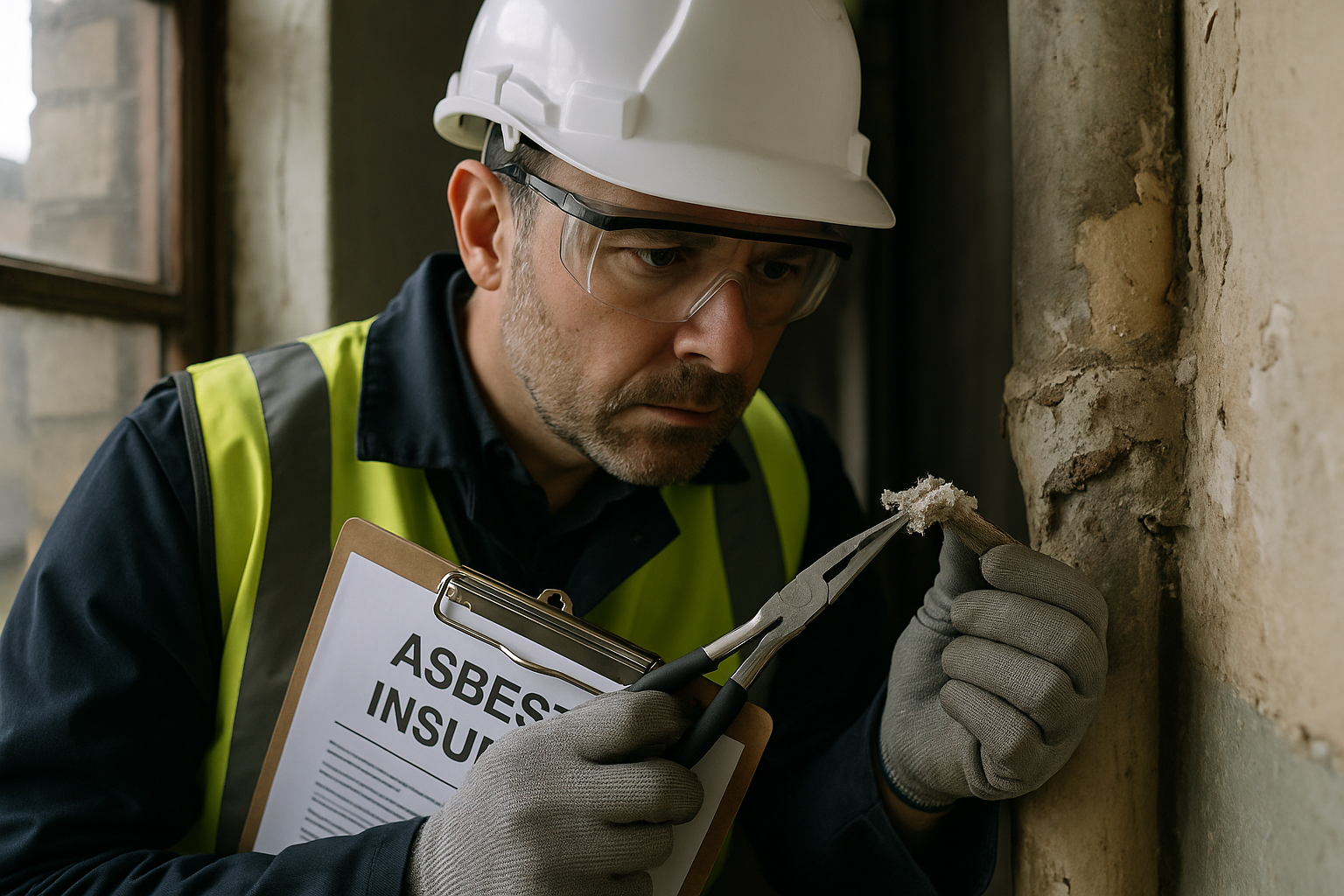
Failure to disclose can create serious problems. Depending on the policy wording and the circumstances, an insurer may reduce a claim payment, impose different terms or challenge the basis on which cover was offered.
Practical disclosure advice
- Review your asbestos records before renewal. Do not wait for the proposal form to prompt you.
- Declare known asbestos honestly. Managed asbestos is usually easier for an insurer to accept than unknown asbestos.
- Provide documents if asked. Survey reports, registers and management plans help demonstrate control.
- Explain incidents clearly. If there has been accidental disturbance or remedial work, say so.
- Update your broker or insurer after major works. Refurbishment can change the asbestos risk profile.
If you are not sure whether asbestos is present, establish the position before renewal rather than guessing. A current asbestos management survey can provide the baseline information you need.
How the Control of Asbestos Regulations affect insurance
The Control of Asbestos Regulations place duties on those who manage non-domestic premises. In simple terms, if you are responsible for maintenance or repair, you may also be responsible for identifying and managing asbestos.
Insurers pay close attention to this because compliance failures increase both the likelihood and the cost of claims. If a dutyholder has not taken reasonable steps to identify asbestos, kept poor records or failed to communicate risks to contractors, an insurer may see the building as a poorly managed exposure.
The duty to manage and insurance risk
The duty to manage means taking reasonable steps to find out whether asbestos-containing materials are present, assessing their condition and presuming materials contain asbestos unless there is strong evidence to the contrary. Information must then be kept up to date and made available to anyone liable to disturb those materials.
From an asbestos insurance point of view, that affects whether an insurer sees you as a responsible risk. If you cannot show compliance, you may face:
- Higher premiums
- More restrictive terms
- Asbestos exclusions
- Difficulties defending liability claims
- Greater scrutiny after an incident
Why HSG264 matters
HSG264 sets out the survey framework used across the industry. It explains the purpose of different survey types and the standards expected when asbestos is inspected and assessed.
For insurers, HSG264-aligned surveys provide a recognised basis for understanding the asbestos risk in a building. For dutyholders, they provide practical evidence that suitable steps have been taken.
What documents strengthen your asbestos insurance position
If you want fewer surprises at renewal and a stronger footing during claims, keep your asbestos paperwork organised and current. Insurers, brokers, loss adjusters and solicitors usually look for the same core records.
- Survey report identifying suspected or confirmed asbestos-containing materials
- Asbestos register showing location, extent, product type and condition
- Management plan setting out how materials will be monitored and controlled
- Re-inspection records confirming whether condition has changed
- Contractor communication records showing asbestos information was shared
- Removal or remedial documentation for completed works
- Analytical results where materials have been sampled and tested
If you need to confirm whether a material contains asbestos, professional asbestos testing can provide the evidence needed for management or project decisions. For individual material checks, laboratory sample analysis can also be useful where sampling is carried out safely and appropriately.
How to reduce asbestos insurance problems in practice
The best way to manage asbestos insurance is to reduce uncertainty. Insurers are far more comfortable with a risk they can see, assess and price than one hidden behind poor records and assumptions.
Carry out the right survey at the right time
Use the survey type that matches the work. For normal occupation and routine maintenance, a management survey is usually appropriate. Before intrusive works, use a refurbishment survey. Before structural demolition, use a demolition survey.
Using the wrong survey is a common cause of disputes. A management survey is not designed to support intrusive refurbishment works, and relying on it for that purpose can leave dangerous gaps.
Keep the asbestos register live
A register should not be a forgotten PDF sitting in a shared folder. It needs to reflect the current position on site, including removals, encapsulation, damage, re-inspections and newly identified materials.
If contractors are relying on out-of-date information, your insurance position weakens quickly after an incident.
Brief contractors before work starts
Anyone liable to disturb asbestos-containing materials should receive relevant information before they begin work. That includes maintenance teams, fit-out contractors, electricians, plumbers and IT installers.
Make this practical:
- Issue the relevant asbestos information during pre-start
- Record that it was shared
- Check the scope of works against the survey information
- Stop work if the planned activity becomes more intrusive
Investigate suspect materials early
If a material is damaged, unidentified or likely to be disturbed, deal with it before it becomes an emergency. Delaying a small issue often leads to a larger claim, project delay or enforcement problem later.
Where there is uncertainty, arrange targeted asbestos testing rather than relying on assumptions.
Plan for asbestos in project budgets
Insurers are unlikely to fund planned compliance work. If you are buying, refurbishing or redeveloping a property, include realistic asbestos investigation and removal costs in the budget from the start.
This is especially important for older stock where hidden materials may be found behind walls, above ceilings, within plant rooms or in service risers.
Asbestos insurance when buying, leasing or managing property
Asbestos can affect transactions as well as claims. Buyers, tenants, managing agents and lenders all want clarity on building risks, and insurers often ask the same questions during placement or renewal.
For buyers
If you are acquiring an older commercial property, ask for the asbestos survey, register and management plan as part of due diligence. If the information is missing, out of date or clearly inadequate, arrange your own assessment before exchange where possible.
Buying a building with unmanaged asbestos can create immediate compliance and insurance problems.
For landlords and managing agents
If you control common parts or retain repair obligations, asbestos responsibilities do not disappear because a tenant occupies the space. Make sure responsibilities are clear in leases and service arrangements, and ensure asbestos information is available to anyone arranging works.
For occupied premises in the capital, a local asbestos survey London service can help establish the condition of the building before renewal, tenant works or maintenance programmes begin.
For regional portfolios
Portfolio managers often struggle with inconsistent records across multiple sites. Standardise your approach. Use the same survey quality, document structure and contractor briefing process across the estate.
For North West properties, arranging an asbestos survey Manchester can help bring older documentation up to date and reduce underwriting uncertainty.
Common mistakes that make asbestos insurance harder
Many insurance issues are avoidable. The same mistakes appear again and again when claims are disputed or cover is restricted.
- Assuming no asbestos is present because the building looks modern
- Relying on an old survey without checking whether it is still relevant
- Using a management survey for intrusive refurbishment work
- Failing to update the register after removal or damage
- Not sharing asbestos information with contractors
- Assuming planned removal will be covered by insurance
- Giving vague or incomplete disclosure at renewal
If any of these sound familiar, fix them before your next renewal or project start date. Insurers are usually more receptive to a risk that has been identified and corrected than one that is still being ignored.
Practical steps to take before your next renewal
If you want a smoother asbestos insurance renewal, prepare early. Leaving asbestos questions until the broker asks for urgent answers is when mistakes happen.
- Review the age and history of each building.
- Check whether the current survey type matches the current use and planned works.
- Confirm the asbestos register is up to date.
- Make sure re-inspections have been carried out where needed.
- Gather management plans, testing results and removal records.
- Identify any recent incidents, disturbances or remedial works.
- Speak to your broker with clear documents rather than assumptions.
This approach will not remove every underwriting question, but it puts you in a far stronger position than trying to explain gaps after a claim.
Frequently Asked Questions
Does asbestos insurance pay to remove asbestos from a building?
Usually no. Planned removal is normally treated as a maintenance, compliance or project cost, not an insured event. Insurance may respond where asbestos contamination follows an insured peril such as fire or flood, but policy wording must be checked carefully.
Do I need to tell my insurer if asbestos is present?
Yes. Known or suspected asbestos is generally a material fact and should be disclosed when applying for or renewing cover. If you hold surveys, registers or reports showing asbestos-containing materials, be ready to provide them if requested.
Will a survey help with asbestos insurance?
Yes. A suitable survey gives insurers evidence that asbestos has been identified and assessed properly. It also supports compliance with the Control of Asbestos Regulations and helps reduce the uncertainty that often leads to higher premiums or exclusions.
What survey do I need before refurbishment works?
Before intrusive works, you will usually need a refurbishment survey for the affected area. A standard management survey is not designed for intrusive refurbishment activity and should not be relied on for that purpose.
What is the biggest asbestos insurance mistake property managers make?
The most common mistake is assuming existing cover will deal with any asbestos issue. In reality, unmanaged asbestos, poor disclosure and weak records often lead to exclusions, disputes or uninsured costs. The safest approach is to identify asbestos properly, keep records current and share information with contractors before work starts.
If you need clear asbestos information before renewal, a project or a property transaction, Supernova Asbestos Surveys can help. We provide surveys, testing and support nationwide, including management, refurbishment and demolition work. Call 020 4586 0680 or visit asbestos-surveys.org.uk to book the right service for your building.