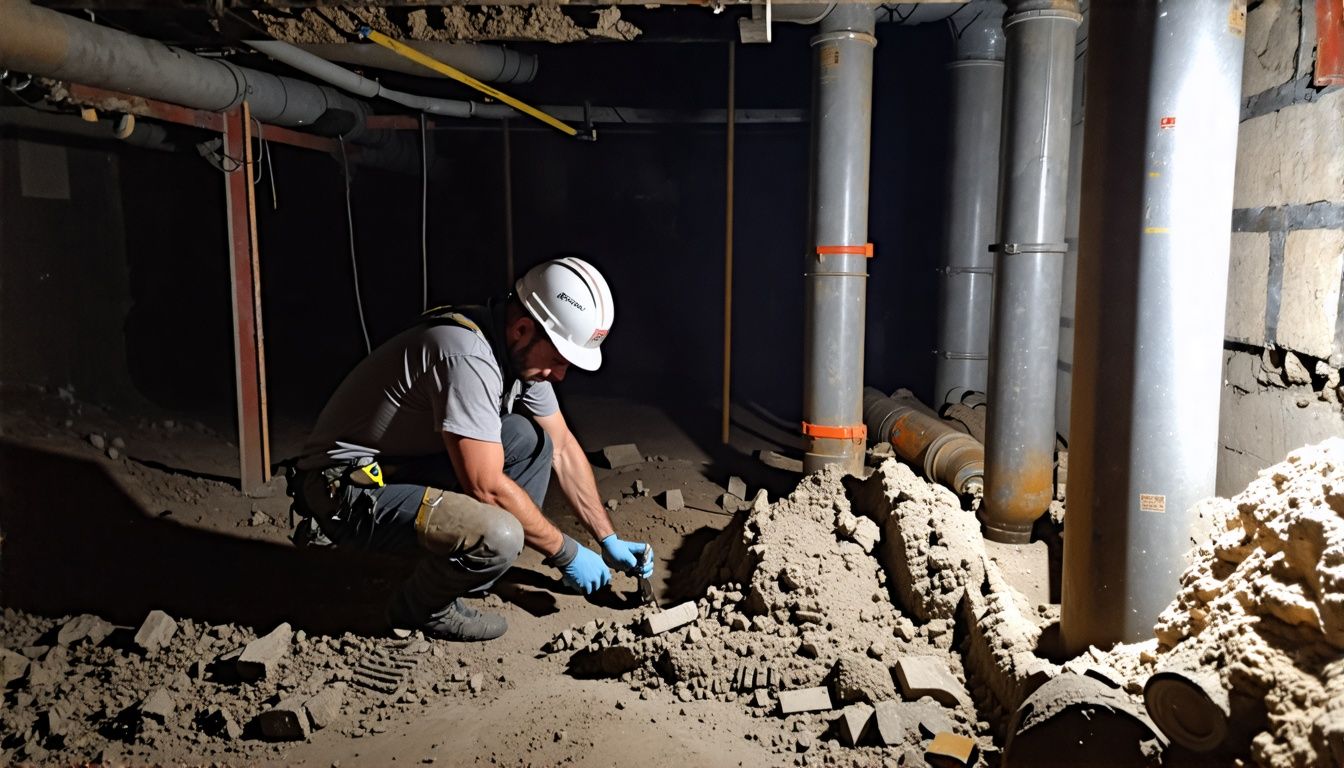
Asbestos kills around 5,000 people in the UK every year — more than any other single work-related cause of death. What makes this figure so troubling is that the symptoms of asbestos exposure can take 20 to 40 years to appear. By the time someone feels unwell, the exposure that caused their illness may have happened before they even started a family.
If you worked in construction, lived with someone who did, or manage a building that may contain asbestos-containing materials (ACMs), understanding what to look for could genuinely be life-saving. The UK has one of the highest rates of asbestos-related disease in the world — a direct consequence of the material’s widespread use in construction, shipbuilding, and manufacturing throughout the twentieth century.
Asbestos was banned from new construction in 1999, but it remains present in an enormous number of buildings built before that date. The risk did not end with the ban.
Why Asbestos Causes Disease
Asbestos is a naturally occurring fibrous mineral. Its fire-resistant and durable properties made it extraordinarily popular in industry and construction for most of the last century — and that popularity has left a dangerous legacy.
The problem begins when ACMs are disturbed. When asbestos-containing materials are damaged, drilled into, cut, or allowed to deteriorate, they release microscopic fibres into the air. These fibres are invisible to the naked eye, have no smell, and can remain airborne for hours.
Once inhaled, they lodge permanently in the lungs and surrounding tissue. The body cannot break them down or expel them. Damage accumulates silently over years and decades, with no warning signs until disease has already taken hold. There is no established safe level of exposure — even relatively brief contact carries some degree of risk, though the highest risks are associated with prolonged or heavy occupational exposure.
Recognising the Symptoms of Asbestos Exposure
The most important thing to understand about the symptoms of asbestos exposure is that they are almost always delayed. The conditions caused by asbestos have latency periods of 20 to 40 years — sometimes longer. By the time symptoms appear, the disease is often already well advanced.
Watch for the following warning signs:
- Persistent breathlessness that worsens progressively over time, particularly on exertion
- A dry, persistent cough that doesn’t resolve and has no obvious cause
- Chest pain or tightness, often described as a dull ache or a feeling of pressure
- Unexplained fatigue and a general decline in physical capacity
- Unexplained weight loss, particularly when combined with respiratory symptoms
- Coughing up blood — a serious symptom that always requires immediate medical attention
- Swelling in the face or neck, which can indicate advanced disease affecting the lymphatic system
If you have a history of working with or around asbestos — or lived with someone who did — and you are experiencing any of these symptoms, see your GP without delay. Make sure your doctor is aware of your exposure history. This context is critical for accurate diagnosis.
Diagnostic tools include chest X-rays, CT scans, pulmonary function tests, and in some cases biopsy or thoracentesis. Specialist respiratory clinics and occupational health services are the best route to an accurate diagnosis.
The Diseases Caused by Asbestos Exposure
The symptoms of asbestos exposure are closely tied to the specific conditions asbestos fibres cause. Each disease has a distinct profile, but all share that characteristic long latency period.
Mesothelioma
Mesothelioma is an aggressive, incurable cancer that affects the lining of the lungs (pleura), abdomen (peritoneum), or heart (pericardium). It is almost exclusively caused by asbestos exposure — there is no other known significant cause.
Symptoms include chest pain, breathlessness, persistent cough, unexplained weight loss, and fatigue. Because these symptoms closely resemble other respiratory conditions, diagnosis is frequently delayed. By the time mesothelioma is confirmed, it is often at an advanced stage.
Prognosis remains poor, but early diagnosis — while still difficult — offers the best chance of accessing treatment that can extend life and improve quality of life.
Lung Cancer
Asbestos exposure significantly increases the risk of developing lung cancer. The risk is compounded considerably for those who also smoke — the two factors together create a far greater combined risk than either alone.
Asbestos-related lung cancer is clinically indistinguishable from lung cancer caused by other factors, which can make attribution difficult. Symptoms include a persistent cough, coughing up blood, chest pain, and worsening breathlessness. Workers with prolonged occupational exposure — particularly in construction, shipbuilding, and asbestos manufacturing — carry the greatest risk.
Asbestosis
Asbestosis is a chronic, progressive scarring of the lung tissue (fibrosis) caused by the inhalation of asbestos fibres over time. It is not cancer, but it is a serious and debilitating condition with no cure.
As scar tissue builds up, the lungs lose their ability to expand and contract normally. Symptoms include worsening breathlessness, a persistent dry cough, chest tightness, and fatigue. In severe cases, asbestosis can lead to respiratory failure. The condition typically develops after prolonged, heavy exposure and is most commonly seen in people who worked directly with asbestos materials.
Pleural Plaques and Pleural Thickening
Pleural plaques are areas of thickened, hardened tissue on the lining of the lungs. They are the most common sign of past asbestos exposure. While not cancerous or directly harmful in themselves, they indicate that significant fibre inhalation has occurred — and that ongoing monitoring is advisable.
Diffuse pleural thickening is a more extensive scarring of the lung lining and can restrict lung function, causing significant breathlessness and reduced physical capacity in a way similar to asbestosis.
Who Is Most at Risk?
Occupational Exposure
Historically, the highest rates of asbestos-related disease have been among those who worked directly with asbestos materials. Trades and industries with elevated risk include:
- Construction workers involved in demolition, roofing, and refurbishment of older buildings
- Plumbers and heating engineers who worked with lagged pipework
- Electricians working in older commercial and industrial premises
- Shipbuilders and those involved in vessel maintenance and repair
- Insulation workers and laggers
- Firefighters attending incidents in pre-2000 buildings
- Automotive mechanics handling older brake linings and clutch components
- Teachers and school staff in buildings constructed with ACMs
Today, the greatest occupational risk sits with tradespeople working in buildings that contain ACMs — particularly those who may not realise they are disturbing asbestos during routine maintenance or refurbishment. This is precisely why an asbestos management survey is a legal requirement for non-domestic premises and not simply a box-ticking exercise.
Secondary (Household) Exposure
Secondary exposure is less well understood by the general public but is a genuine and documented risk. Workers who carried asbestos fibres home on their clothing, skin, and hair unknowingly exposed their families over many years.
Partners, children, and other household members developed asbestos-related diseases despite never setting foot on an industrial site. Those who laundered contaminated work clothing were particularly at risk. If you believe a family member’s past occupation involved significant asbestos exposure, discuss this history with your GP — especially if you are experiencing unexplained respiratory symptoms.
Environmental Exposure
Environmental exposure can occur through demolition or renovation of ACM-containing buildings without proper controls, proximity to industrial sites where asbestos was historically processed, improper disposal of asbestos waste, and naturally occurring asbestos deposits disturbed by construction or land development.
While environmental exposure typically involves lower fibre concentrations than occupational exposure, any inhalation of asbestos fibres carries risk — particularly with repeated or ongoing contact.
Where Asbestos Hides in Buildings
Any building constructed or refurbished before 2000 may contain asbestos. It was used in a wide range of building products, and its presence is not always obvious. Common locations include:
- Ceiling tiles and floor tiles
- Textured coatings such as Artex
- Pipe and boiler lagging
- Roof sheets and guttering
- Partition walls and firebreaks
- Sprayed coatings on structural steelwork
- Insulating board around heating systems, doors, and soffits
- Bitumen felt and roofing materials
Asbestos in good condition and left undisturbed is generally considered low risk. The danger arises when ACMs deteriorate, are damaged, or are worked on without appropriate precautions.
Before any renovation work, a refurbishment survey must be carried out to identify all ACMs that could be disturbed. Before a building or part of a building is torn down, a demolition survey is a legal requirement under the Control of Asbestos Regulations.
Your Legal Duties Under the Control of Asbestos Regulations
The Control of Asbestos Regulations set out clear legal duties for those who own, manage, or have responsibility for non-domestic premises. These are not guidelines — they are enforceable obligations.
Key duties include:
- The duty to manage: Dutyholders must identify the location and condition of ACMs, assess the risk, and put a written asbestos management plan in place.
- Surveys before work: A refurbishment or demolition survey must be carried out before any work that may disturb ACMs.
- Notification: Certain higher-risk asbestos removal work must be notified to the Health and Safety Executive (HSE) in advance.
- Licensed contractors: Removal of certain ACMs — including asbestos insulating board, pipe lagging, and sprayed coatings — must only be carried out by a licensed contractor.
- Worker training: Employers must ensure workers who may encounter asbestos are properly trained and informed.
Failure to comply is a criminal offence and can result in significant fines or prosecution. HSE guidance document HSG264 sets out detailed requirements for asbestos surveys and should be the reference point for anyone commissioning survey work.
For domestic properties, there is no equivalent duty to manage — but landlords have obligations under broader health and safety legislation to protect tenants, and anyone commissioning work on an older property has a responsibility to check for asbestos before work begins.
Practical Steps to Reduce the Risk
Get a Professional Asbestos Survey
This is the single most important step you can take. Do not assume a building is asbestos-free because it looks well-maintained — ACMs can be concealed within walls, under floors, above ceilings, and around pipework. Only a qualified surveyor can identify what is present, where it is, and what condition it is in.
At Supernova Asbestos Surveys, our management survey service identifies and assesses ACMs in occupied premises, forming the foundation of your legal duty to manage. We also carry out periodic re-inspection survey work to monitor the condition of known ACMs over time and ensure your asbestos register remains current and accurate.
Don’t Disturb Suspected Materials
If you spot a damaged or deteriorating material that you suspect may contain asbestos — particularly in a pre-2000 building — do not touch it, drill into it, cut it, or sand it. Stop work immediately and seek professional advice before proceeding.
The cost of getting this wrong is not just financial. Disturbing ACMs without proper controls puts you, your workers, and anyone else in the building at risk of inhaling fibres that could cause disease decades later.
Arrange Professional Asbestos Removal Where Necessary
Not all ACMs need to be removed — in many cases, managing them in situ is the appropriate approach. But where removal is necessary, it must be carried out correctly. Our asbestos removal service ensures that work is completed safely, in compliance with the Control of Asbestos Regulations, and with full documentation for your records.
Keep Your Asbestos Register Up to Date
An asbestos register is a living document, not a one-time exercise. ACMs change condition over time, buildings get modified, and new areas may be accessed. A register that was accurate five years ago may not reflect the current situation.
Regular re-inspection surveys ensure your register reflects reality — and that anyone working in your building has access to accurate, current information about where ACMs are located and what precautions are needed.
Know the History of Your Building
If you manage or own a building constructed before 2000, assume it may contain asbestos until a professional survey proves otherwise. This applies equally to offices, schools, hospitals, industrial units, and residential blocks. The material does not discriminate by building type.
Supernova Asbestos Surveys operates nationwide. Whether you need an asbestos survey London, an asbestos survey Manchester, or an asbestos survey Birmingham, our UKAS-accredited surveyors are available to carry out the work you need, when you need it.
If You Think You Have Been Exposed
If you have reason to believe you have been exposed to asbestos — whether through work, household contact, or environmental factors — the most important step is to speak to your GP as soon as possible. Be specific about your exposure history: the industry you worked in, the years involved, and the nature of the work.
Do not wait for symptoms to develop before seeking advice. Some asbestos-related conditions can be detected through screening before symptoms appear, and early detection — while it cannot undo past exposure — gives the best possible chance of effective management.
If you are a dutyholder for a non-domestic building and have not yet commissioned an asbestos survey, you are potentially in breach of the Control of Asbestos Regulations right now. The duty to manage is not triggered by a problem — it exists regardless of whether you believe asbestos is present.
Frequently Asked Questions
How long after asbestos exposure do symptoms appear?
The symptoms of asbestos exposure typically take between 20 and 40 years to appear, and in some cases even longer. This extended latency period means that people are often diagnosed with asbestos-related disease long after the exposure that caused it, making it difficult to connect the two without a detailed occupational or environmental history.
Can a single exposure to asbestos cause disease?
There is no established safe level of asbestos exposure, and even a single significant exposure carries some degree of risk. However, the highest risks are associated with prolonged or repeated occupational exposure over months or years. Brief, incidental contact with intact ACMs in good condition is generally considered to carry a much lower risk than sustained, heavy exposure.
What should I do if I find suspected asbestos in my building?
Do not disturb it. If you find a material you suspect may contain asbestos, leave it alone and arrange for a professional survey to assess it. Under the Control of Asbestos Regulations, dutyholders for non-domestic premises are legally required to manage ACMs. A management survey will identify what is present, assess its condition and risk, and inform your asbestos management plan.
Is asbestos only dangerous when it is disturbed?
Asbestos-containing materials that are in good condition and left completely undisturbed are generally considered low risk. The danger arises when ACMs are damaged, deteriorating, or worked on — because this releases microscopic fibres into the air that can be inhaled. Any planned work on a pre-2000 building should be preceded by an appropriate asbestos survey to establish what is present before work begins.
Are landlords legally responsible for asbestos in their properties?
For non-domestic premises, the duty to manage under the Control of Asbestos Regulations applies to anyone who has responsibility for maintenance or repair of the building. For residential landlords, while the specific duty to manage does not apply in the same way, broader health and safety obligations mean landlords must take reasonable steps to ensure tenants are not exposed to asbestos risk. Professional advice should be sought if asbestos is suspected in a rented property.
Speak to Supernova Asbestos Surveys
Supernova Asbestos Surveys has completed over 50,000 surveys across the UK. Our UKAS-accredited surveyors provide the full range of asbestos survey and management services — from initial management surveys through to refurbishment and demolition surveys, re-inspections, and licensed removal.
If you have concerns about asbestos in a building you manage, own, or work in, call us today on 020 4586 0680 or visit asbestos-surveys.org.uk to find out how we can help. Do not leave it to chance — the consequences of getting asbestos wrong are too serious and too permanent.