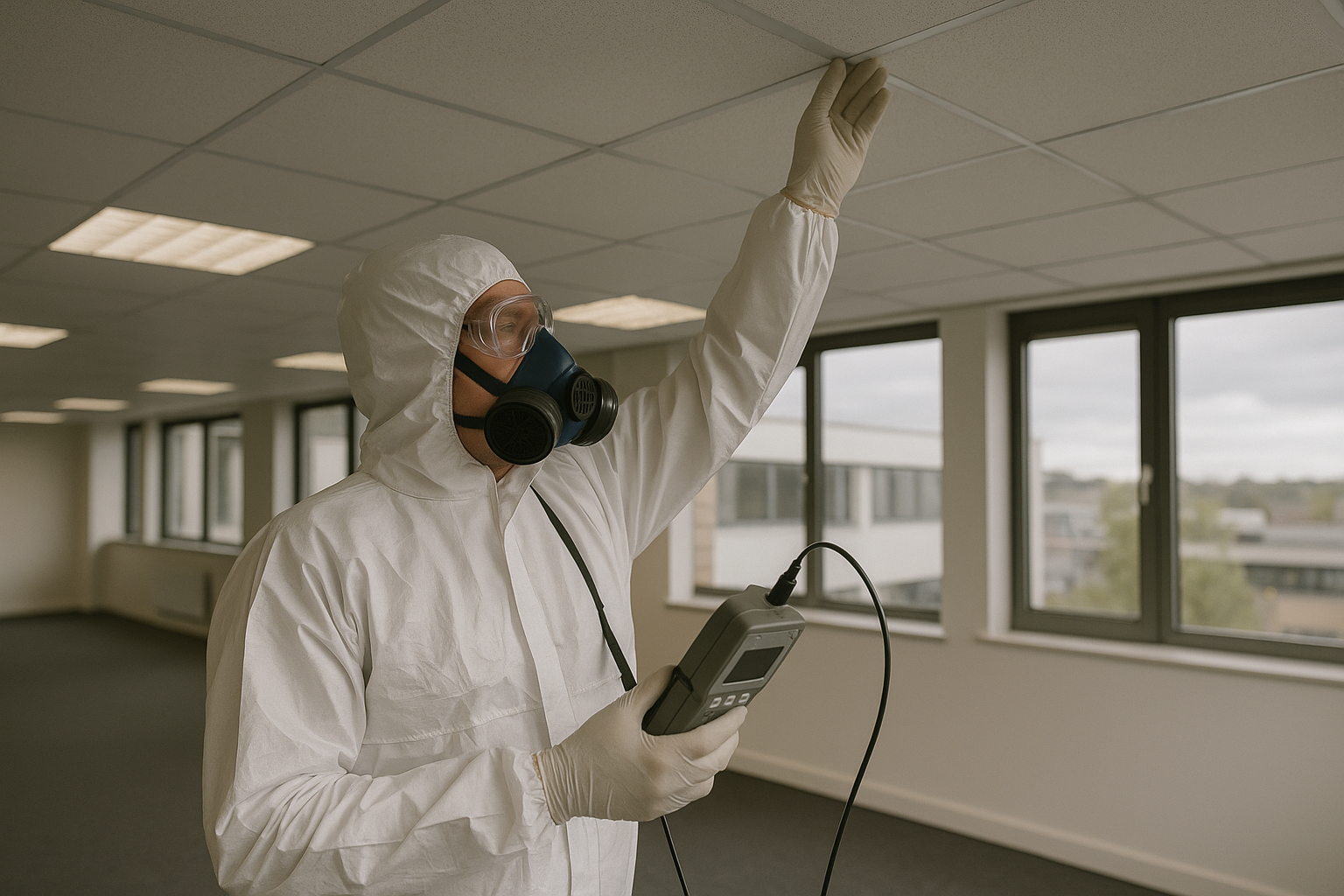
Asbestos is still one of the most significant hidden risks in older UK buildings. It sits in ceiling voids, risers, plant rooms, wall panels, roof sheets and service ducts, often unnoticed until someone drills, cuts or disturbs it.
For property managers, landlords, duty holders and contractors, asbestos is not just an old construction material. It is a live compliance issue tied to safety, maintenance planning and the legal duty to prevent exposure.
The reason asbestos became so common is straightforward. It was strong, heat resistant, chemically durable and cheap to use in everything from insulation to cement products. Those same qualities helped it spread through British construction and industry, and they explain why so much asbestos remains in place today.
What is asbestos?
Asbestos is a commercial term for a group of naturally occurring fibrous silicate minerals. It is not one single material. The term covers six recognised minerals that can be separated into very small fibres and used in manufactured products.
Those fibres are what make asbestos dangerous. When asbestos-containing materials are damaged, drilled, cut, sanded, broken or allowed to deteriorate, fibres can be released into the air and breathed in.
Under the Control of Asbestos Regulations, those responsible for non-domestic premises must identify asbestos risks and manage them properly. Surveying, risk assessment, record keeping and safe work planning all sit within that duty.
A practical point matters here: asbestos is often safest when it is in good condition and left undisturbed. The risk changes when the material is damaged or when work is planned without checking what is present.
The six types of asbestos
Asbestos is divided into two mineral families: serpentine and amphibole. In day-to-day property management, you will usually hear about three types more than the others, but all asbestos types are hazardous.
Serpentine asbestos
- Chrysotile – often called white asbestos
Amphibole asbestos
- Amosite – often called brown asbestos
- Crocidolite – often called blue asbestos
- Tremolite
- Anthophyllite
- Actinolite
In UK buildings, the types most commonly encountered are:
- Chrysotile in cement sheets, floor tiles, textured coatings, gaskets and some insulation products
- Amosite in asbestos insulating board, ceiling tiles, partition systems and thermal insulation
- Crocidolite in some sprayed coatings, pipe insulation, cement products and specialist applications
None of these should be treated casually. If a material is suspected to contain asbestos, the correct response is to stop and verify, not to guess.
Where the word asbestos comes from
The word asbestos comes from a Greek term meaning “unquenchable” or “inextinguishable”. That tells you a lot about why people valued it for so long.
Its resistance to heat and flame gave asbestos an almost indestructible reputation. That reputation drove its use in fire protection, insulation and industrial processes for centuries before the health risks were fully understood.
The history of asbestos in buildings and industry
The history of asbestos stretches back thousands of years. Long before modern construction, people had noticed fibrous minerals that could withstand heat and fire.
Early uses of asbestos
Historical accounts describe asbestos being used in lamp wicks, cloths and specialist heat-resistant items. Some writers even referred to fabrics that could be cleaned in fire, which added to the material’s unusual reputation.
These uses were limited in scale. Production methods were basic, and asbestos was more curiosity than mainstream building product.
Industrial expansion
That changed once mining and manufacturing expanded. Asbestos could be crushed, milled, graded and blended into a huge range of products. It moved quickly from niche material to industrial staple.
Factories, shipyards, railways, power stations and construction firms all found uses for asbestos. It could be woven, sprayed, mixed with cement, formed into boards or packed around hot pipework.
By the time mass development accelerated across the UK, asbestos was embedded in homes, schools, hospitals, offices, warehouses and public buildings. That is why it still turns up so often during surveys today.
When the health risks became clear
Medical concerns about asbestos did not appear overnight. Over time, workers exposed to fibres in mining, insulation, shipbuilding and manufacturing developed severe respiratory disease.
The evidence eventually became overwhelming. Exposure to asbestos fibres is linked to serious illnesses including asbestosis, mesothelioma and lung cancer.
That is why modern asbestos management focuses on preventing exposure. In the UK, this means identifying asbestos-containing materials, assessing their condition, recording their location and managing the risk in line with the Control of Asbestos Regulations, HSG264 and current HSE guidance.
Why asbestos was used so widely
Asbestos solved several practical problems at once. For builders and manufacturers, it offered a combination of properties that was hard to ignore.
- Heat resistance
- Fire resistance
- Thermal insulation
- Some acoustic insulation
- Strength when mixed into products
- Resistance to many chemicals
- Low cost compared with alternatives available at the time
That mix made asbestos commercially attractive across several sectors. It was used not because it was rare or specialised, but because it was versatile and easy to incorporate into ordinary products.
How asbestos was mined, processed and manufactured
Asbestos production involved more than simply extracting rock from the ground. Deposits were mined, crushed and milled so the fibres could be separated.
Those fibres were then graded by length and quality. Manufacturers mixed asbestos into cement, bitumen, paper, textiles, insulation products, plastics and friction materials.
Asbestos was supplied in many forms, including:
- Loose fibre
- Boards
- Cement sheets
- Pipe lagging
- Sprayed coatings
- Ropes and textiles
- Floor tiles
- Gaskets and seals
- Paper products
- Decorative and textured coatings
This range is one reason asbestos remains such a surveying issue. It can appear in obvious places, but it can also be hidden inside plant, behind finishes or within service installations.
Which industries used asbestos most heavily?
If you manage an older building, its original use often gives strong clues about where asbestos may be present. Different industries used asbestos in different ways.
Construction and building maintenance
Construction was one of the largest users of asbestos. It appeared in fire protection, partition systems, roofing, soffits, wall linings, insulation, floor finishes and rainwater goods.
Maintenance trades then inherited the risk. Electricians, plumbers, telecoms engineers, decorators, joiners and general builders have all historically encountered asbestos during routine work.
Shipbuilding and marine engineering
Ships relied heavily on thermal insulation and fire protection. Asbestos was used around engines, boilers, bulkheads, pipework and machinery spaces.
Manufacturing and heavy industry
Factories used asbestos in ovens, furnaces, machinery insulation, gaskets, seals and protective products. High-temperature environments made asbestos especially attractive to industry.
Power generation
Power stations and boiler houses often contained substantial asbestos insulation. Pipework, ducts, turbines, valves and plant rooms were common locations.
Transport
Rail, automotive and aviation sectors used asbestos in friction materials, insulation and heat-resistant components. Brake linings and clutch parts are well-known examples.
Public sector buildings
Schools, hospitals, council buildings and similar premises often contain asbestos because they were built or refurbished during periods when asbestos products were standard specification.
That history matters. A former factory, school or boiler-heavy office block will usually present a different asbestos profile from a simple residential conversion.
Common asbestos-containing materials in UK buildings
Many people think asbestos only means pipe insulation. In reality, asbestos was used in hundreds of products, and many still turn up during inspections and surveys.
Higher-risk asbestos materials
These materials can release fibres more easily when damaged because they are often more friable:
- Pipe lagging
- Sprayed coatings
- Loose fill insulation
- Asbestos insulating board
These products usually need tighter controls because the asbestos content is often high and the material can be easier to disturb.
Lower-risk asbestos materials
These can still be dangerous if worked on or damaged, but the fibres are generally more firmly bound within the product:
- Asbestos cement sheets and panels
- Roof sheets and wall cladding
- Floor tiles
- Bitumen products
- Textured coatings
- Gaskets and seals
- Toilet cisterns and water tanks
Lower risk does not mean safe to drill, cut or remove without checks. A lower-risk product can still create exposure if the work is uncontrolled.
Asbestos products often missed
Some asbestos-containing materials are easy to overlook during maintenance planning:
- Fire doors with asbestos cores or linings
- Lift shaft panels
- Electrical flash guards and fuse carriers
- Boiler seals and rope gaskets
- Window infill panels
- Soffits and service riser linings
- Backing boards behind heaters
- Panels inside meter cupboards
This is exactly why assumptions cause problems. If there is any doubt, check the records and arrange the right survey before work starts.
Where asbestos is commonly found
If a building was constructed or refurbished before the UK ban, asbestos could be present. The exact location depends on the building’s age, use, layout and maintenance history.
Common locations include:
- Plant rooms and boiler houses
- Ceiling voids
- Service risers and ducts
- Partition walls
- Soffits and canopies
- Roof sheets, gutters and downpipes
- Floor finishes and adhesives
- Textured wall and ceiling coatings
- Pipework, valves and calorifiers
- Fire doors
- Electrical cupboards and switch rooms
- Garages, stores and outbuildings
Asbestos is not always visible. It may be painted over, boxed in, hidden behind newer finishes or sealed inside building fabric.
What makes asbestos dangerous?
The danger comes from inhaling airborne fibres. You cannot reliably see asbestos fibres with the naked eye, and you cannot smell them.
When asbestos-containing materials are disturbed, tiny fibres can become airborne and remain suspended. If breathed in, they can lodge in the lungs and cause serious disease over time.
The level of risk depends on several factors:
- The type of asbestos
- The condition of the material
- How easily it releases fibres
- Whether the work disturbs it
- The extent and duration of exposure
For practical building management, the key rule is simple: damaged or disturbed asbestos is the real problem. Intact asbestos that is properly identified and managed may not need immediate removal.
How asbestos is managed in the UK
Managing asbestos is about preventing exposure, not creating unnecessary disruption. The correct approach depends on the material, its condition and the likelihood of disturbance.
Check the asbestos register
Before any maintenance, installation or access work, review the asbestos register if one exists. Contractors should not begin work blind.
Arrange the correct survey
For normal occupation and routine maintenance, a management survey is usually the starting point. Its purpose is to locate, as far as reasonably practicable, asbestos-containing materials that could be disturbed during everyday use or minor works.
Before intrusive refurbishment or structural alteration, a more invasive survey is needed. If major strip-out or demolition is planned, a demolition survey is essential so hidden asbestos can be identified before the building fabric is disturbed.
Assess condition and risk
Not all asbestos has to be removed immediately. Materials in good condition and unlikely to be disturbed may be managed in place, provided they are recorded, monitored and clearly communicated to anyone who may work near them.
Use competent contractors
Some asbestos work must be carried out by licensed contractors. Even where a licence is not required, the work still needs proper planning, suitable controls and trained personnel.
Keep records up to date
Registers, plans, sample results and management actions should reflect the current situation. If asbestos is removed, repaired, encapsulated or newly identified, the records must be updated.
One of the most effective practical steps is also the simplest: if there is uncertainty, stop the job until the material is checked.
When should you arrange an asbestos survey?
You should not wait until something is damaged. Surveys are most useful when they are arranged before work creates a problem.
Typical triggers include:
- Taking control of an older commercial property
- Planning maintenance or contractor access
- Refurbishing offices, shops, schools or industrial units
- Stripping out plant rooms or service areas
- Demolishing part or all of a building
- Updating an out-of-date asbestos register
- Investigating suspect materials after damage or deterioration
If you manage sites in the capital, booking an asbestos survey London service can help you move quickly when maintenance schedules are tight. For regional portfolios, support is also available through an asbestos survey Manchester team and an asbestos survey Birmingham service.
Practical advice for property managers and duty holders
Good asbestos management is mostly about process and discipline. Small checks made at the right time prevent expensive mistakes.
- Know which buildings are at risk. Older premises, especially those with repeated refurbishments, should always be treated cautiously.
- Make the register easy to access. Contractors, facilities teams and project managers need the information before work starts.
- Do not rely on memory. Staff changes, tenant churn and historic alterations make verbal assumptions unreliable.
- Brief contractors properly. Anyone drilling, fixing, cabling or opening up fabric should know where asbestos may be present.
- Inspect known asbestos materials. Check condition periodically and after leaks, impact damage or unauthorised works.
- Match the survey to the work. Routine occupation, refurbishment and demolition all require different levels of information.
- Pause when something unexpected appears. Hidden boards, lagging or debris should trigger immediate review.
These steps are practical, proportionate and aligned with how the HSE expects asbestos to be managed in real buildings.
Does all asbestos need to be removed?
No. Removal is not automatically the right answer in every case.
If asbestos-containing material is in good condition, properly recorded and unlikely to be disturbed, managing it in place can be appropriate. That may include labelling, periodic inspection, local protection or encapsulation, depending on the circumstances.
Removal becomes more likely where:
- The material is damaged
- Its condition is deteriorating
- It is likely to be disturbed by normal use
- Refurbishment or demolition is planned
- Management in place is no longer reliable
The decision should be based on risk, not habit. Removing asbestos unnecessarily can itself create disruption and cost, while leaving deteriorating asbestos unmanaged creates obvious danger.
What to do if you suspect asbestos
If you come across a suspect material, avoid touching or disturbing it. Do not drill it, break it, sample it yourself or ask a contractor to “just be careful”.
Take these steps instead:
- Stop work immediately
- Keep people away from the area if disturbance may have occurred
- Check the asbestos register and any previous survey information
- Arrange a competent inspection or sampling visit
- Follow the advice given on management, repair or removal
Fast, calm action is usually enough to prevent a minor concern becoming a serious incident.
Why professional asbestos surveying matters
Asbestos is too variable to manage by guesswork. Two materials can look similar while presenting very different levels of risk.
A professional survey helps you understand:
- Whether asbestos is present
- What type of material has been identified
- Where it is located
- What condition it is in
- How likely it is to be disturbed
- What action should be taken next
That information supports safe maintenance, legal compliance and better budgeting. It also protects contractors and occupants from avoidable exposure.
Frequently Asked Questions
What is the basic definition of asbestos?
Asbestos is a group of naturally occurring fibrous silicate minerals that were widely used in building materials and industrial products because of their heat resistance, strength and durability.
Is asbestos always dangerous?
Asbestos becomes dangerous when fibres are released and inhaled. Materials in good condition that are properly identified and managed may present lower immediate risk, but they still need control.
Where is asbestos most commonly found in buildings?
Common locations include pipe lagging, asbestos insulating board, cement roof sheets, ceiling voids, service risers, floor tiles, textured coatings, fire doors and plant rooms.
Do I need an asbestos survey before refurbishment?
Yes, if intrusive work is planned in a building where asbestos may be present, a suitable refurbishment or demolition-type survey is needed before work starts so hidden materials can be identified safely.
Who is responsible for managing asbestos in non-domestic premises?
The duty usually falls on the person or organisation responsible for maintenance or repair of the premises, which may be the owner, landlord, managing agent or another duty holder under the Control of Asbestos Regulations.
If you need clear advice, fast turnaround and reliable reporting, Supernova Asbestos Surveys can help. We deliver asbestos surveys across the UK for commercial, public and residential clients. Call 020 4586 0680 or visit asbestos-surveys.org.uk to book a survey or discuss your site.