Asbestos and the Environment: What Every Property Owner Needs to Know
Asbestos is widely understood as a human health hazard — but its asbestos environmental impact is a dimension that rarely gets the attention it deserves. Once fibres enter the air, soil, or water, they don’t simply disappear. They persist, accumulate, and continue to pose risks to ecosystems, wildlife, and communities long after the original source has been removed or forgotten.
If you manage a property, work in construction, or have responsibility for a site with suspected asbestos-containing materials (ACMs), understanding the environmental dimension is just as important as understanding the health risks to occupants.
Where Does Asbestos Environmental Contamination Come From?
Asbestos enters the environment from two broad sources: natural geological deposits and human activity. In the UK context, it’s the latter that demands the most attention — though both are worth understanding.
Natural Asbestos Deposits
Asbestos is a naturally occurring mineral group, formed over millions of years within ultramafic and serpentinised rock. Deposits exist across the world — including parts of Europe — and can release fibres through wind erosion or seismic activity without any human involvement.
In the UK, naturally occurring asbestos is far less of a concern than in countries like Canada, South Africa, or parts of Eastern Europe. That said, ground disturbance through infrastructure projects or quarrying can expose asbestos minerals if they happen to be present in the local geology.
Industrial Sources and Improper Disposal
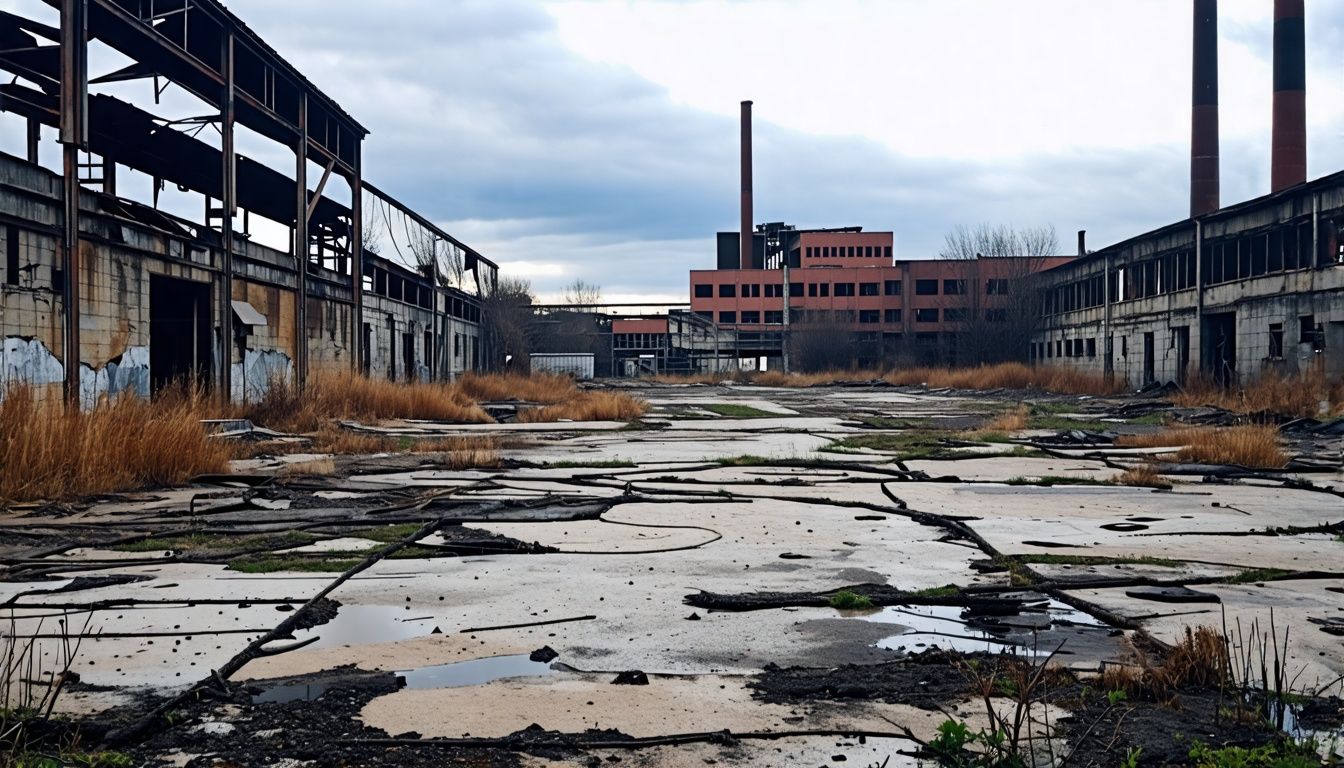
This is where the vast majority of asbestos environmental contamination in the UK originates. Decades of widespread industrial use — in shipbuilding, construction, insulation manufacturing, and more — left behind an enormous legacy of ACMs in buildings and on brownfield sites.
Environmental contamination typically occurs through:
- Demolition and refurbishment work carried out without proper surveys, releasing fibres into the air and onto surrounding land
- Fly-tipping of asbestos waste, which remains a persistent problem across the UK
- Deteriorating ACMs in neglected buildings, where weather and physical decay cause fibres to shed over time
- Landfill sites that accepted asbestos waste before current controls were in place, where fibres can leach into soil and groundwater
- Former industrial sites and factories where ACMs were used extensively and disposal was poorly regulated
The problem is compounded by the fact that asbestos fibres are invisible to the naked eye and can travel considerable distances on air currents before settling on land, water, or vegetation.
How Asbestos Affects Air Quality
Airborne asbestos fibres represent the most immediate and well-documented asbestos environmental threat. When ACMs are disturbed — through drilling, cutting, demolition, or natural decay — microscopic fibres become suspended in the air and can remain there for extended periods.
Unlike larger particles, asbestos fibres don’t fall to the ground quickly. Their shape and weight allow them to stay airborne long enough to be carried well away from the original source, affecting people and wildlife who may have no idea the disturbance even occurred.
Health Consequences of Fibre Inhalation
Once inhaled, asbestos fibres lodge in lung tissue and cannot be expelled by the body. The consequences are serious and frequently fatal:
- Mesothelioma — an aggressive cancer of the lining of the lungs or abdomen, almost exclusively caused by asbestos exposure
- Asbestosis — progressive scarring of lung tissue leading to severe respiratory impairment
- Lung cancer — risk significantly elevated by asbestos exposure, particularly in smokers
- Pleural thickening — a non-malignant condition that nonetheless causes significant breathing difficulties
There is no known safe level of asbestos exposure. The latency period — the gap between exposure and disease onset — can be anywhere from 15 to 60 years. This long delay makes it extremely difficult for individuals to connect their illness to a specific exposure event, and it’s precisely why preventing environmental contamination matters so much.
Risks to Wildlife
It’s not only humans who are affected. Birds, small mammals, and other wildlife living near contaminated sites can inhale or ingest asbestos fibres. The research on wildlife-specific impacts is less extensive than human health studies, but the biological mechanisms — fibre accumulation causing tissue damage — are not unique to humans.
Any site with known or suspected asbestos environmental contamination should be assessed with wildlife exposure in mind, particularly where ecological surveys are required as part of a planning or development process.
Asbestos Contamination of Soil and Water
Water Supply Contamination
Asbestos can enter water systems through several routes. Historically, asbestos-cement pipes were widely used in water distribution infrastructure across the UK. As these pipes age and degrade, fibres can be released into the water flowing through them.
Runoff from contaminated land — particularly during heavy rainfall — can also carry fibres into streams, rivers, and eventually reservoirs. Improper disposal of asbestos waste near watercourses is a significant contributing factor to this problem.
Ingested asbestos fibres are generally considered a lower risk than inhaled fibres, as the digestive system provides some barrier. However, long-term consumption of asbestos-contaminated water has been associated with increased risk of gastrointestinal cancers, and the precautionary principle strongly supports taking this exposure route seriously.
Soil Contamination and Ecosystem Disruption
When asbestos fibres settle from the air or leach from waste deposits, they accumulate in soil. This contamination can persist for decades — or indefinitely — since asbestos fibres do not biodegrade under normal environmental conditions.
The ecological consequences include:
- Disruption to soil microbiomes — the microscopic organisms that underpin soil health and fertility can be adversely affected by fibre accumulation
- Uptake through plant roots — fibres can be absorbed by plants and enter the food chain, affecting herbivores and the predators that feed on them
- Re-suspension of fibres — agricultural activity, construction, or strong winds can disturb contaminated soil and return fibres to the air
- Long-term land sterilisation — heavily contaminated sites may be unfit for agriculture, development, or ecological use without costly remediation
Brownfield sites across the UK — former industrial land earmarked for housing or regeneration — frequently carry asbestos soil contamination as part of a broader legacy of industrial pollution. Any development on such sites requires thorough environmental assessment before work begins.
The Different Types of Asbestos and Their Environmental Risk Profiles
Not all asbestos types behave identically in the environment. The six regulated asbestos mineral types fall into two broad categories, and understanding the distinction matters when assessing asbestos environmental risk.
Serpentine Asbestos
Chrysotile (white asbestos) is the most widely used form globally, accounting for the vast majority of asbestos found in UK buildings. Its curly fibres are considered somewhat less durable in biological tissue than amphibole fibres — but it remains highly hazardous and is fully banned in the UK.
Amphibole Asbestos
This group includes amosite (brown asbestos), commonly found in insulation boards and ceiling tiles in buildings constructed between the 1950s and 1980s, and crocidolite (blue asbestos), considered the most hazardous type, with needle-like fibres that penetrate tissue deeply and resist breakdown. Tremolite, actinolite, and anthophyllite are less commonly encountered but remain regulated.
Amphibole fibres are generally more environmentally persistent and more biologically damaging than chrysotile. In soil and water, they resist chemical breakdown and can remain hazardous almost indefinitely. This makes their proper containment and removal even more critical from an asbestos environmental standpoint.
The UK Regulatory Framework for Asbestos Environmental Management
The UK has some of the most comprehensive asbestos regulations in the world. All forms of asbestos have been banned from use in new products and construction. The key legislative framework includes:
- The Control of Asbestos Regulations — the primary legislation governing the management, handling, and removal of asbestos in the UK. These regulations place a legal duty on those responsible for non-domestic premises to manage asbestos risk proactively.
- The Environmental Protection Act — governs the disposal of hazardous waste, including asbestos, and provides enforcement powers against illegal dumping.
- The Hazardous Waste Regulations — asbestos waste must be classified, handled, transported, and disposed of at licensed facilities only.
- HSE guidance and approved codes of practice (ACoPs) — including HSG264, which sets out practical standards for asbestos surveys and management.
The Health and Safety Executive (HSE) oversees asbestos regulation in workplace settings, while the Environment Agency (and SEPA in Scotland, NRW in Wales) handles environmental enforcement. Penalties for illegal disposal or inadequate management can be severe, including prosecution and significant fines.
Despite this framework, fly-tipping of asbestos waste remains a serious and ongoing problem. The cost of legal disposal — combined with poor awareness — continues to drive illegal dumping, particularly of corrugated asbestos roofing sheets.
How Asbestos Remediation Works in Practice
Whether you’re dealing with ACMs in a building or contaminated land on a development site, professional remediation is non-negotiable. This is not work that can be safely managed without specialist knowledge, equipment, and in many cases, an HSE licence.
Survey and Assessment
The first step is always a thorough, professional asbestos survey. Depending on the nature of the site and the planned works, this will typically be one of the following:
- A management survey — for occupied premises, to locate and assess the condition of ACMs for ongoing management without disruption to normal use
- A demolition survey — required before any significant building work or demolition, this is more intrusive and designed to locate all ACMs that could be disturbed during the works
Suspected materials are sampled and sent for laboratory analysis to confirm presence and fibre type. At Supernova Asbestos Surveys, our surveyors are trained to BOHS P402 standard and operate across the whole of the UK.
Risk Evaluation and Management Planning
Not all ACMs need to be immediately removed. Materials in good condition and unlikely to be disturbed can often be safely managed in situ, with a documented asbestos management plan and regular re-inspection survey monitoring to track their condition over time.
Where materials are damaged, deteriorating, or in the path of planned works, removal is usually the appropriate course of action. The decision should always be made by a qualified professional — not guesswork.
Safe Removal and Disposal
Licensed asbestos removal contractors operate under strict controls to protect both workers and the surrounding environment:
- Establishing containment zones with negative air pressure to prevent fibre release beyond the work area
- Using HEPA-filtered respiratory protective equipment (RPE) and full protective suits
- Wetting materials during removal to suppress fibre release
- Double-bagging and clearly labelling all waste in line with hazardous waste regulations
- Transporting waste only to licensed asbestos disposal facilities
- Conducting a thorough four-stage clearance process, including independent air testing, before a clearance certificate is issued
Ongoing Monitoring
For sites where ACMs remain in situ under a management plan, regular monitoring is essential. Conditions change — buildings deteriorate, uses change, and previously stable materials can become damaged. A re-inspection survey carried out at appropriate intervals ensures that any deterioration is identified and acted upon before fibres are released into the environment.
Asbestos Environmental Risks During Development and Demolition
Development projects — whether residential, commercial, or infrastructure — carry a heightened asbestos environmental risk. Demolition in particular is one of the most common triggers for fibre release, and the consequences of getting it wrong extend well beyond the site boundary.
Before any demolition or major refurbishment work begins, a full demolition survey is legally required. This survey must be completed by a qualified surveyor and must cover the entire structure, including areas that would be difficult or dangerous to access during normal occupation.
Developers and contractors working in major urban centres need to be especially vigilant given the density of pre-2000 buildings in those areas. Whether you need an asbestos survey London, an asbestos survey Manchester, or an asbestos survey Birmingham, the principle is the same: survey first, work second.
Skipping or cutting corners on a pre-demolition survey isn’t just a legal risk — it’s an asbestos environmental risk that can affect neighbouring properties, local communities, and the wider ecosystem for years to come.
What Property Owners and Duty Holders Should Do Right Now
If you have responsibility for a non-domestic building constructed before the year 2000, or a site with a legacy of industrial use, here are the practical steps you should be taking:
- Commission a professional asbestos survey if you don’t already have one, or if your existing register is out of date. An up-to-date register is the foundation of all asbestos environmental management.
- Review your asbestos management plan to ensure it reflects the current condition of ACMs and any changes in how the building is used.
- Schedule regular re-inspections — annually is the standard benchmark, though higher-risk materials or more demanding environments may warrant more frequent checks.
- Never allow unlicensed contractors to disturb ACMs. Even well-intentioned tradespeople working without awareness of asbestos can cause significant environmental contamination.
- Dispose of asbestos waste legally. Fly-tipping is not only an environmental offence — it carries the risk of serious prosecution and unlimited fines.
- Seek specialist advice before any demolition or major refurbishment. The earlier a surveyor is involved in the planning process, the more effectively environmental risks can be managed.
Frequently Asked Questions
How does asbestos get into the environment?
Asbestos enters the environment primarily through human activity — demolition and construction work, fly-tipping of asbestos waste, deterioration of ACMs in neglected buildings, and historical industrial disposal. Naturally occurring asbestos deposits can also release fibres through erosion or ground disturbance, though this is less of a concern in the UK than in some other countries.
Can asbestos fibres in soil or water cause harm?
Yes, though the risk profile differs from airborne exposure. Fibres in soil can be re-suspended into the air by wind, agricultural activity, or construction work. Fibres in water have been associated with increased gastrointestinal cancer risk with long-term consumption. Soil contamination can also disrupt ecosystems and enter the food chain through plant uptake.
Is asbestos still found in UK buildings?
Asbestos was used extensively in UK construction until it was fully banned. Any building constructed or refurbished before the year 2000 may contain ACMs. The Control of Asbestos Regulations place a legal duty on those responsible for non-domestic premises to manage this risk through a documented asbestos management plan.
Do I need a survey before demolishing a building?
Yes. A demolition survey is a legal requirement before any significant demolition or major refurbishment work. It must be carried out by a qualified surveyor and must cover the entire structure. Failing to commission a survey before demolition is both a legal offence and a serious asbestos environmental risk.
What happens if asbestos waste is fly-tipped?
Fly-tipping of asbestos waste is a criminal offence under the Environmental Protection Act. It exposes the public, wildlife, and local ecosystems to asbestos fibre contamination that can persist indefinitely. Offenders face prosecution, significant fines, and in serious cases, custodial sentences. The Environment Agency and local authorities have powers to investigate and prosecute fly-tipping incidents.
Speak to Supernova Asbestos Surveys
Supernova Asbestos Surveys has completed over 50,000 surveys across the UK, helping property owners, developers, and duty holders manage asbestos environmental risk safely, legally, and effectively. Our surveyors are BOHS P402 qualified and operate nationwide — from large industrial sites to individual residential properties.
Whether you need a management survey, demolition survey, re-inspection, or advice on asbestos removal, we’re here to help. Call us on 020 4586 0680 or visit asbestos-surveys.org.uk to request a quote or speak to a member of our team.