
A survey sitting in a compliance folder does not keep anyone safe. The real question is how often should asbestos surveys be carried out so your records still reflect the building people are actually working in, maintaining, refurbishing, or preparing for demolition.
That matters because asbestos management is not a one-off exercise. Under the Control of Asbestos Regulations, duty holders must manage asbestos risk on an ongoing basis, and HSE guidance and HSG264 are clear that any survey is a snapshot of the premises at the time it was completed.
So, how often should asbestos surveys be carried out in practice? There is no universal expiry date. The right answer depends on the survey type, the condition of asbestos-containing materials, what has changed in the building, and whether planned works will disturb the fabric of the property.
For many occupied buildings, the routine answer is that known or presumed asbestos-containing materials should be checked at suitable intervals, often every 12 months through a re-inspection survey. But that does not replace the need for the correct intrusive survey before refurbishment or demolition.
How often should asbestos surveys be carried out in UK buildings?
If you want the short version, start here:
- Management surveys remain the baseline for normal occupation, provided they still reflect the building and support an up-to-date register and management plan.
- Re-inspection surveys are commonly carried out at least annually for known or presumed asbestos-containing materials, and more often where risk is higher.
- Refurbishment surveys are required before intrusive refurbishment work starts.
- Demolition surveys are required before demolition of a building or part of a building.
That is why how often should asbestos surveys be carried out cannot be answered with a single number. Some surveys are periodic. Others are triggered by works, changes in access, damage, or changes in use.
A useful rule is simple: a survey remains valid only while it accurately describes the premises and the asbestos risk within it. Once the building changes, the survey may need updating or replacing.
Why asbestos surveys do not have a fixed expiry date
A common misunderstanding is that an asbestos survey lasts for a set number of years and can then be renewed like an insurance policy. That is not how UK asbestos compliance works.
A survey can become unreliable quickly if contractors have opened up hidden areas, tenants have altered the layout, or materials have deteriorated. Equally, a well-managed building with stable conditions may continue to rely on an existing survey, supported by regular review and updated records.
Your current survey may no longer be reliable if:
- the building has been altered, extended, or reconfigured
- tenants or occupiers have carried out fit-out works
- maintenance works have opened ceilings, risers, ducts, or voids
- known asbestos-containing materials have been damaged
- water ingress, vibration, abrasion, or impact has affected condition
- areas that were previously inaccessible are now open
- the original survey had significant limitations
- the use of the building has changed and increased the likelihood of disturbance
In other words, the better compliance question is not only how often should asbestos surveys be carried out, but whether your survey still matches reality on site.
Understanding the different asbestos survey types
Survey frequency only makes sense when you separate the different survey types properly. Using the wrong survey is one of the most common reasons projects are delayed or unsafe work starts without the right information.
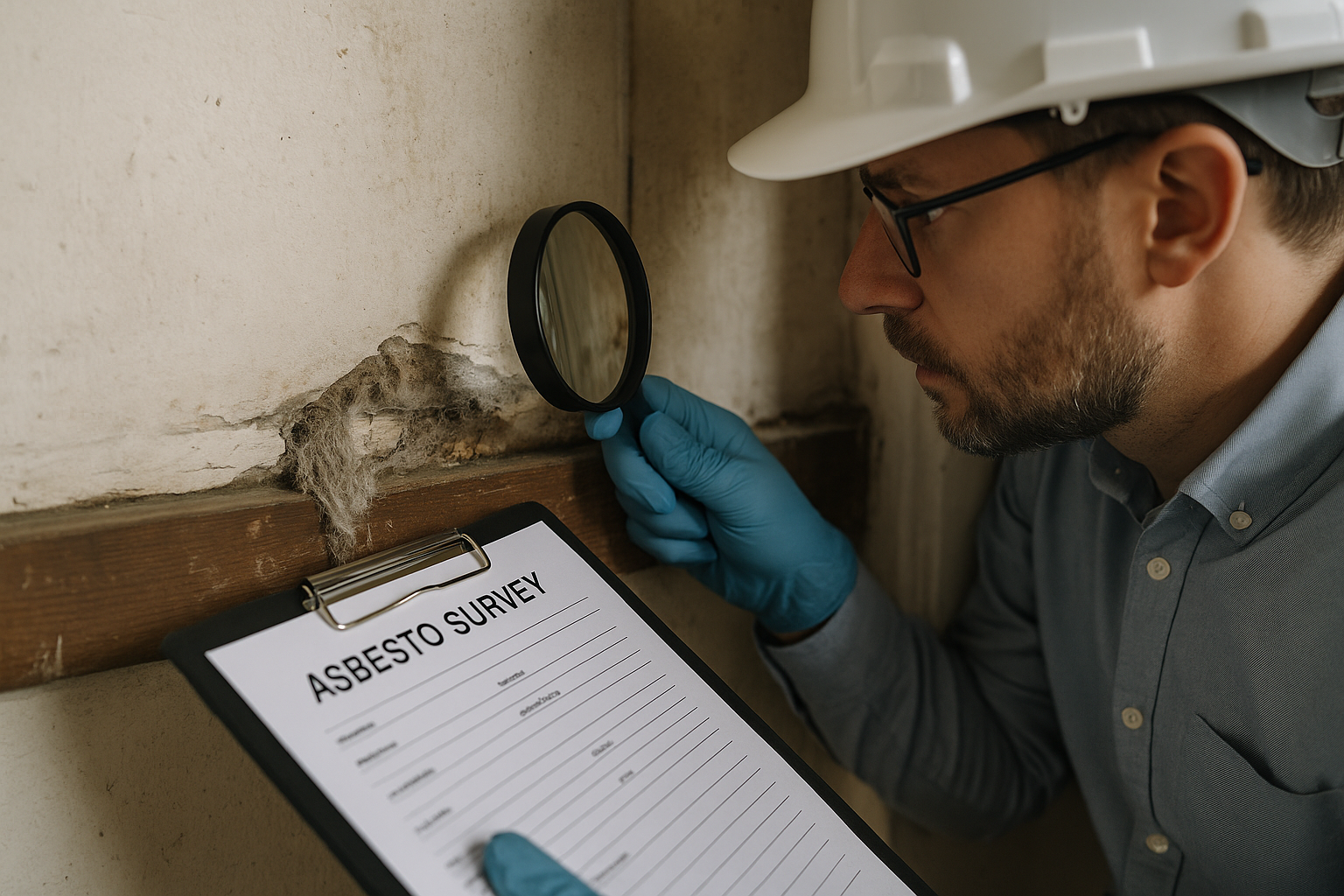
Management survey
A management survey is the standard survey for occupied buildings in normal use. Its purpose is to locate, as far as reasonably practicable, the presence and extent of suspected asbestos-containing materials that could be disturbed during normal occupation, routine maintenance, or minor works.
This is usually the starting point for non-domestic premises and the common parts of domestic premises. It supports your asbestos register and management plan, but it does not authorise intrusive work.
Refurbishment survey
A refurbishment survey is required before any work that will disturb the building fabric. That includes opening walls, removing ceilings, lifting floor finishes, accessing risers, replacing kitchens or bathrooms in shared areas, and carrying out strip-out works.
This survey is intrusive by design. If hidden materials may be disturbed, a management survey is not enough.
Demolition survey
A demolition survey is required before a building, or part of it, is demolished. It is fully intrusive and aims to identify all asbestos-containing materials within the demolition scope.
If asbestos is identified, it must be managed correctly and, where required, removed before demolition proceeds.
Re-inspection survey
A re-inspection survey checks the condition of known or presumed asbestos-containing materials and updates the risk information in the register. For many duty holders, this is the survey type most closely linked to the question how often should asbestos surveys be carried out.
In many buildings, annual re-inspection is suitable. In higher-risk settings, more frequent review may be justified.
What affects how often asbestos surveys should be reviewed?
There is no one-size-fits-all timetable because risk varies from one property to another. A quiet office with limited change is very different from a school, plant room, warehouse, retail unit, or residential block with regular contractor access.
When deciding how often should asbestos surveys be carried out, consider these factors:
- Material type: asbestos insulating board, lagging, and sprayed coatings usually need closer control than asbestos cement in good condition.
- Condition: cracks, abrasion, exposed edges, delamination, or surface damage increase concern.
- Location: accessible and high-traffic areas carry more risk than locked service spaces.
- Building use: busy, occupied, or sensitive settings may need tighter review intervals.
- Maintenance activity: the more often contractors interact with the fabric, the more often records should be checked.
- Survey limitations: inaccessible areas or presumptions may need earlier follow-up.
- Incidents: leaks, impact damage, vibration, or accidental disturbance should trigger immediate review.
Practical advice is straightforward. If the building changes often, inspect and update often. If it is stable, annual review may be enough, provided the register remains current and materials are still in the same condition.
How often should asbestos registers and management plans be updated?
Your asbestos register should be treated as a live working document, not a file that only gets opened during an audit. If it has not changed for years in a busy property, that is usually a warning sign rather than evidence that nothing has changed.

The register should be updated whenever information changes. In practice, that means updating it:
- after each re-inspection
- after asbestos-containing materials are repaired, sealed, encapsulated, or removed
- after leaks, impact, damage, or any incident affecting condition
- after refurbishment or intrusive maintenance works
- when previously inaccessible areas are inspected
- when sampling confirms or rules out asbestos
- when the use of an area changes and affects the risk assessment
A useful asbestos register should include:
- the location of each known or presumed asbestos-containing material
- a description of the material or product
- its extent or quantity where known
- its current condition
- material and priority assessments
- recommended actions
- inspection and re-inspection dates
- limitations and areas not accessed
Marked-up plans also help. Contractors need to understand the register quickly before they start work, especially where access is limited or multiple trades are involved.
When a re-inspection is enough and when you need a new survey
Not every issue means starting again from scratch. If the building is broadly unchanged and you are reviewing known materials in place, a re-inspection is often the right next step.
There are also clear cases where a re-inspection is not enough.
Use a re-inspection when:
- you already have a suitable baseline survey
- known or presumed materials simply need condition review
- the building layout and use are broadly unchanged
- no intrusive works are planned
Commission a new or different survey when:
- records are missing, poor quality, or unreliable
- the building has been significantly altered
- new areas have become accessible
- intrusive refurbishment works are planned
- demolition is planned
- the original survey does not meet the expected standard under HSG264
If findings show asbestos must be dealt with before works proceed, arrange competent asbestos removal through the appropriate specialists. Trying to make decisions on site without the right survey information is exactly how avoidable exposure happens.
How sampling and testing fit into asbestos management
Sometimes the issue is not only how often should asbestos surveys be carried out, but whether a suspect material contains asbestos at all. Where there is uncertainty, targeted asbestos testing can provide clarity.
Sampling can be useful where:
- a survey identified a presumed asbestos-containing material that now needs confirmation
- a small number of suspect materials need checking
- maintenance planning depends on a definite result
- you need to know whether a material can remain in place or requires tighter control
For straightforward identification, individual materials can also be sent for sample analysis. Where a postal option is suitable, a testing kit may help with initial material identification.
That said, larger buildings, higher-risk materials, and properties with active management duties still need professional surveying and competent advice. If you need broader support across a site or portfolio, you can also arrange specialist asbestos testing as part of a wider compliance strategy.
Buildings that often need closer asbestos review
The answer to how often should asbestos surveys be carried out often depends on the type of premises. Some buildings experience more wear, more contractor activity, or more frequent layout changes, so review intervals may need tightening.
Schools and education buildings
Older schools, colleges, and nurseries often contain asbestos in ceiling tiles, panels, risers, service ducts, and plant rooms. Frequent occupation and regular maintenance mean asbestos records must be current, practical, and easy for contractors to access.
Healthcare settings
Hospitals, clinics, surgeries, and care homes often combine older buildings with constant occupation and ongoing works. Up-to-date asbestos information is essential because maintenance may be taking place in sensitive, continuously used environments.
Commercial offices
Offices can look low risk on paper, but tenant churn, partition changes, IT upgrades, and fit-outs can quickly make older survey information unreliable. A stable office may only need routine re-inspection, while a frequently altered one may need more regular review and additional intrusive surveys.
Industrial sites and warehouses
Factories, depots, workshops, and warehouses may contain asbestos cement, insulating board, lagging, sprayed coatings, or older plant insulation. Heavy use, vibration, impact risk, and regular maintenance can justify closer monitoring.
Residential common parts
The duty to manage applies to common parts of domestic premises such as corridors, stairwells, roof spaces, meter cupboards, plant rooms, and bin stores. Managing agents and landlords should not overlook these areas simply because the building is residential.
Practical triggers that mean you should review asbestos information now
If you are unsure how often should asbestos surveys be carried out for your building, look for triggers rather than waiting for a fixed anniversary date. These are the situations that most often mean action is needed.
- You are planning works. If the work is intrusive, a refurbishment or demolition survey may be required before anything starts.
- Your last survey has obvious limitations. Areas marked inaccessible, no access, or not inspected may need follow-up.
- Contractors regularly open up the building. Ceiling voids, risers, ducts, service cupboards, and floor voids increase the chance of disturbance.
- There has been damage or water ingress. Deterioration can change the risk quickly.
- The building has changed use. A storage area becoming office space or a quiet office becoming a busy education setting changes the exposure risk.
- Your asbestos register is out of date. If nobody trusts it, it is not doing its job.
- There is no clear management plan. A survey without controls, communication, and review is only part of compliance.
A simple site walk with your latest survey, register, and maintenance records often reveals whether the information still makes sense. If room names have changed, partitions have moved, or materials no longer match the report, arrange a review before work continues.
How asbestos management links with wider building safety
Good asbestos control should sit alongside your wider compliance systems, not apart from them. If your permit-to-work process, contractor induction, maintenance planning, and emergency procedures do not reflect the asbestos register, the register is not doing enough.
It also makes sense to align asbestos reviews with other building safety duties. For example, a fire risk assessment also needs regular review where building use, occupancy, escape routes, or layout changes.
For larger estates, coordinating asbestos inspections with broader compliance planning can reduce disruption and improve oversight. The key point is practical: the people authorising work, supervising contractors, and responding to incidents must have the right asbestos information at the right time.
Common mistakes duty holders make
Most asbestos compliance problems are not caused by a total lack of paperwork. They happen because records are out of date, the wrong survey is relied on, or nobody checks whether the report still reflects the site.
Watch out for these common mistakes:
- assuming a management survey covers refurbishment work
- treating the survey as valid forever without review
- failing to re-inspect known asbestos-containing materials
- keeping an asbestos register that contractors cannot easily access
- not updating records after removal, repair, or damage
- ignoring inaccessible areas noted in the original survey
- allowing minor works to start without checking the asbestos information first
If you are responsible for a property portfolio, standardising your process helps. Make sure every site has a current survey, a live register, a management plan, and a clear trigger for when additional surveys are required.
What duty holders should do next
If you manage a building and are still asking how often should asbestos surveys be carried out, focus on actions rather than assumptions.
Start with this checklist:
- Find your latest asbestos survey and read the limitations.
- Check whether the building layout, use, or occupancy has changed.
- Review whether any intrusive works are planned.
- Confirm when known or presumed asbestos-containing materials were last re-inspected.
- Make sure the asbestos register has been updated after repairs, incidents, or removal.
- Check that contractors can access the information before starting work.
- Arrange the correct survey if records are missing, outdated, or unsuitable.
This approach is practical, defensible, and aligned with the duty to manage under the Control of Asbestos Regulations. It also helps avoid delays, unexpected discoveries during works, and unnecessary exposure risk.
Frequently Asked Questions
Is an asbestos survey required every year?
Not necessarily. There is no rule saying every asbestos survey must be replaced annually. In many buildings, known or presumed asbestos-containing materials are reviewed through annual re-inspection, while the original management survey remains in use if it still accurately reflects the premises.
How often should asbestos-containing materials be re-inspected?
Suitable intervals depend on risk, but annual re-inspection is common. Higher-risk materials, damaged materials, or buildings with frequent disturbance may need more frequent review.
Do I need a new survey before refurbishment works?
Yes, if the work is intrusive. A management survey is not enough for refurbishment that disturbs the building fabric. You will usually need a refurbishment survey before works begin.
Does an asbestos management survey expire?
It does not have a simple expiry date. It remains useful only while it still reflects the building, the accessible areas surveyed, and the condition of known or presumed asbestos-containing materials.
What happens if asbestos is found before works start?
The material must be assessed and managed correctly before work continues. Depending on the type, condition, and scope of works, that may involve updating the register, changing the work method, encapsulating the material, or arranging licensed or non-licensed removal as appropriate.
If you need clear advice on how often should asbestos surveys be carried out, or you need the right survey for an occupied building, planned refurbishment, demolition, or re-inspection, speak to Supernova Asbestos Surveys. We deliver nationwide surveying, testing, and compliance support. Call 020 4586 0680 or visit asbestos-surveys.org.uk to book a survey.