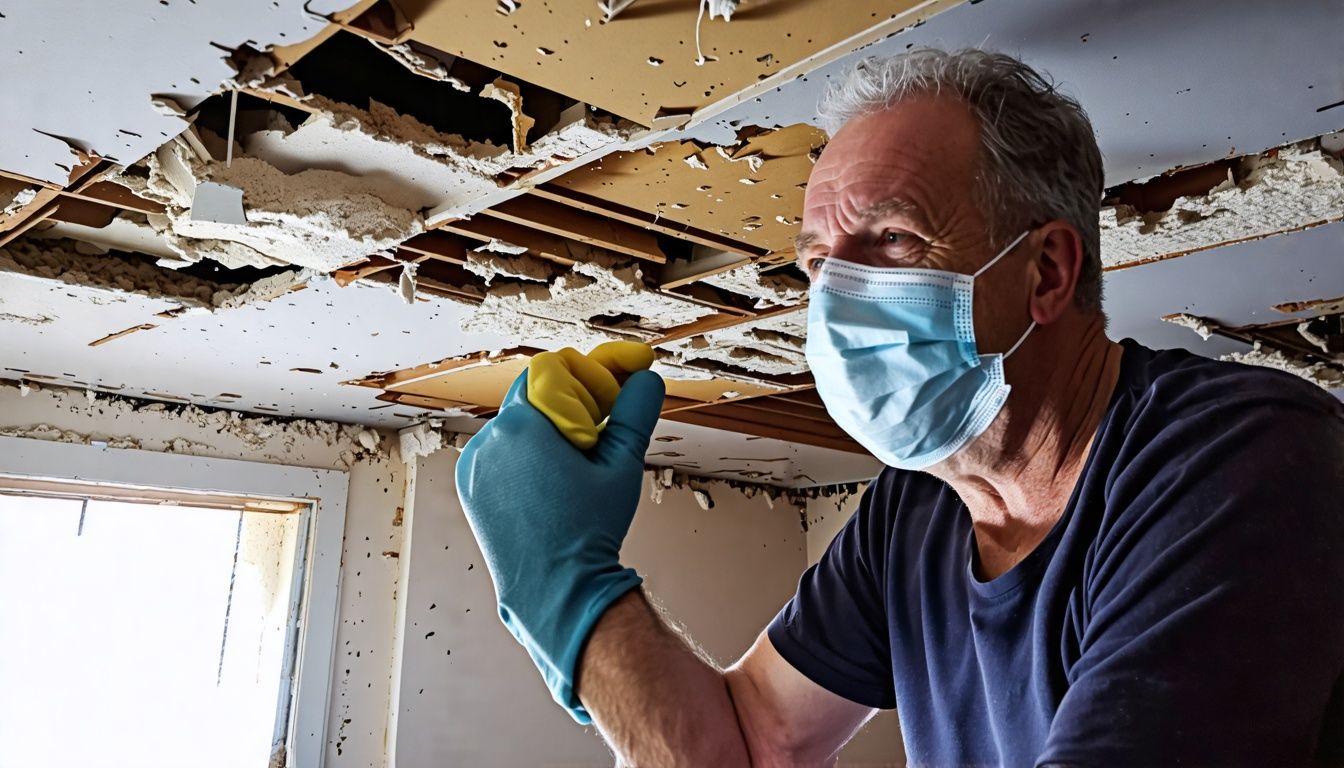
Asbestos Survey Winchester: What Property Owners and Managers Need to Know
Winchester is a city built on history — and like much of the UK, a significant proportion of its buildings were constructed during the decades when asbestos was used as a matter of course. If you own, manage, or are responsible for a building in Winchester that was built before the year 2000, there is a real possibility that asbestos-containing materials (ACMs) are present. Getting a professional asbestos survey in Winchester is not just good practice — in many cases, it is a legal requirement.
This post covers why asbestos surveys matter, what the different types involve, who is legally responsible, and what happens if asbestos is found.
Why Asbestos Is Still a Live Issue in Winchester
Asbestos use in UK construction was not banned until 1999. That means any building erected before that date — offices, schools, hospitals, industrial units, residential blocks, churches, and civic buildings — could contain one or more types of ACM.
Winchester has a rich stock of older buildings, from Victorian terraces and Edwardian commercial properties through to the post-war social housing and 1960s–80s public buildings that are among the highest-risk structures in the country. The materials used in those buildings — ceiling tiles, pipe lagging, insulating board, textured coatings, roofing sheets — were routinely manufactured with asbestos.
When ACMs are in good condition and left undisturbed, they pose a limited immediate risk. The danger arises when they deteriorate, are damaged, or are disturbed during maintenance, renovation, or demolition. At that point, microscopic fibres become airborne and can be inhaled — with potentially fatal consequences decades later.
Asbestos-related diseases, including mesothelioma, asbestosis, and asbestos-related lung cancer, remain a leading cause of work-related death in the UK. The latency period — the time between exposure and disease onset — can be anywhere from 15 to 50 years, which means exposure happening in Winchester buildings today could have consequences well into the future.
Who Has a Legal Duty to Manage Asbestos?
Under the Control of Asbestos Regulations, anyone who has responsibility for maintaining or repairing a non-domestic building has a legal duty to manage asbestos. This applies to building owners, employers, and those with management responsibility under a lease or service agreement.
The duty to manage requires you to:
- Identify whether ACMs are present in the building
- Assess the condition and risk of any materials found
- Produce and maintain an asbestos register
- Implement a written asbestos management plan
- Ensure anyone who might disturb ACMs — contractors, maintenance staff — is informed of their location and condition
- Keep the register up to date through regular re-inspection
Failure to comply is a criminal offence. The Health and Safety Executive (HSE) has the power to prosecute, issue improvement notices, and impose significant fines. More importantly, non-compliance puts people’s lives at risk.
For domestic properties, the legal picture is slightly different — homeowners do not have the same statutory duty as employers or commercial landlords — but the health risk is identical. Anyone planning renovation or extension work on a pre-2000 home in Winchester should arrange a survey before work begins.
The Three Types of Asbestos Survey Explained
Not all asbestos surveys are the same. The type of survey you need depends on what you intend to do with the building. Here is a clear breakdown.
Management Survey
A management survey is the standard survey for buildings in normal occupation. Its purpose is to identify ACMs that could be disturbed during routine maintenance and day-to-day use of the building.
The surveyor will inspect accessible areas, sample suspect materials, and produce a detailed report including an asbestos register and risk assessment. This gives you everything you need to fulfil your duty to manage under the Control of Asbestos Regulations.
A management survey is the starting point for most commercial property owners and managers in Winchester. If you do not already have an up-to-date asbestos register for your building, this is where you begin.
Refurbishment Survey
If you are planning any refurbishment, fit-out, or intrusive maintenance work, you need a refurbishment survey before work starts. This type of survey is more thorough than a management survey and involves some destructive inspection — opening up walls, lifting floor coverings, accessing voids — to locate hidden ACMs that could be disturbed during the works.
Carrying out refurbishment work without a prior survey is a serious regulatory breach and puts contractors and occupants at risk. If asbestos is discovered mid-project, work must stop immediately — causing costly delays and potential enforcement action.
Demolition Survey
Before any structure is demolished, a demolition survey is required. This is the most thorough type of survey, designed to locate every ACM throughout the entire building — including in areas that would normally be inaccessible.
All asbestos must be removed prior to demolition. Demolition surveys are highly intrusive and should only be conducted in buildings that have been vacated. The resulting report provides the information needed to plan safe, compliant asbestos removal before any structural work begins.
What Happens During an Asbestos Survey in Winchester?
If you have never had a survey carried out before, knowing what to expect helps you prepare properly and ensures the process goes smoothly.
A qualified asbestos surveyor — accredited to the relevant UKAS standard — will attend your property at an agreed time. The surveyor will carry out a thorough visual inspection of the building, looking for materials that are known or suspected to contain asbestos.
Where suspect materials are identified, small samples are taken for laboratory analysis. Sampling is carried out using controlled methods to minimise fibre release, and the surveyor will seal and make good any areas disturbed during sampling.
Samples are sent to an accredited laboratory for analysis. Results confirm whether asbestos is present and, if so, which type — different fibre types carry different risk profiles. The three main types found in UK buildings are chrysotile (white asbestos), amosite (brown asbestos), and crocidolite (blue asbestos), with amosite and crocidolite considered the most hazardous.
Once analysis is complete, you receive a full written report including:
- A complete asbestos register listing all identified and presumed ACMs
- The location, condition, and extent of each material
- A risk assessment for each ACM
- Photographs and floor plan markings
- Recommendations for management, monitoring, or removal
The report becomes your working document for asbestos management going forward. It should be kept on site, made available to contractors, and updated whenever the condition of materials changes or new work is planned.
Common Asbestos-Containing Materials Found in Winchester Buildings
Asbestos was used in a remarkable range of construction products. The following ACMs are among the most commonly identified in surveys of Winchester properties:
- Textured decorative coatings — products like Artex applied to ceilings and walls before 1999 frequently contain chrysotile
- Asbestos insulating board (AIB) — used in ceiling tiles, partition walls, fire doors, and boxing around pipes and ducts
- Pipe and boiler lagging — particularly common in older commercial and industrial properties with original heating systems
- Asbestos cement products — roofing sheets, guttering, downpipes, and wall cladding on agricultural and industrial buildings
- Floor tiles and adhesives — thermoplastic floor tiles and the black bitumen adhesive used to fix them
- Sprayed asbestos coatings — applied to structural steelwork and concrete for fire protection in larger commercial and public buildings
- Rope seals and gaskets — found in older boilers, furnaces, and heating plant
Many of these materials are not immediately obvious to the untrained eye. A professional surveyor knows where to look and how to distinguish suspect materials from safe ones — which is why attempting to self-assess is never advisable.
What Happens If Asbestos Is Found?
Finding asbestos in a building does not automatically mean it needs to be removed. In many cases, ACMs in good condition and in low-risk locations can be safely managed in place — monitored regularly and left undisturbed.
Your asbestos surveyor will assign a risk rating to each material based on its condition, location, accessibility, and the likelihood of disturbance. This risk rating drives the recommended management action, which might be:
- Monitor and manage — the material is in good condition and low risk; record it, check it periodically, and ensure contractors are aware of its location
- Repair or encapsulate — the material shows signs of minor damage or deterioration; specialist encapsulation or sealing can stabilise it
- Remove — the material is in poor condition, is at high risk of disturbance, or removal is required before planned works
Where removal is necessary, it must be carried out by qualified professionals. For the most hazardous materials — sprayed coatings, asbestos insulating board, and pipe lagging — work must be undertaken by a licensed contractor under strict HSE-approved methods. Our asbestos removal service covers all categories of work, from non-licensed removals through to full licensed enclosure projects.
Choosing the Right Asbestos Surveying Company in Winchester
Not all surveying companies are equal. When selecting a provider for your asbestos survey in Winchester, there are several non-negotiable criteria to check:
- UKAS accreditation — the surveying company should hold accreditation from the United Kingdom Accreditation Service, demonstrating that their surveyors meet the competence requirements set out in HSG264, the HSE’s guidance on asbestos surveys
- Qualified surveyors — individual surveyors should hold recognised qualifications such as the BOHS P402 certificate
- Accredited laboratory analysis — samples should be analysed by a UKAS-accredited laboratory, not an in-house facility without independent accreditation
- Clear, detailed reporting — the survey report should meet the requirements of HSG264 and provide all the information you need to manage asbestos compliantly
- Professional indemnity insurance — essential protection for you and the surveying company alike
Supernova Asbestos Surveys meets all of these standards. With over 50,000 surveys completed across the UK, we bring the same level of rigour to every survey — whether it is a small retail unit in Winchester city centre or a large commercial complex on the outskirts.
Supernova Asbestos Surveys: Nationwide Coverage, Local Expertise
We carry out asbestos surveys across the UK, from major city centres to smaller towns and rural areas. Alongside our Winchester service, we cover major urban centres including asbestos survey London, asbestos survey Manchester, and asbestos survey Birmingham — with the same accredited standards applied everywhere.
Our surveyors understand the local building stock and can advise you quickly on which survey type is appropriate for your property and circumstances. We provide fast turnaround on reports and are available to talk through findings and recommendations once your report is delivered.
If you need an asbestos survey in Winchester — whether for compliance, before planned works, or because you have concerns about materials in your building — contact Supernova Asbestos Surveys today. Call us on 020 4586 0680 or visit asbestos-surveys.org.uk to request a quote and speak to a member of our team.
Frequently Asked Questions
How much does an asbestos survey in Winchester cost?
The cost depends on the size, type, and complexity of the property. A management survey for a small commercial unit will cost considerably less than a demolition survey of a large industrial building. The best way to get an accurate figure is to request a quote directly — we provide clear, itemised pricing with no hidden charges.
Do I need an asbestos survey for a domestic property in Winchester?
Homeowners are not subject to the same statutory duty as commercial landlords or employers, but the health risk is the same. If your home was built before 2000 and you are planning renovation, extension, or significant maintenance work, arranging a survey before work begins is strongly advisable. Disturbing ACMs without knowing they are present puts you, your family, and any tradespeople at risk.
How long does an asbestos survey take?
The duration depends on the size and type of property. A survey of a small office or retail unit might take two to three hours, while a large school or industrial complex could take a full day or more. Laboratory analysis of samples typically takes a few working days, after which your written report is prepared and issued. We aim to deliver reports promptly so you are not left waiting.
What is the difference between a management survey and a refurbishment survey?
A management survey is designed for buildings in normal use and focuses on accessible areas where ACMs might be disturbed during day-to-day activity or routine maintenance. A refurbishment survey is more intrusive — it involves opening up structures to find hidden materials before any building work begins. If you are planning any works that will disturb the fabric of the building, a refurbishment survey is required, even if you already have a management survey in place.
Can asbestos be left in place rather than removed?
Yes — in many cases, managing asbestos in place is the correct and legally compliant approach. ACMs that are in good condition, in a low-risk location, and unlikely to be disturbed can be monitored and recorded rather than removed. Removal is only necessary when materials are in poor condition, are at high risk of disturbance, or when planned works require it. Your survey report will set out the recommended course of action for each material identified.