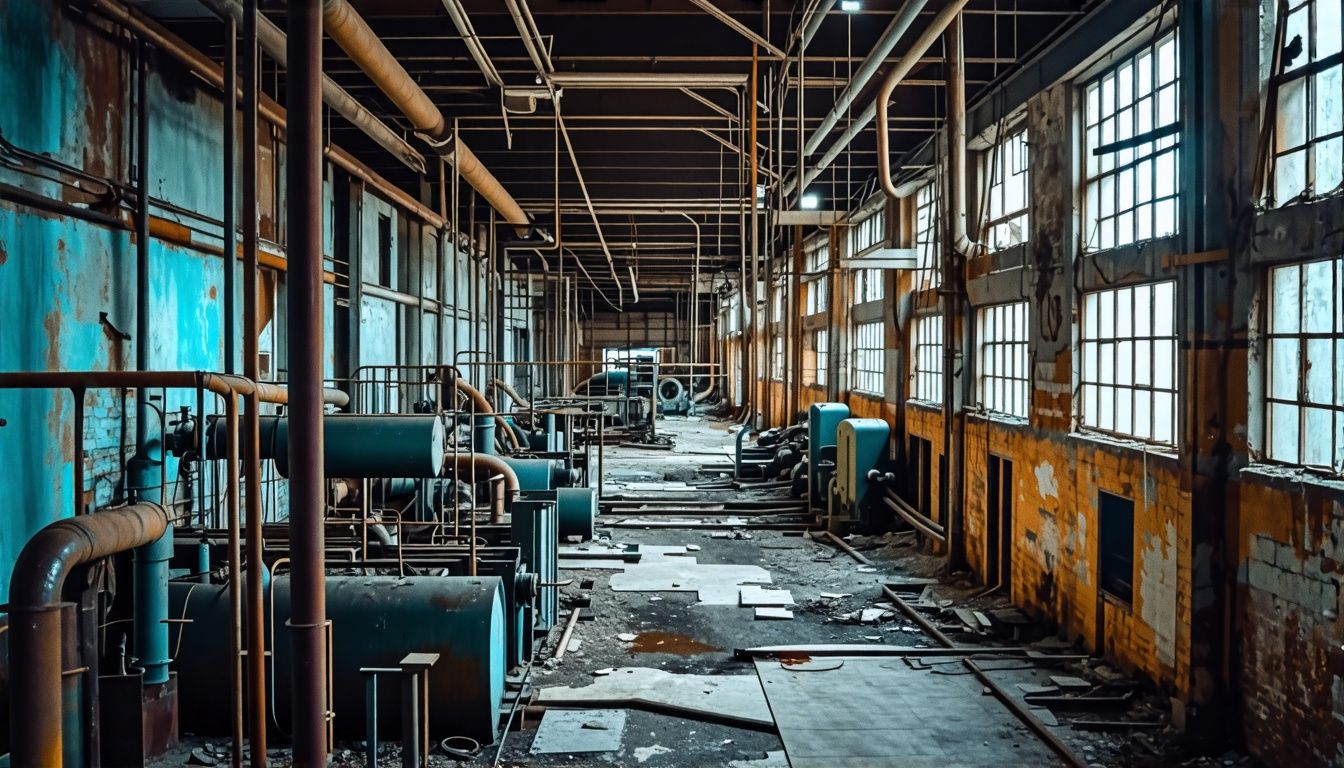
Higher Risk Asbestos Products Include These — And They’re Still in Buildings Across the UK
Asbestos wasn’t confined to one corner of industry. For most of the 20th century, it was woven into the fabric of British construction, manufacturing, and infrastructure — and higher risk asbestos products include some of the most common building materials found in properties built before 2000. The ban on new asbestos use didn’t make the danger disappear. It froze it in place, waiting to be disturbed.
Anyone who works in, manages, or owns older buildings needs to understand which materials pose the greatest threat — and which industries put workers closest to them every day.
Why Some Asbestos Products Are More Dangerous Than Others
Not all asbestos-containing materials (ACMs) carry equal risk. The danger depends on two things: the type of asbestos fibre present, and how easily the material releases those fibres into the air.
Materials are classified by their friability — essentially, how easily they crumble or break apart. Friable materials release fibres with very little disturbance. Bound or encapsulated materials are more stable, but can still become hazardous when cut, drilled, or damaged.
The amphibole fibres — crocidolite (blue asbestos) and amosite (brown asbestos) — are considered the most hazardous because of their thin, needle-like shape, which allows them to penetrate deep into lung tissue. Chrysotile (white asbestos), while considered less potent, is still a confirmed carcinogen and was used in the widest range of products.
Higher Risk Asbestos Products Include These Common Building Materials
The following materials sit at the top of the risk hierarchy. They were used extensively in UK buildings, and many remain in place today.
Sprayed Asbestos Coatings
Sprayed coatings were applied directly to structural steelwork, ceilings, and walls as fire protection and thermal insulation. They are among the most friable ACMs in existence — the fibres are loosely bound and release easily with minimal disturbance.
Found in factories, warehouses, power stations, and commercial buildings constructed from roughly the 1940s through to the 1970s, sprayed coatings are considered the highest-risk ACM encountered in practice. Even air movement near damaged sprayed coatings can release fibres.
Asbestos Insulating Board (AIB)
AIB was manufactured using amosite (brown asbestos) as its primary fibre, making it one of the more hazardous products in common use. It was used extensively in ceiling tiles, wall panels, partition boards, fire doors, and soffit boards.
AIB looks unremarkable — it resembles ordinary board or tile — which is precisely what makes it dangerous. Workers who drill, cut, or break AIB without knowing what it is can release significant quantities of amosite fibres. Any work involving AIB is classified as licensed asbestos work under the Control of Asbestos Regulations.
Pipe and Boiler Lagging
Thermal insulation applied to pipes, boilers, and heating systems was frequently made from asbestos — often amosite or crocidolite mixed into an insulating matrix. This lagging was applied by hand and is highly friable, particularly when aged or damaged.
Plumbers, heating engineers, and maintenance workers are most likely to encounter pipe lagging. Any insulation on pipework in a pre-2000 building should be treated as potentially asbestos-containing until confirmed otherwise by sampling and analysis.
Thermal Insulation on Industrial Plant
Boilers, turbines, generators, and industrial machinery in factories and power stations were heavily insulated with asbestos throughout the 20th century. This insulation was often applied in thick, layered sections and is extremely friable when disturbed.
Maintenance engineers working on ageing plant — particularly in manufacturing, energy, and heavy industry — face some of the highest exposure risks of any occupational group.
Medium-Risk Asbestos Products Still Widely Present in UK Buildings
These materials are less friable than the products above, but they still release harmful fibres when worked on — particularly when cut, drilled, or sanded.
Asbestos Cement
Asbestos cement was the most widely used ACM in the UK by volume. It was formed by mixing chrysotile fibres into a Portland cement matrix, producing a durable, weather-resistant sheet material used in roofing, cladding, gutters, downpipes, flue pipes, and water tanks.
In good condition, asbestos cement is relatively stable. But when it weathers, cracks, or is cut and drilled, it releases fibres. Agricultural buildings, industrial units, garages, and older residential outbuildings across the UK are still clad and roofed with asbestos cement sheeting.
Textured Coatings (Including Artex)
Textured decorative coatings were applied to millions of ceilings and walls in UK homes and commercial buildings from the 1960s through to the 1980s. Many contain chrysotile asbestos.
When intact and painted over, they present a low risk. When sanded, scraped, or drilled — as happens during renovation work — they release fibres. Decorators, kitchen and bathroom fitters, and anyone carrying out DIY renovation in a pre-2000 property should treat textured coatings as potentially asbestos-containing and arrange testing before disturbing them.
Floor Tiles and Adhesives
Vinyl floor tiles and the bitumen-based adhesives used to fix them frequently contained chrysotile asbestos. These were installed in homes, schools, offices, and commercial premises throughout the mid-20th century.
The tiles themselves are relatively stable when intact. The risk arises when they are lifted, broken, or when old adhesive is scraped from the substrate. The adhesive layer often contains a higher concentration of asbestos than the tile itself.
Asbestos Rope Seals and Gaskets
Woven asbestos rope was used as sealing material in boilers, stoves, furnaces, and industrial equipment. Asbestos gaskets were standard components in pipework, engines, and mechanical plant.
Both materials contain high proportions of asbestos fibre and release them readily when compressed, cut, or removed. Chimney sweeps, heating engineers, and mechanical maintenance workers are most likely to encounter these materials in older domestic and industrial settings.
Which Industries Put Workers Closest to Higher Risk Asbestos Products
Higher risk asbestos products include materials found across almost every sector of the UK economy — but some industries put workers in direct, regular contact with them.
Construction, Refurbishment, and Demolition
This remains the highest-risk sector in the UK. Workers involved in refurbishment, maintenance, and demolition of pre-2000 buildings encounter AIB, sprayed coatings, pipe lagging, textured coatings, and asbestos cement on a near-daily basis. Cutting, drilling, and breaking these materials without proper controls releases fibres that are invisible to the naked eye.
Before any intrusive work begins on a pre-2000 building, a demolition survey or refurbishment survey is legally required under the Control of Asbestos Regulations. This identifies ACMs that would be disturbed by the planned work and enables safe management or removal before work begins.
Shipbuilding and Ship Repair
UK shipyards were among the heaviest users of asbestos in the country. Ships built before the 1980s were insulated throughout with asbestos — in engine rooms, boiler rooms, bulkheads, fire doors, and pipe lagging.
The confined spaces typical of ship interiors mean disturbed fibres have nowhere to go, leading to dangerously high airborne concentrations. The legacy of asbestos exposure in shipyards on the Clyde, Tyne, and Mersey has contributed significantly to mesothelioma rates in those regions.
Power Generation
Power stations relied heavily on asbestos for thermal insulation around turbines, boilers, steam pipes, and generators. Maintenance engineers at older facilities were among the most heavily exposed workers in the country.
Decommissioning of older power stations continues to present asbestos risks when not properly managed. Thorough surveying before any decommissioning or maintenance programme is essential.
Industrial Manufacturing
Factories, chemical plants, steel mills, and refineries used asbestos to protect equipment and workers from extreme heat. Asbestos was woven into protective clothing, used to line furnaces, and applied to machinery as thermal insulation.
Maintenance workers carrying out repairs on ageing plant remain at elevated risk, particularly in enclosed areas with poor ventilation. Many older industrial sites have never been comprehensively surveyed.
Plumbing and Heating Engineering
Plumbers work directly with pipework and heating systems — historically two of the most heavily insulated areas in any building. Older properties frequently retain asbestos pipe lagging, boiler insulation, and asbestos cement flue pipes.
Cutting or removing this material without proper identification and controls is one of the most common causes of accidental asbestos exposure in the UK today. All plumbing and heating contractors working in pre-2000 properties should check for an asbestos register before starting work.
Electrical Work
Electricians working in older properties regularly encounter AIB around consumer units and fuse boxes, asbestos lagging on heating pipes, and textured ceiling coatings. Chasing walls, drilling through partitions, or removing old panels can disturb ACMs without any warning.
Asbestos awareness training is legally required for electricians working in pre-2000 properties. It is not a box-ticking exercise — it is the difference between a safe job and a potentially fatal exposure.
Firefighting
Firefighters face a dual exposure risk. When responding to fires in older buildings, ACMs can combust or be physically disturbed, releasing fibres into smoke. Beyond live incidents, firefighters also attend building collapses and demolitions in structures that may contain asbestos.
Post-incident decontamination protocols are critical, and fire services operating in areas with significant pre-2000 building stock need robust asbestos awareness procedures in place.
Education and Healthcare
Schools, hospitals, and other public buildings constructed during the mid-20th century are among the most heavily ACM-laden building types in the UK. Maintenance staff, caretakers, and facilities managers in these settings regularly work around AIB ceiling tiles, asbestos cement panels, and textured coatings.
The duty to manage asbestos in these buildings is particularly stringent given the vulnerability of occupants. A current, accurate asbestos register and a properly maintained asbestos management plan are non-negotiable legal requirements.
What the Law Requires: Identifying and Managing ACMs
Under the Control of Asbestos Regulations, employers and dutyholders responsible for non-domestic premises must identify and assess all ACMs through a formal survey. This isn’t optional — it’s a legal duty.
A management survey is required for occupied premises to locate ACMs that could be disturbed during normal occupation and maintenance. It forms the basis of an asbestos register, which must be kept up to date and made available to anyone planning to carry out work on the building.
Where refurbishment or demolition is planned, a more intrusive survey is required to identify all ACMs that would be disturbed by the work — including those hidden within the building fabric. The HSE’s guidance document HSG264 sets out the standards surveyors must meet and the methodology they must follow. Surveys must be carried out by competent surveyors with appropriate qualifications and experience.
If you’re based in the capital and need expert help, our team provides a full asbestos survey London service covering all property types. We also cover the whole of the UK, including a dedicated asbestos survey Manchester service and an asbestos survey Birmingham service for clients across the Midlands.
When Asbestos Removal Is the Right Decision
Not all ACMs need to be removed immediately. Materials in good condition and in low-disturbance locations can often be managed in place, with their condition monitored regularly through a programme of inspection.
But where materials are damaged, deteriorating, or located in areas where they will inevitably be disturbed, removal is the appropriate course of action. Licensed asbestos removal is legally required for the highest-risk materials — including AIB, sprayed coatings, and pipe lagging. Only contractors licensed by the HSE can carry out this work, and it must be notified to the relevant enforcing authority in advance.
Attempting to remove high-risk ACMs without a licensed contractor is not only illegal — it puts workers, building occupants, and the wider public at serious risk.
The Health Consequences of Asbestos Exposure
The diseases caused by asbestos exposure have long latency periods — symptoms can take 20 to 50 years to appear after initial exposure. This means workers exposed decades ago are still being diagnosed today, and the full toll of 20th-century occupational exposure is still unfolding.
The conditions associated with asbestos exposure include:
- Mesothelioma — an aggressive cancer of the pleural or peritoneal lining, almost exclusively caused by asbestos exposure and with a very poor prognosis
- Asbestos-related lung cancer — risk is significantly compounded in those who also smoked
- Asbestosis — a progressive scarring of the lung tissue caused by prolonged exposure to asbestos fibres, leading to severe breathing difficulties
- Pleural plaques and pleural thickening — changes to the lining of the lungs that can cause breathlessness and indicate past exposure
There is no safe level of asbestos exposure. The only effective protection is preventing exposure in the first place — through proper identification, risk assessment, and management of ACMs before any work begins.
Practical Steps for Employers and Dutyholders
If you manage or own a pre-2000 building, or if your workers regularly enter older properties, the following steps are not optional — they are legal requirements under the Control of Asbestos Regulations:
- Commission a professional asbestos survey — a management survey for occupied premises, or a refurbishment/demolition survey before intrusive work
- Maintain an up-to-date asbestos register — recording the location, type, condition, and risk rating of all identified or presumed ACMs
- Develop and implement an asbestos management plan — setting out how identified ACMs will be managed, monitored, and communicated to relevant parties
- Provide asbestos awareness training to all workers who could encounter ACMs in the course of their work
- Share the asbestos register with any contractor or tradesperson before they begin work on the building
- Arrange licensed removal for high-risk materials that are damaged or due to be disturbed
These steps protect your workers, protect building occupants, and protect you from enforcement action, prosecution, and civil liability.
Frequently Asked Questions
What are the highest risk asbestos products found in UK buildings?
The highest risk asbestos products include sprayed asbestos coatings, asbestos insulating board (AIB), and pipe and boiler lagging. These materials are highly friable — they release fibres easily when disturbed — and many contain amosite or crocidolite, the most hazardous asbestos fibre types. They are most commonly found in commercial and industrial buildings constructed before the 1980s.
Which workers are most at risk from asbestos exposure in the UK?
Construction, refurbishment, and demolition workers face the highest risk because they regularly disturb building materials that may contain asbestos. Plumbers, heating engineers, electricians, and maintenance workers in older buildings also face significant risk. Shipbuilding workers and those in power generation and heavy manufacturing have historically been among the most exposed groups.
Is asbestos cement dangerous?
Asbestos cement is considered a medium-risk material. When intact and undisturbed, it is relatively stable. The risk arises when it is cut, drilled, weathered, or broken — all of which release chrysotile fibres. Asbestos cement roofing and cladding is still present on a large number of agricultural, industrial, and commercial buildings across the UK.
Do I need a survey before carrying out building work?
Yes. Under the Control of Asbestos Regulations, a refurbishment or demolition survey is legally required before any intrusive work begins on a pre-2000 building. This applies to commercial and industrial premises. The survey identifies ACMs that would be disturbed by the planned work, enabling them to be safely managed or removed before work starts. Failure to survey before work begins is a criminal offence.
Can asbestos-containing materials be left in place rather than removed?
Yes, in many cases. Materials that are in good condition, not deteriorating, and unlikely to be disturbed can be managed in place under an asbestos management plan. Their condition must be monitored regularly. However, where materials are damaged, in poor condition, or located where they will be disturbed by planned work, removal by a licensed contractor is the appropriate course of action.
Talk to Supernova Asbestos Surveys
Supernova Asbestos Surveys has completed over 50,000 surveys nationwide. Our UKAS-accredited surveyors work across all sectors — commercial, industrial, residential, education, and healthcare — providing management surveys, refurbishment and demolition surveys, sampling and analysis, and licensed removal coordination.
Whether you need a survey for a single property or a rolling programme across a large estate, we provide clear, accurate reports that meet HSG264 standards and give you everything you need to manage your legal obligations with confidence.
Call us on 020 4586 0680 or visit asbestos-surveys.org.uk to arrange a survey or speak to a member of our team.