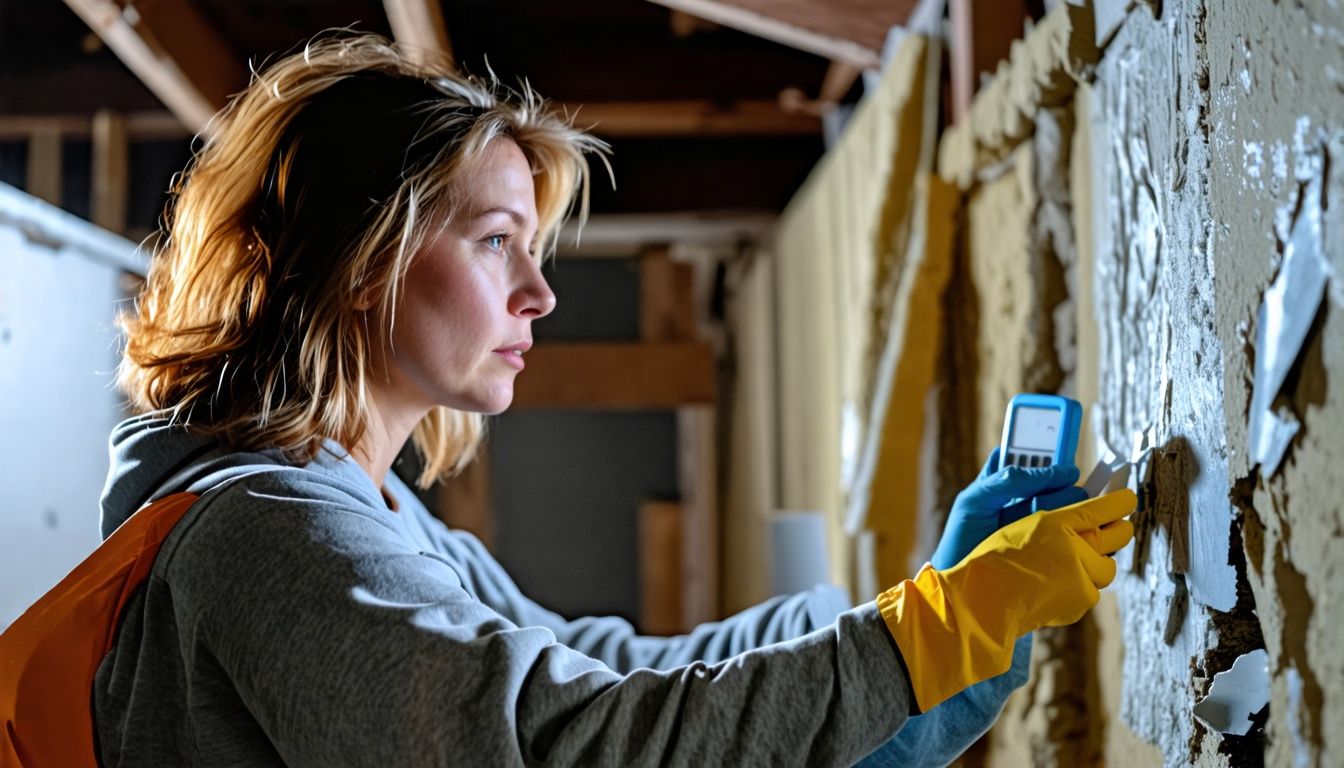
You’ve Found Asbestos Mid-Renovation — Here’s Exactly What to Do
Finding asbestos during a renovation project stops most homeowners cold — and that instinct is entirely correct. Knowing what to do if you discover asbestos is the difference between a manageable situation and a serious, long-term health risk. The reassuring news is that asbestos in sound condition, left completely undisturbed, poses minimal immediate danger.
The danger begins the moment you drill into it, sand it, or cut through it — releasing microscopic fibres capable of causing irreversible lung disease decades later. This is more common than most people expect. Any property built or refurbished before 2000 may contain asbestos-containing materials (ACMs), and renovation work is precisely the kind of activity that disturbs them.
Can You Identify Asbestos Just by Looking at It?
No — not reliably. Asbestos-containing materials have no distinctive appearance that sets them apart from safer alternatives, which is a large part of what makes them so hazardous. You cannot identify asbestos by colour, texture, or smell.
That said, certain materials in pre-2000 properties should always be treated with suspicion until tested:
- Textured ceiling and wall coatings, such as Artex
- Vinyl and thermoplastic floor tiles, including their adhesive backing
- Pipe lagging and boiler insulation
- Ceiling tiles, particularly in older office conversions or commercial-style kitchens
- Soffit boards and corrugated cement roof panels
- Insulation boards around fireplaces and behind fuse boxes
- Sprayed coatings on structural steelwork or concrete
- Asbestos cement guttering and rainwater goods
The UK banned asbestos in new construction materials in 1999, but properties built right up to that point — and those refurbished using older stock — can still contain ACMs. If your property pre-dates 2000, treat any suspicious material as potentially hazardous until you have professional confirmation otherwise.
What to Do If You Discover Asbestos: The Step-by-Step Response
Step 1: Stop All Work Immediately
The moment you suspect you have uncovered an ACM, put down tools, switch off any equipment generating dust or vibration, and move everyone out of the immediate area. This is not overcautious — it is the correct and proportionate response.
Continuing to drill, cut, or sand into a material that contains asbestos dramatically increases fibre release. The delay to your renovation timeline is temporary. The consequences of significant asbestos exposure are not.
Step 2: Do Not Touch, Move, or Clean It Up
Resist the urge to collect debris, bag up the material, or sweep the area. Standard vacuum cleaners and brushes do not contain asbestos fibres — they spread them. Even handling the material with bare hands can release fibres that remain airborne for hours.
Leave everything exactly as it is. Do not attempt to take a sample yourself at this stage, particularly if the material is already damaged or disturbed.
Step 3: Seal Off the Affected Area
If possible, close doors and windows to the affected room or area to prevent fibres from circulating through the rest of the property. If there is visible debris, cover it loosely with heavy-duty polythene sheeting — without pressing down on the material or compressing it.
Keep everyone out of the area — family members, pets, and other tradespeople — until a professional assessment has been completed.
Step 4: Get a Professional Asbestos Survey
This is the most critical step. Before any work resumes, you need professional confirmation of what you are dealing with — the type of asbestos present, its condition, and the safest course of action.
The most relevant survey types for renovation scenarios are:
- A refurbishment survey is the appropriate choice when renovation work is planned and ACMs may be disturbed. It involves intrusive inspection of the areas due to be worked on and is a legal requirement before refurbishment or demolition work in non-domestic properties under the Control of Asbestos Regulations. For domestic properties, it is strongly recommended practice and essential for your own protection.
- A management survey is more appropriate when asbestos has been found incidentally — during routine decorating, for example — and is in reasonable condition. It identifies the extent of ACMs throughout the property and helps you decide whether removal or management in situ is the right approach.
- A demolition survey is required where demolition rather than refurbishment is involved. This is the most thorough survey type and must be completed before any demolition work begins.
Supernova Asbestos Surveys carries out all survey types across the UK, including asbestos survey London and nationwide. Our surveyors will assess the material, take samples where required, and provide a detailed written report with clear recommendations. Call us on 020 4586 0680 or visit asbestos-surveys.org.uk to book.
Step 5: Get the Material Tested
If you are not yet ready to arrange a full survey, or want initial confirmation before proceeding, asbestos testing is a practical first step. Our UKAS-accredited laboratory can analyse samples and return results promptly.
You can order a testing kit from our website — you take a small, careful sample following the safety instructions provided and post it to our lab for sample analysis. Results are clear and actionable.
However, if the material is already significantly damaged or has been disturbed during renovation work, do not attempt to take a sample yourself. In that scenario, arrange a professional asbestos testing service or full survey instead.
What to Do If You Have Already Disturbed Asbestos
If you have inadvertently disturbed a material you now suspect contained asbestos, leave the area immediately. Wash your hands and face thoroughly and change your clothing. Place the clothes in a sealed bag — do not shake them out or wash them with other items.
Arrange a professional assessment as soon as possible. If significant disturbance has occurred, speak to a specialist asbestos contractor about air testing before re-entering the space.
On the question of health risk: a single, brief, low-level exposure is very unlikely to cause long-term harm. The serious diseases associated with asbestos are linked primarily to repeated or prolonged occupational exposure. That said, inform your GP of the incident so it can be noted in your medical records, and seek advice if you develop any respiratory symptoms over time.
Understanding the Health Risks of Asbestos Exposure
Asbestos-related diseases have an exceptionally long latency period. Symptoms can take 20 to 40 years to develop after exposure, which means the consequences of a renovation incident today may not become apparent for decades. This is precisely why prevention is so critical.
The main conditions associated with asbestos exposure include:
- Mesothelioma — a rare and aggressive cancer of the lining of the lungs or abdomen, almost exclusively caused by asbestos exposure
- Asbestosis — progressive scarring of lung tissue caused by inhaled fibres, leading to worsening breathlessness
- Lung cancer — asbestos is a recognised carcinogen, and exposure significantly increases risk, particularly in smokers
- Pleural thickening and pleural plaques — changes to the lining around the lungs that can cause breathing difficulties and chest discomfort
None of these conditions are curable once established. Avoiding exposure in the first place is the only reliable protection.
Does Asbestos Always Need to Be Removed?
Not necessarily. Asbestos that is in good condition and not at risk of disturbance can often be safely managed in place. This is frequently the recommended approach for materials such as floor tiles in good condition, or external asbestos cement panels that are not being worked on.
Unnecessary removal introduces its own risks — disturbing stable ACMs can release fibres that would otherwise remain contained. A professional survey will identify which materials need to come out and which can be safely monitored through a periodic re-inspection survey.
Where removal is required, it must always be followed by independent air testing to confirm that fibre levels have returned to safe levels before the space is reoccupied or renovation work resumes.
Your Legal Position as a Homeowner or Property Manager
For homeowners carrying out work on their own private residence, the Control of Asbestos Regulations primarily governs how licensed contractors must handle and remove ACMs. But that does not mean private individuals can simply ignore the issue.
Key points to understand:
- If you are employing contractors, you cannot knowingly ask workers to disturb ACMs without proper precautions in place — doing so exposes you to legal liability
- Licensed asbestos removal — required for the most hazardous materials including sprayed coatings, pipe lagging, and loose-fill insulation — must legally be carried out by an HSE-licensed contractor
- Notifiable Non-Licensed Work (NNLW) covers certain lower-risk asbestos tasks, but still requires medical surveillance and proper record-keeping for the workers involved
- Asbestos waste must be disposed of at a licensed hazardous waste facility — it cannot go into general household waste or a skip
If you manage a rented property or a commercial building, your responsibilities under the duty to manage asbestos are considerably more extensive. You are legally required to have an up-to-date asbestos management plan in place, and to ensure that anyone working on the building is made aware of any known ACMs.
Choosing the Right Asbestos Removal Contractor
Not all asbestos removal work requires a fully licensed contractor, but for any work involving high-risk materials — or where there is any uncertainty — always use an HSE-licensed specialist. Using an unlicensed contractor for licensable work is illegal and can expose you to significant personal liability.
When evaluating contractors, check the following:
- They hold a current HSE asbestos removal licence, which you can verify on the HSE website
- They carry adequate public liability and employer’s liability insurance
- They provide a detailed method statement and risk assessment before work begins
- They issue a waste transfer note for all asbestos removed from your property
- Clearance air testing after removal is carried out by an independent party — not the same contractor who did the removal work
Be cautious of contractors who quote unusually low prices, are vague about disposal arrangements, or are reluctant to provide documentation. Cutting corners with asbestos is never worth the risk.
Supernova’s asbestos removal service connects you with licensed, accredited specialists who follow the correct procedures from start to finish, including proper waste disposal and independent clearance testing.
What Happens After Asbestos Is Removed?
Once licensed removal has been completed, the area must not be reoccupied until independent clearance air testing confirms that airborne fibre levels are within safe limits. This testing must be carried out by a separate, accredited analyst — not the removal contractor themselves.
You should also receive a waste consignment note confirming that the removed materials have been disposed of correctly at a licensed hazardous waste facility. Keep this documentation — it may be required if you sell the property or if questions arise in the future.
Once clearance has been confirmed, you can resume renovation work. If additional ACMs are identified during the next phase of work, the same process applies: stop, seal, survey, and act on professional advice before proceeding.
Preventing Asbestos Surprises Before Renovation Begins
The best time to establish whether a pre-2000 property contains ACMs is before you start any renovation work — not after you have already disturbed something. Knowing what to do if you discover asbestos is valuable, but avoiding the situation entirely is far better.
A refurbishment survey carried out ahead of the project gives you a clear picture of what is present, where it is located, and what condition it is in. That information allows you to plan your renovation properly — factoring in any removal work, adjusting your timeline, and briefing contractors accurately before they set foot on site.
The cost of a survey before work begins is considerably lower than the cost — financial, legal, and personal — of dealing with a significant disturbance incident mid-project. If you are planning any renovation work on a property built before 2000, commissioning a survey first is simply the responsible approach.
Frequently Asked Questions
What should I do first if I discover asbestos during a renovation?
Stop all work immediately, move everyone out of the area, and seal off the affected space by closing doors and windows. Do not touch, move, or attempt to clean up any debris. Contact a professional asbestos surveyor to assess the material before any work resumes.
Can I take an asbestos sample myself?
If the material is intact and undisturbed, a DIY sample using a proper testing kit is possible — but only if you follow the safety instructions carefully. If the material has already been disturbed or is visibly damaged, do not attempt to sample it yourself. Arrange professional asbestos testing or a full survey instead.
Does all asbestos have to be removed?
No. Asbestos in good condition that is not at risk of disturbance can often be safely managed in place and monitored through periodic re-inspection surveys. Unnecessary removal can itself release fibres from otherwise stable materials. A professional survey will advise on the most appropriate course of action for each material identified.
Is it illegal to disturb asbestos in my own home?
Homeowners are not prohibited from carrying out work on their own property, but if you employ contractors, you cannot knowingly ask them to disturb ACMs without proper precautions. Certain removal work — particularly involving high-risk materials such as pipe lagging or sprayed coatings — must legally be carried out by an HSE-licensed contractor, regardless of whether the property is domestic or commercial.
How do I know if my property contains asbestos?
You cannot tell by looking. The only reliable way to confirm whether a material contains asbestos is through laboratory analysis of a sample. If your property was built or refurbished before 2000, treat any suspicious material as potentially hazardous and commission a professional survey or asbestos test before carrying out any work that might disturb it.