One hidden panel above a ceiling tile can stop a London project in its tracks. Asbestos testing London property managers rely on is often the difference between a controlled job and an urgent, expensive shutdown after suspect materials are disturbed.
You cannot confirm asbestos by sight alone. Textured coatings, insulation board, floor tiles, cement sheets and pipe lagging can all look ordinary until they are properly sampled and analysed. In a city full of altered, extended and refurbished buildings, early checks protect your programme, your contractors and your compliance position.
Why asbestos testing London properties still need
Asbestos was used widely in UK buildings because it provided insulation, strength and resistance to heat. Many of those materials remain in place in commercial premises, schools, shops, industrial sites and common parts of residential blocks.
The risk appears when those materials are disturbed. Drilling, sanding, cutting, cable installation, strip-out works, plant replacement and demolition can all release fibres if asbestos-containing materials are present.
For duty holders and project teams, the practical message is simple:
- Do not rely on age or appearance alone
- Do not allow contractors to disturb suspect materials without checks
- Arrange testing or the correct survey before work starts
- Keep asbestos records available on site
- Review known asbestos materials regularly
Asbestos testing London clients book is rarely just about one item. More often, it is about understanding wider building risk so work can proceed safely and in line with the Control of Asbestos Regulations.
Where asbestos is commonly found in London buildings
London has an unusually mixed building stock. Victorian conversions sit next to post-war estates, modernised office blocks and older industrial units. That means asbestos can turn up in obvious places, but also behind newer finishes added during later refurbishments.
Common locations include:
- Textured coatings on ceilings and walls
- Asbestos insulating board in partitions, risers, soffits and ceiling tiles
- Pipe lagging and thermal insulation around boilers and plant
- Vinyl floor tiles and bitumen adhesives
- Cement sheets on garages, roofs and outbuildings
- Gutters, downpipes and flues
- Sprayed coatings in older commercial premises
- Toilet cisterns, bath panels and other moulded products
- Fire breaks in service cupboards and plant rooms
- Panels behind electrical boards or inside risers
One of the biggest issues in London is layered refurbishment. A clean-looking office or upgraded flat block may still contain asbestos behind partitions, above suspended ceilings, beneath floor coverings or inside service voids.
That is why asbestos testing London projects need should happen before intrusive work starts, not after debris appears on site.
What asbestos testing actually involves
People often use the term loosely, but asbestos testing can mean several different services. The right option depends on whether you need to identify one suspect material, assess a wider area, or investigate possible fibre release.
Bulk sampling
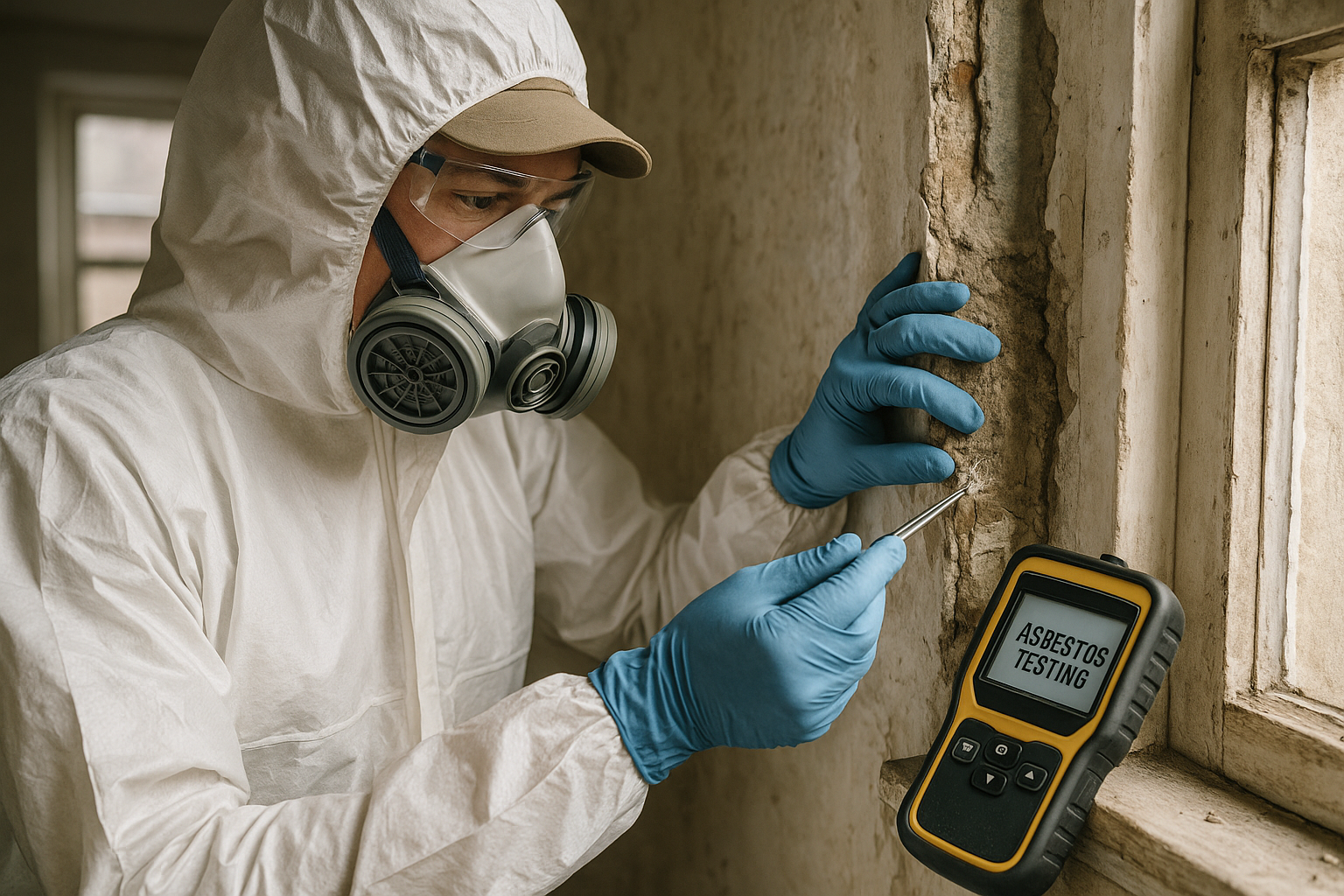
Bulk sampling is the most common form of asbestos testing. A trained surveyor takes a small sample from a suspect material and sends it for laboratory identification.
This is how you confirm whether a board, ceiling coating, floor tile, insulation product or cement sheet contains asbestos. If you need a professional attendance for a suspect material, our asbestos testing service is the usual starting point.
Air sampling
Air testing measures airborne fibre concentration at the time of the test. It is typically used during licensed asbestos work, after removal, or after an accidental disturbance where there is concern that fibres may have been released.
Air monitoring may include:
- Background sampling before work starts
- Leak monitoring around enclosures
- Personal monitoring for workers
- Clearance testing after removal work
Air testing has a specific role, but it is not a substitute for a survey. It will not tell you what hidden asbestos-containing materials are present in the fabric of the building.
Surface or dust sampling
Where contamination is suspected, dust or debris may be sampled as part of an incident investigation. This is more specialist than routine bulk sampling, but it can help establish whether poor-quality work or accidental damage has spread asbestos debris beyond the original source.
Which asbestos survey do you need?
Testing and surveying often go together. If you only sample one visible item, you may miss other asbestos-containing materials nearby. Choosing the right survey type is one of the most important decisions a duty holder or project manager makes.
Management survey
A management survey is designed for occupied buildings. Its purpose is to locate, as far as reasonably practicable, asbestos-containing materials that could be disturbed during normal occupation, routine maintenance or installation work.
This is usually the right starting point if you:
- Manage a non-domestic property
- Need an asbestos register for contractors
- Are responsible for common parts of a residential building
- Want to understand ongoing asbestos risk in an occupied site
Refurbishment survey
If intrusive work is planned, a refurbishment survey is required in the affected area before the project begins. This survey is intrusive because it must identify asbestos that could be disturbed by the planned works.
Typical triggers include:
- Kitchen or bathroom replacements
- Rewiring and electrical upgrades
- Boiler or HVAC replacement
- Office fit-outs and strip-outs
- Structural alterations
- Extensions and loft conversions
Starting refurbishment without the right survey is a common cause of delay. Contractors open up the fabric, suspect materials are found, work stops and urgent testing has to be arranged.
Demolition survey
Before a structure is demolished, a demolition survey is needed. This is the most intrusive survey type because the aim is to identify all asbestos-containing materials, so they can be removed or managed before demolition proceeds.
For redevelopment sites, vacant offices, garages, warehouses and schools, this is a critical part of pre-construction planning.
Re-inspection survey
If asbestos has already been identified and left in place, it should not be forgotten. A re-inspection survey checks known materials to confirm whether their condition has changed and whether the management plan is still suitable.
This is practical asbestos management. Materials age, areas change use and contractors may accidentally damage items that were previously stable.
When asbestos testing London projects should arrange
London jobs move quickly. Reactive maintenance, lease-end works, fit-outs and redevelopment programmes often leave little room for delay. That is exactly why asbestos testing London teams need should be arranged early.

Book testing or the correct survey before any of the following:
- Drilling into walls, ceilings or risers
- Replacing floor finishes
- Removing partitions
- Upgrading electrical systems
- Changing boilers, plant or pipework
- Carrying out roof repairs
- Starting strip-out works
- Demolition or site clearance
A short pause to test first is far cheaper than halting a live job after suspect debris is found. It also protects contractors who may otherwise be exposed without warning.
Legal duties and guidance you need to know
The legal position is clear. Under the Control of Asbestos Regulations, those responsible for non-domestic premises must manage asbestos risk. That duty can also apply to common parts of residential buildings, including corridors, stairwells, service cupboards, plant rooms and entrance areas.
In practice, duty holders should:
- Find out whether asbestos is present, and if so where it is
- Assess the risk from those materials
- Keep an up-to-date asbestos register
- Prepare and implement a management plan
- Share information with anyone liable to disturb the material
- Review the condition of known materials regularly
Survey work should align with HSG264, which sets out the purpose, scope and reporting expectations for asbestos surveys. Wider HSE guidance also informs how asbestos is sampled, analysed, managed and removed.
If you are a landlord, facilities manager, managing agent, contractor or commercial property owner, asbestos records should sit alongside your core compliance documents. They need to be available before works are priced, scoped or started.
Can you use a testing kit instead of a survey?
Sometimes yes, but often no. It depends on what you need to prove and how much risk is involved in taking a sample.
If you have one accessible suspect item and only need laboratory confirmation, an asbestos testing kit can be a practical option. It allows you to submit a sample without arranging a full site visit.
If you already have a safely collected sample and only need lab identification, sample analysis may be enough. For straightforward checks on a single material, that can save time.
There are limits though. A kit does not inspect the rest of the property. It does not assess extent, accessibility, condition or likelihood of disturbance. It does not create an asbestos register or management plan. It also does not replace a legally required survey before refurbishment or demolition.
A testing kit should not be used where the material is damaged, friable, overhead, difficult to access, close to services or likely to release fibres during sampling. In those cases, professional attendance is the safer route.
If you want a quick overview of available options, this page on asbestos testing explains the service routes clearly.
What happens if asbestos is found?
Finding asbestos does not automatically mean it must be removed. The correct response depends on the material type, condition, location, accessibility and whether planned works will disturb it.
There are usually three possible outcomes:
- Leave it in place and manage it if the material is in good condition and unlikely to be disturbed
- Repair, seal or encapsulate it if minor damage can be controlled safely
- Remove it if it is damaged, higher risk or in the way of planned works
This is where good advice matters. A useful report should not just identify asbestos. It should help you decide what action is proportionate and what needs to happen next.
Where removal is required, use a competent contractor and make sure the scope matches the survey findings. If remedial work is needed, Supernova can also help coordinate asbestos removal so identification and next steps stay joined up.
How to choose the right asbestos testing company in London
Not all providers deliver the same standard of survey work, reporting or practical advice. In a city as busy as London, you need a team that can respond quickly without cutting corners.
Look for competence
Surveyors should be properly trained in asbestos surveying and sampling. Reports should be site-specific, clear and usable, not generic documents that leave you guessing.
Check the reporting standard
A good report should identify the material, location, extent and recommended action. It should support real decisions on maintenance, contractor control and project planning.
Make sure the survey matches the project
A management survey will not do the job of a refurbishment survey. If works are planned, say so at the start. The instruction needs to reflect the actual scope of the job.
Expect practical advice
The best asbestos consultants explain what to do next. They tell you whether a material can remain in place, whether further checks are needed, what contractors need to know and how urgent the issue really is.
Ask these questions before appointing anyone:
- What type of survey or testing do you recommend for this job?
- Will the report include clear material locations and actions?
- Can you attend quickly if works are time-sensitive?
- Do you also help with re-inspections and follow-on advice?
- Can you support removal planning if asbestos is identified?
Practical steps for property managers before work starts
If you manage a building portfolio, speed matters. So does consistency. The simplest way to avoid asbestos-related disruption is to build checks into your standard pre-work process.
Use this checklist before any maintenance, fit-out or redevelopment activity:
- Review the existing asbestos register and previous reports
- Check whether the planned works are intrusive
- Confirm whether the existing information actually covers the work area
- Arrange testing or the correct survey before contractors attend
- Share the findings with anyone pricing or carrying out the work
- Update records once works are complete
It is also worth keeping a simple rule for site teams: if a material is suspect and there is no clear asbestos information, stop and check before disturbing it.
Why early asbestos testing saves time as well as reducing risk
Most asbestos problems on London sites are not caused by the material itself. They are caused by late discovery. A job is scoped without proper information, contractors start opening up the building, then someone finds a suspicious board, lagging or ceiling finish.
That creates immediate problems:
- Works may need to stop
- Areas may need to be isolated
- Contractors may need new instructions
- Programmes can slip
- Costs increase because decisions are being made under pressure
Early asbestos testing London projects arrange avoids that pattern. It gives you a clearer scope, better pricing, safer contractor control and fewer surprises once work begins.
For planned works, the best time to deal with asbestos is before tenders are finalised and before anyone starts cutting into the fabric.
Asbestos testing London for different property types
The basic principles stay the same, but the way asbestos risk appears can vary by property type.
Offices
Older offices often contain asbestos in ceiling tiles, risers, service ducts, column casings and plant rooms. Fit-outs and CAT A or CAT B works regularly trigger the need for intrusive surveying.
Schools and education buildings
Schools may contain asbestos in classrooms, corridors, boiler rooms and service areas. Careful planning matters because buildings are often occupied and works may need to be phased around term time.
Residential blocks
Common parts such as stairwells, bin stores, service cupboards and plant rooms can fall within duty to manage requirements. Refurbishment inside flats may also require targeted surveys in the work area.
Retail and hospitality
Shop refits move quickly, and strip-out work can expose hidden materials behind signage, ceilings and wall linings. Testing before lease-end dilapidations or new tenant works can prevent costly delays.
Industrial units and warehouses
Roofs, wall cladding, pipe insulation, fire protection and old plant areas are frequent risk points. Demolition and redevelopment work in these settings often requires extensive intrusive surveying.
Frequently Asked Questions
How quickly can asbestos testing be arranged in London?
That depends on the property, access and whether you need a single sample visit or a full survey. For urgent projects, it helps to provide the address, photos if available, the planned works and your timescale so the right service can be booked quickly.
Is asbestos testing the same as an asbestos survey?
No. Testing usually means taking and analysing samples from suspect materials. A survey is broader and is designed to locate asbestos-containing materials in line with the building use and planned works. If refurbishment or demolition is planned, testing alone is usually not enough.
Do all asbestos materials need to be removed?
No. If asbestos-containing material is in good condition and unlikely to be disturbed, it can often remain in place and be managed. Removal is more likely where the material is damaged, higher risk or will be affected by planned works.
Can I take my own asbestos sample?
Only in limited low-risk situations, and only if the item is accessible and can be sampled safely. If the material is damaged, friable, overhead, difficult to reach or part of a wider project, professional sampling is the safer option.
What is the difference between a management survey and a refurbishment survey?
A management survey is for occupied buildings and helps manage asbestos during normal use and routine maintenance. A refurbishment survey is intrusive and is required before planned refurbishment work in the affected area.
If you need reliable asbestos testing London support, Supernova Asbestos Surveys can help with sampling, surveys, re-inspections and follow-on advice across the capital. Call 020 4586 0680 or visit asbestos-surveys.org.uk to book the right service for your property.