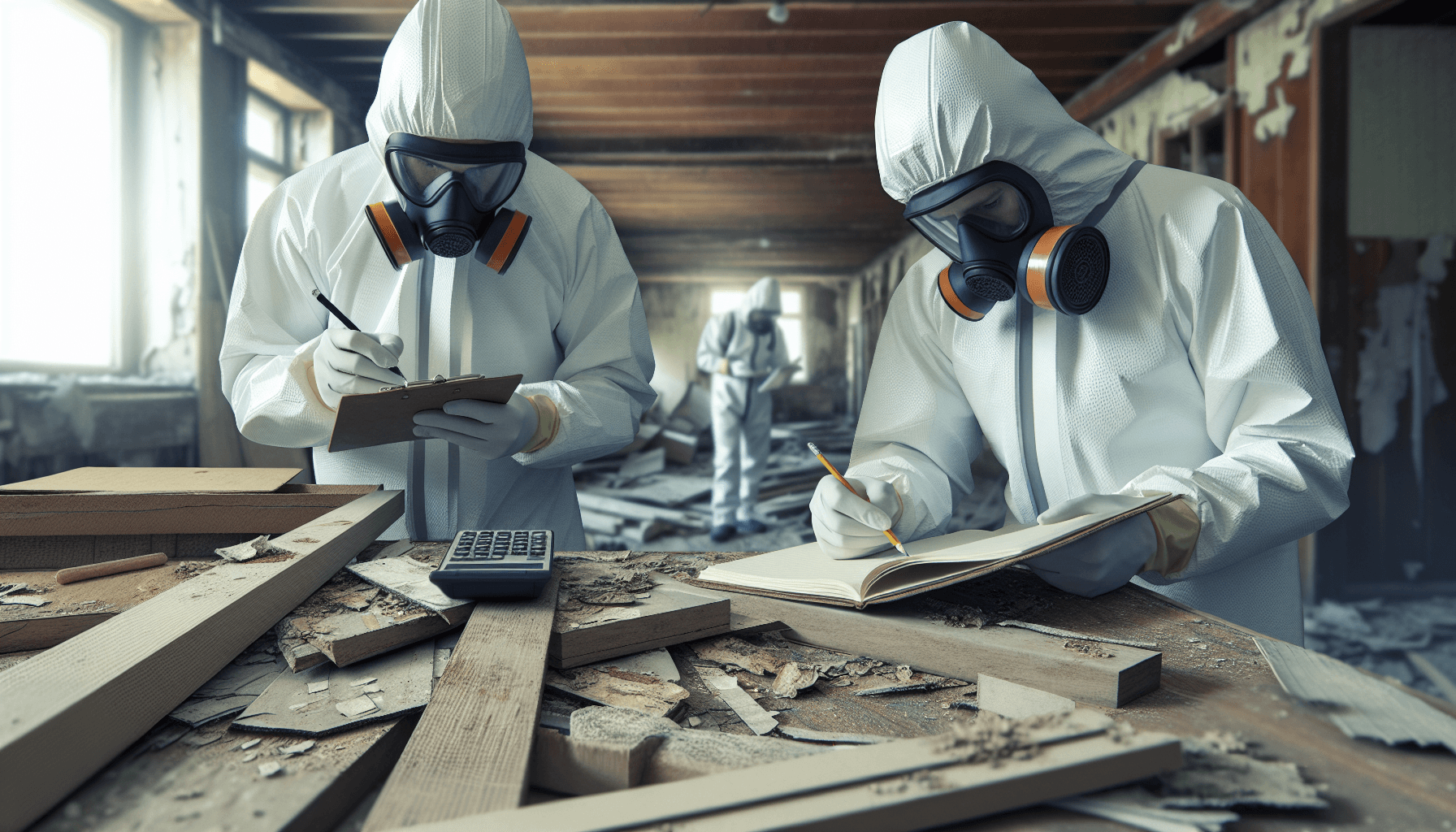
Asbestos Testing Services: What Every UK Property Owner Needs to Know
Asbestos remains present in a significant proportion of UK buildings constructed before 2000. If you own, manage, or are planning to renovate a property from that era, professional asbestos testing services are not optional — they are a legal requirement and a basic duty of care. Getting this wrong carries serious consequences for health, finances, and legal standing.
Why Asbestos Testing Services Matter
The Health Risks Are Severe and Long-Lasting
Asbestos fibres, once airborne, are invisible to the naked eye and nearly impossible to expel from the body once inhaled. Over time, they cause irreversible damage to lung tissue, leading to conditions including mesothelioma, asbestosis, and lung cancer — all of which are life-limiting, frequently fatal, and have no cure.
What makes asbestos especially dangerous is its latency period. Symptoms can take 20 to 40 years to appear after initial exposure, by which time the damage is already done. Disturbing asbestos-containing materials (ACMs) during routine work — drilling into a ceiling, ripping out floor tiles, removing partition walls — can release dangerous concentrations of fibres in seconds.
Testing before any works begin is the only way to know what you are dealing with. There is no safe level of guesswork when it comes to asbestos.
Your Legal Obligations as a Duty Holder
If you have any duty of care over a non-domestic property — as a landlord, employer, building manager, or property owner — the Control of Asbestos Regulations place a clear legal duty on you to manage asbestos risk. That duty requires you to:
- Identify whether ACMs are present in your premises
- Assess the condition and risk level of any ACMs found
- Produce and maintain an asbestos register
- Implement a management plan and keep it under review
- Inform anyone who might disturb those materials
Failure to comply is not simply a civil matter. The Health and Safety Executive (HSE) can issue improvement notices, prohibition notices, and prosecute duty holders. Fines and custodial sentences have both been imposed for serious breaches.
For domestic properties, the legal position differs — homeowners are not bound by the same duty-to-manage rules — but anyone undertaking renovation or extension work should still arrange testing before starting, for their own safety and that of any tradespeople on site.
Insurance and Property Value
Undisclosed asbestos can create significant complications when selling, remortgaging, or insuring a property. Many standard policies exclude asbestos-related remediation costs unless material has been disturbed as a direct result of a covered event.
Having a current asbestos survey on file demonstrates due diligence and makes conveyancing, insurance renewals, and lease negotiations considerably smoother. It is a relatively small upfront cost against potentially significant liabilities further down the line.
What Asbestos Testing Services Are Available?
Asbestos testing is not a single service. It encompasses several distinct activities depending on your circumstances, the type of property involved, and what you plan to do with it.
Asbestos Management Survey
A management survey is the standard survey for occupied premises. It is designed to locate ACMs that could be disturbed during normal occupation and routine maintenance. Surveyors access all accessible areas, take samples from suspected materials, and produce a report including an asbestos register and risk assessment.
This is what most commercial landlords, property managers, and employers need to fulfil their legal duty to manage asbestos. If you are unsure which survey type you need, an asbestos management survey is usually the starting point for any occupied building.
Refurbishment Survey
Before any refurbishment work begins — even something as minor as a bathroom refit or the removal of a partition wall — a refurbishment survey is required in the affected areas. This is a more intrusive survey, involving minor destructive inspection to locate all ACMs that could be disturbed during the planned works.
No contractor should be permitted to commence work in an area that has not had a refurbishment survey completed first. This protects workers, duty holders, and the integrity of the project.
Demolition Survey
The most comprehensive and intrusive survey type, a demolition survey is required before any structure is brought down or undergoes major structural alteration. It aims to locate all ACMs throughout the entire building so that a full asbestos removal programme can be planned prior to demolition.
This is a regulatory requirement under the Control of Asbestos Regulations. Principal contractors must have a copy of the demolition survey report before notifiable demolition work begins.
Re-Inspection Survey
If your property already has an asbestos register, the ACMs within it need to be periodically re-inspected to confirm their condition has not deteriorated. A re-inspection survey updates your existing asbestos management plan and ensures you remain compliant on an ongoing basis.
Annual re-inspections are standard practice, though high-risk or damaged materials may require more frequent monitoring. Keeping your register current is not just good practice — it is a legal obligation.
Asbestos Sample Testing and Testing Kits
If you have identified a specific material you are concerned about — an old floor tile, an Artex ceiling, pipe lagging — and want straightforward confirmation of whether it contains asbestos, sample testing is a cost-effective option. You can arrange professional asbestos testing directly, or use a home sampling kit if you need a quick answer on a single material.
Supernova offers an asbestos testing kit directly from our website, allowing you to safely collect a sample yourself and send it to a UKAS-accredited laboratory for analysis. Full instructions and appropriate protective equipment are included. Results are typically returned within 24 to 48 hours.
This testing kit is a practical solution for homeowners, small landlords, or anyone who needs a quick answer before deciding on next steps. It is not a substitute for a full survey where one is legally required, but it is a sensible first step when you have a specific concern.
Asbestos Removal
Where testing confirms the presence of ACMs that need to be removed — because they are damaged, or because refurbishment or demolition is planned — licensed asbestos removal by an HSE-licensed contractor is required for the most hazardous materials. Supernova provides removal services as part of a fully managed process, so you are not left coordinating between multiple contractors.
Understanding the Asbestos Testing Process
Knowing what to expect makes the process far less daunting. Here is how professional asbestos testing services work from start to finish.
Step 1: Initial Assessment and Site Visit
The process begins with a surveyor visiting the property to carry out a systematic inspection. For larger or more complex sites, a preliminary walkthrough may be arranged to review existing plans, identify access constraints, and scope the work accurately.
Experienced surveyors do not simply tick boxes. They understand building construction, can identify high-risk materials by appearance and location, and know where to look even when materials have been painted over or concealed behind subsequent finishes.
Step 2: Sample Collection
When materials suspected of containing asbestos are identified, small samples are carefully taken for laboratory analysis. The collection process is tightly controlled: surveyors use appropriate PPE, wet-wipe the area to suppress fibre release, seal the sample immediately, and decontaminate or dispose of tools as asbestos waste.
Where a material cannot be sampled safely — or where it is clearly in poor condition — surveyors will often presume it contains asbestos and record it as such. This cautious approach is consistent with HSE guidance and protects everyone involved.
Step 3: Laboratory Analysis
All samples are sent to a UKAS-accredited laboratory for analysis. UKAS accreditation is the recognised standard in the UK for testing competence, and it ensures results are reliable, defensible, and legally credible.
The primary analytical technique is polarised light microscopy (PLM), which allows analysts to identify the type and approximate concentration of asbestos fibres present. Standard turnaround is 24 to 48 hours, with priority or same-day analysis available where urgency demands it.
Step 4: Survey Report and Asbestos Register
Once results are returned, you receive a detailed written report. A well-produced survey report includes:
- A full asbestos register listing every ACM identified
- Location, type, and extent of each material
- Condition and risk assessment for each ACM
- Photographs of sampled materials and their locations
- Recommendations for management, encapsulation, or removal
- A priority action plan where required
This document becomes the foundation of your asbestos management plan. It must be made available to any contractor or maintenance worker before they begin any work on your premises.
Common Materials Found to Contain Asbestos
Asbestos was used in an extraordinarily wide range of building products. If your property was built or refurbished before 2000, any of the following could potentially contain asbestos:
- Textured coatings (Artex and similar products) on ceilings and walls
- Ceiling tiles and floor tiles, especially vinyl composite tiles
- Floor tile adhesives and bitumen-based mastics
- Pipe lagging and boiler insulation
- Insulating board used in fire doors, partition walls, and ceiling panels
- Roof sheets, guttering, and rainwater pipes (asbestos cement)
- Sprayed coatings on structural steelwork
- Soffit boards and external cladding panels
- Rope seals and gaskets in boilers and heating systems
- Toilet cisterns and water tanks
The presence of asbestos is not always obvious. Many ACMs look identical to their non-asbestos equivalents. Only laboratory analysis can confirm whether a material contains asbestos fibres — which is precisely why professional asbestos testing services exist.
How to Choose the Right Asbestos Testing Company
Check for UKAS Accreditation
UKAS (United Kingdom Accreditation Service) accreditation is the gold standard for asbestos surveying and laboratory analysis in the UK. It is not a nice-to-have — it is the minimum you should accept from any provider. A UKAS-accredited company operates under third-party oversight, regular audits, and defined quality assurance frameworks.
Do not be afraid to ask a company for their UKAS accreditation certificate before engaging them. Any reputable provider will produce it without hesitation. Without accreditation, you have no reliable way to verify the quality of the work or the validity of the results.
Look for Qualified, Experienced Surveyors
The survey is only as good as the person conducting it. Asbestos surveyors should hold the relevant P402 qualification as a minimum. Ask about the experience of the specific surveyors who will attend your site — not just the company’s general credentials.
Experience matters particularly in older or unusual building types: pre-war industrial buildings, listed properties, schools, hospitals, and public sector estates all present challenges that a less experienced surveyor might miss. HSG264 — the HSE’s guidance on asbestos surveys — sets out the competency requirements that surveyors should meet.
Consider Service Range and National Coverage
If you manage multiple properties or operate across different regions, you need a provider with consistent national coverage — not one that serves one area well but struggles to resource sites elsewhere. Supernova Asbestos Surveys provides nationwide coverage across England, Scotland, and Wales, with surveyors deployed directly rather than subcontracted.
This matters because subcontracting introduces variability in quality, communication, and accountability. When you engage Supernova, you know exactly who is attending your site and what standards they are held to.
Transparency on Pricing and Turnaround
Reputable providers will give you a clear, itemised quote before any work begins. Be cautious of vague pricing structures, hidden laboratory fees, or companies that are evasive about turnaround times for reports.
A good asbestos testing company will also advise you honestly on which service you actually need — not upsell you to a more expensive survey type if a simpler solution is appropriate.
Who Needs Asbestos Testing Services?
The short answer: anyone responsible for a building constructed before 2000. But in practice, the need for asbestos testing is particularly acute for:
- Commercial landlords — legal duty to manage asbestos in all non-domestic premises
- Employers — responsibility for the safety of employees and contractors on site
- Property developers — required to survey before refurbishment or demolition
- Housing associations and local authorities — managing large portfolios of older stock
- Schools, hospitals, and public buildings — high footfall environments with particular obligations
- Homeowners undertaking renovation — not legally required to manage, but strongly advised to test before any works
- Buyers and conveyancers — due diligence before purchasing older properties
Even if you have no immediate plans to carry out works, having a current asbestos survey on file is sound property management. It protects you, your tenants, your contractors, and anyone else who enters the building.
Frequently Asked Questions
How do I know if my building needs asbestos testing?
If your building was constructed or refurbished before 2000, there is a realistic possibility that asbestos-containing materials are present somewhere within it. Age alone is sufficient reason to arrange a survey. If you are planning any building works — however minor — testing in the affected areas is essential before work begins. For non-domestic premises, the Control of Asbestos Regulations require duty holders to identify and manage asbestos regardless of whether any works are planned.
What is the difference between a survey and a test?
A survey involves a qualified surveyor inspecting the building, collecting samples, and producing a full written report including an asbestos register and risk assessment. A test refers specifically to the laboratory analysis of a sample — either collected by a surveyor or by yourself using a home sampling kit. Testing alone tells you whether a specific material contains asbestos; a survey gives you a complete picture of the building and your legal obligations.
How long does an asbestos survey take?
This depends on the size and complexity of the property. A small commercial unit might be completed in two to three hours. A large industrial building, school, or multi-storey property could take a full day or longer. Your surveyor will advise on the expected duration before attending. Laboratory results are typically returned within 24 to 48 hours of sample submission, after which your written report is produced.
Can I collect my own asbestos sample?
Yes, in some circumstances. Supernova’s asbestos testing kit allows you to safely collect a sample from a suspected material and send it to a UKAS-accredited laboratory for analysis. The kit includes full instructions and appropriate protective equipment. This is suitable for homeowners or small landlords with a concern about a specific material. However, it is not a substitute for a full survey where one is legally required — for example, before refurbishment or demolition works, or to fulfil your duty-to-manage obligations as a non-domestic duty holder.
What happens if asbestos is found?
Finding asbestos does not automatically mean it needs to be removed. Many ACMs in good condition and low-risk locations are best left in place and managed through a documented asbestos management plan. Your survey report will include recommendations for each material identified — whether that is monitoring, encapsulation, or removal. Where removal is required, it must be carried out by an HSE-licensed contractor for the most hazardous materials. Supernova can manage the entire process from survey through to removal and clearance.
Get Professional Asbestos Testing Services from Supernova
Supernova Asbestos Surveys has completed over 50,000 surveys nationwide. Our surveyors are fully qualified, our laboratory partners are UKAS-accredited, and our reports are produced to the standard required by the HSE and the Control of Asbestos Regulations.
Whether you need a management survey for an occupied building, a refurbishment survey before planned works, sample testing for a specific material, or a full demolition survey, we have the expertise and national coverage to deliver it efficiently and accurately.
Call us on 020 4586 0680 or visit asbestos-surveys.org.uk to request a quote or speak to a member of our team. We will advise you honestly on what you need — and get it done properly.