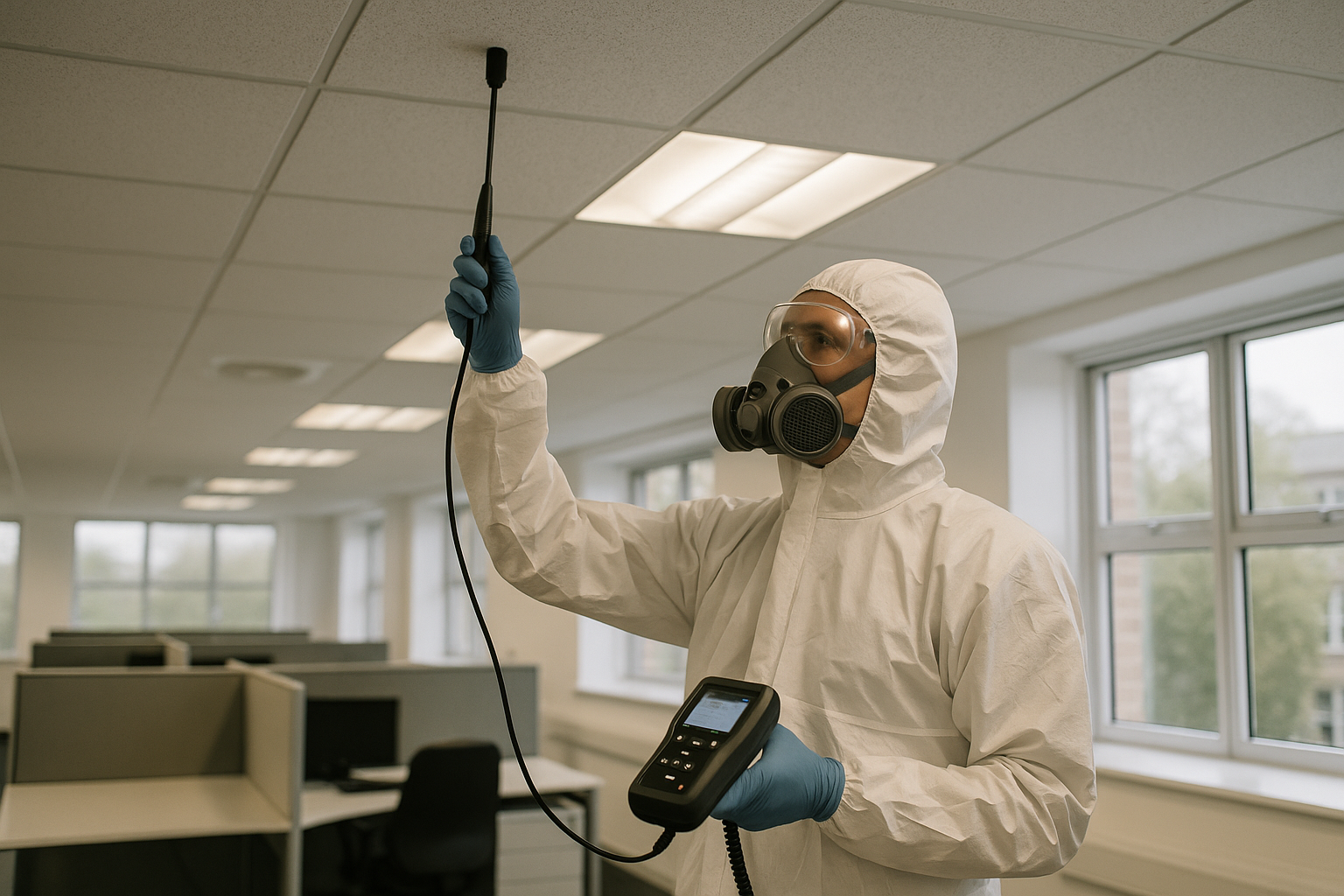
One missed ceiling void can stop a project in its tracks. A commercial asbestos survey gives you reliable information before maintenance teams, fit-out contractors or demolition crews disturb materials that may contain asbestos, helping you avoid delays, unsafe work and expensive surprises.
If you manage non-domestic premises, asbestos is not an admin exercise. Under the Control of Asbestos Regulations, duty holders must identify asbestos-containing materials so far as reasonably practicable, assess their condition and manage the risk in line with HSE guidance and HSG264.
Speak to our expert team
If you are unsure which survey you need, get advice before works start. A short conversation can prevent the wrong survey being commissioned, which is one of the most common reasons projects stall.
Supernova Asbestos Surveys supports landlords, managing agents, facilities managers, contractors and estate teams across the UK. We can help you scope the right commercial asbestos survey, arrange access, review existing asbestos information and explain what the report means in practical terms.
What is asbestos and what risk does it present?
Asbestos is a group of naturally occurring minerals that were widely used in UK buildings because they were heat resistant, durable and good for insulation and fire protection. It was used in many commercial and industrial properties, particularly those built or refurbished before 2000.
The risk comes when asbestos-containing materials are damaged or disturbed. If fibres are released and breathed in, they can cause serious disease, which is why identifying and managing asbestos properly matters so much in occupied buildings and during building work.
Common asbestos-containing materials in commercial premises include:
- Asbestos insulating board
- Pipe lagging
- Sprayed coatings
- Cement sheets and roof panels
- Textured coatings
- Vinyl floor tiles and adhesives
- Insulation around plant and boilers
- Fire protection materials
- Debris in ceiling voids, ducts and service risers
Risk depends on several factors:
- The type of asbestos product
- Its condition
- Its location
- How likely it is to be disturbed
- Who may be exposed, including contractors and maintenance staff
That is why a commercial asbestos survey is not simply about finding asbestos. It is about understanding where the risk sits in the building and what action is sensible.
When is a commercial asbestos survey needed?
A commercial asbestos survey is usually needed when you take on responsibility for a building, when asbestos information is missing or unreliable, or before work that could disturb the fabric of the premises.
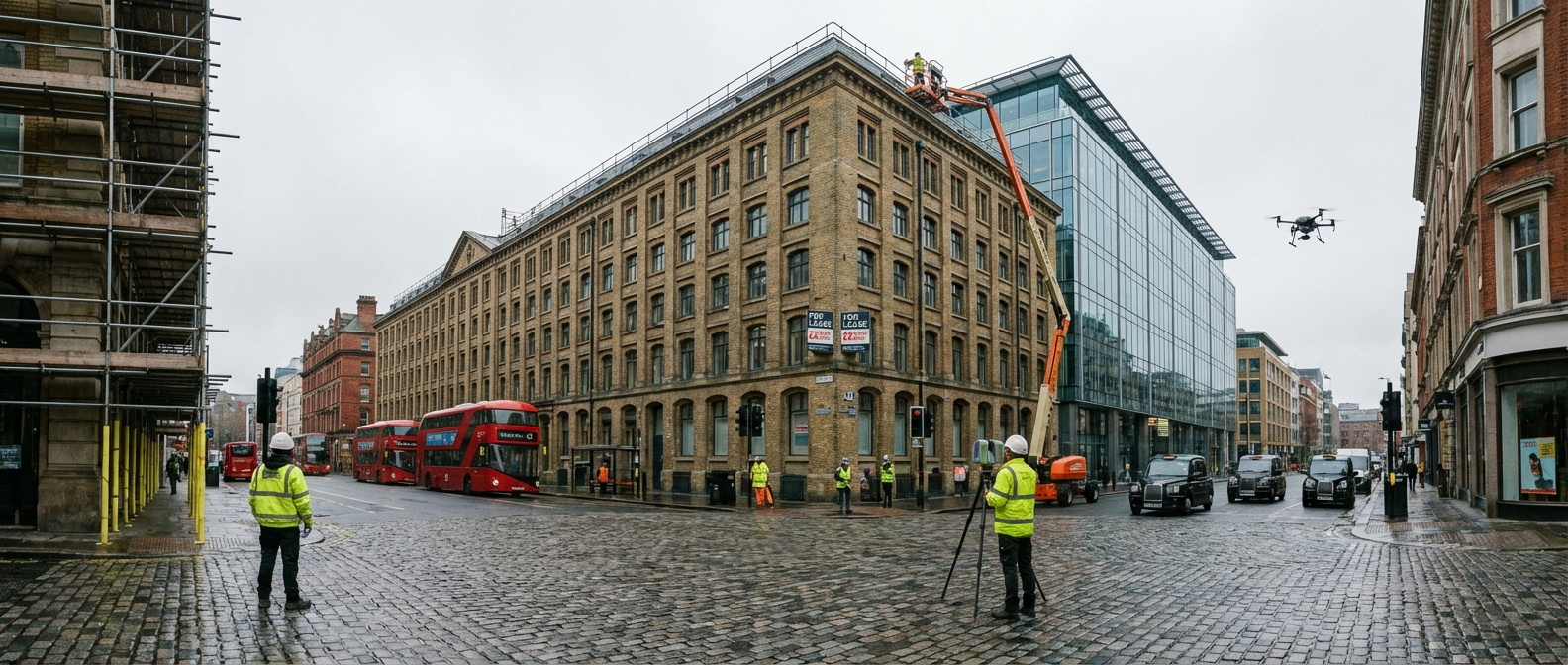
In practical terms, you should be asking for current asbestos information when:
- You have taken over a commercial property
- The building was constructed or refurbished before 2000 and no reliable survey exists
- The asbestos register is missing, unclear or out of date
- Routine maintenance or installation work is planned
- Contractors need asbestos information before starting work
- Refurbishment, strip-out or demolition is due to begin
- Known asbestos is being managed in place and needs reviewing
If there is no dependable information, the safest assumption is that asbestos may be present until a suitable survey proves otherwise. Leaving the question unanswered until contractors arrive on site is where avoidable problems start.
Who usually arranges a commercial asbestos survey?
The duty to manage asbestos generally sits with whoever has responsibility for repair and maintenance of non-domestic premises. Depending on the lease and occupation, that may include:
- Commercial landlords
- Managing agents
- Facilities managers
- Freeholders
- Tenants with repairing obligations
- Employers occupying their own premises
- School, academy and university estates teams
- Healthcare estate managers
- Industrial site operators
- Retail, leisure and hospitality groups
- Public sector organisations
If you authorise maintenance, appoint contractors or control access to the building, you need to know whether the asbestos information is current and fit for purpose.
What does an asbestos survey involve?
A proper commercial asbestos survey is a structured inspection by a competent surveyor. It is not a quick walk-round, and it should not leave contractors guessing what is safe to disturb.
The process usually includes:
- Scoping the survey – the survey type, purpose, access arrangements and affected areas are confirmed.
- Inspecting the site – accessible areas are checked systematically.
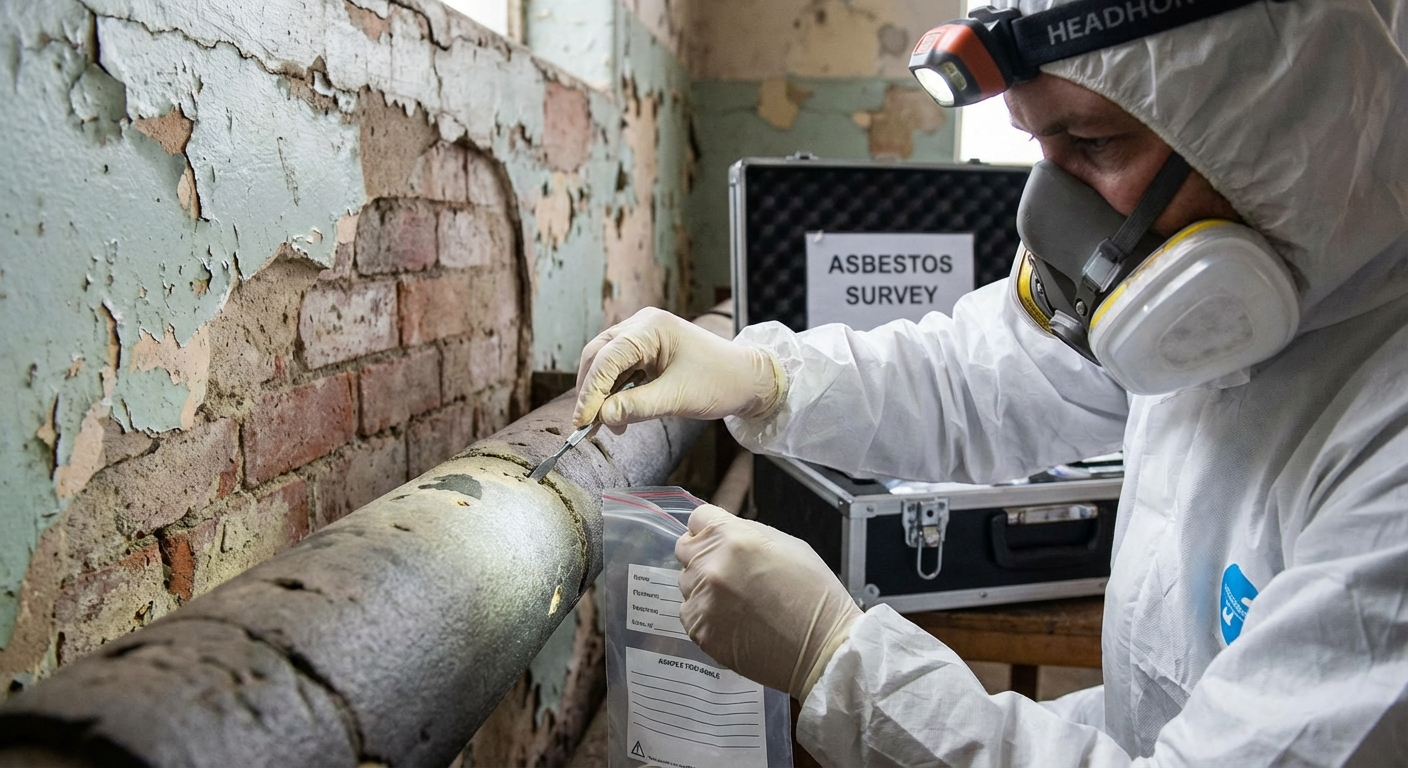
- Sampling suspect materials – where appropriate, samples are taken using controlled techniques.
- Laboratory analysis – samples are analysed by a UKAS-accredited laboratory.
- Recording findings – materials are logged by location, extent, product type and condition.
- Issuing the report – you receive findings, sample results, register information and recommendations.
Some materials may be recorded as presumed asbestos if sampling is not possible or would cause unnecessary damage. A good report makes clear what has been sampled, what has been presumed and which areas were not inspected.
What should be in the survey report?
A useful report should be clear enough for property managers, consultants and contractors to act on without confusion. It will usually include:
- Survey scope and methodology
- Areas inspected
- Exclusions and limitations
- Material descriptions and locations
- Photographs
- Sample locations and laboratory results
- Asbestos register information
- Material assessments
- Recommendations for management or further action
Before relying on the report, check that all relevant areas are covered. Pay particular attention to plant rooms, risers, service ducts, roof voids, basements, external stores and outbuildings.
Types of commercial asbestos survey
The right commercial asbestos survey depends on what is happening in the building. Day-to-day occupation needs a different approach from intrusive works or demolition.
Management survey
A management survey is the standard survey for an occupied building in normal use. Its purpose is to locate, so far as reasonably practicable, suspected asbestos-containing materials that could be damaged or disturbed during normal occupation, routine maintenance or foreseeable installation work.
This survey is usually non-intrusive or only mildly intrusive. It is often suitable when you have recently taken over a property, when no asbestos register exists, or when contractors need information before routine maintenance.
Refurbishment surveys
If intrusive works are planned, a management survey is not enough. A refurbishment survey is designed for areas where the building fabric will be disturbed.
This type of commercial asbestos survey is intrusive by design. It aims to identify asbestos in the areas affected by the planned works, including materials hidden behind walls, above ceilings, below floors and within service routes.
You will usually need one before:
- Office refits
- Toilet or kitchen refurbishments
- Mechanical and electrical upgrades
- Partition changes
- Heating system replacement
- Rewiring projects
- Roof works
- Strip-out before fit-out
Demolition surveys
Where a structure is being taken down, a demolition survey is required. This is a fully intrusive survey intended to locate asbestos-containing materials throughout the building, so they can be dealt with before demolition starts.
The relevant area is normally vacant for this level of inspection. If demolition is planned, a management-focused commercial asbestos survey will not provide enough information.
Re-inspection surveys
When asbestos is being managed in place, information must stay current. A re-inspection survey checks known or presumed asbestos-containing materials again to confirm whether their condition has changed.
This helps you keep your register accurate and decide whether materials can remain in place, need repair, require encapsulation or should be removed.
How to choose the right survey for your building
The key question is not just whether you need a commercial asbestos survey, but what that survey needs to achieve. The answer depends on the building use, planned works, affected areas and whether the premises are occupied.
A simple rule of thumb is:
- Normal occupation and routine maintenance – management survey
- Intrusive refurbishment or strip-out – refurbishment survey
- Full or partial demolition – demolition survey
- Known asbestos still on site – re-inspection survey
Some sites need more than one survey type. A live office building may need a management survey for occupied floors and a refurbishment survey for one vacant suite being altered. A factory may need a phased approach because access permits, shutdown windows and operational risks affect what can be inspected safely.
Before booking, have answers to these questions:
- What work is planned?
- Which exact areas are affected?
- Is the building occupied?
- Do you already have asbestos reports or a register?
- Are there inaccessible spaces such as risers, roof voids or plant rooms?
Getting the scope right at the start saves repeat visits and reduces the chance of gaps in the final report.
Sourcing analysts and surveyors
Choosing the right people matters as much as choosing the right survey type. A commercial asbestos survey should be carried out by competent professionals who understand the building, the planned works and the level of intrusion required.
When sourcing analysts and surveyors, ask practical questions:
- Do they specialise in asbestos surveying for commercial property?
- Can they work to HSG264 requirements?
- Can they explain the survey scope clearly before attending?
- Will samples be analysed by a UKAS-accredited laboratory?
- Can they deal with live sites, permits and restricted access?
- Will the final report be clear enough for contractors to use?
If removal or remedial works are needed afterwards, there may also be a need for analytical support, air monitoring or clearance procedures depending on the nature of the work. Good coordination between surveyors, analysts and contractors keeps projects moving and reduces confusion on site.
What happens if asbestos is found?
Finding asbestos during a commercial asbestos survey does not automatically mean everything must be stripped out. In many cases, asbestos-containing materials can remain safely in place if they are in good condition, sealed, recorded properly and unlikely to be disturbed.
The next step depends on the material, its condition and the planned use of the area. Typical options include:
- Manage in place – where the material is sound and unlikely to be disturbed
- Encapsulate or repair – where minor damage can be controlled
- Restrict access – where immediate disturbance risk needs reducing
- Remove – where the material is damaged, deteriorating or affected by planned works
If removal is required, it should be planned properly under the appropriate controls. Supernova can also help arrange asbestos removal where survey findings show materials need to be taken out.
Our clients
Supernova carries out commercial asbestos survey work for a wide range of organisations. That includes single-site businesses, multi-site property portfolios and complex estates with mixed building types.
We regularly assist:
- Landlords and freeholders
- Managing agents
- Facilities management companies
- Retail and hospitality operators
- Industrial and logistics businesses
- Schools, colleges and universities
- Healthcare providers
- Local authorities and public bodies
- Contractors and project managers
- Housing providers managing common parts and mixed-use sites
Different sectors create different asbestos management challenges. Offices often involve churn and frequent fit-outs, while industrial sites may have plant rooms, service ducts and shutdown constraints. Education and healthcare settings usually need careful planning around occupation and access.
Areas we carry out commercial asbestos surveys
Supernova provides commercial asbestos survey services nationwide. We support clients in major cities, regional centres and multi-site portfolios that need consistent reporting across different locations.
If you need local support, you can arrange an asbestos survey London, an asbestos survey Manchester or an asbestos survey Birmingham.
When booking across multiple sites, it helps to standardise the brief. Provide addresses, building use, planned works, access restrictions and any previous asbestos information for each property so the survey scope can be set correctly from the outset.
Address and site information: what to have ready
A smooth booking starts with accurate property details. If you can provide the full address and a few practical points about the site, the survey can be planned more efficiently and with fewer assumptions.
Have this information ready:
- Full property address
- Building type and approximate age
- Number of floors and approximate size
- Contact details for site access
- Any previous asbestos reports or registers
- Plans, drawings or site layouts if available
- Details of planned works
- Access restrictions, permits or security procedures
Also mention awkward areas early. Locked rooms, roof voids, basements, risers, plant rooms, external stores and outbuildings can all affect the scope of a commercial asbestos survey.
Disclaimer
Survey findings are based on the scope agreed, the areas accessed and the level of intrusion permitted at the time of inspection. No commercial asbestos survey can report on areas that were inaccessible, concealed beyond the survey scope or excluded by client instruction.
If the building use changes, further intrusive works are planned, or previously inaccessible areas need to be disturbed, an additional survey may be required. Survey reports should be read in full, including limitations, exclusions and recommendations, before maintenance, refurbishment or demolition work begins.
Frequently Asked Questions
Do I need a commercial asbestos survey for an occupied building?
If the building is non-domestic and asbestos information is missing, unreliable or out of date, a commercial asbestos survey is often needed. For an occupied building in normal use, this is usually a management survey.
Is a management survey enough before refurbishment works?
No. A management survey is not designed for intrusive works. If refurbishment will disturb the building fabric, you normally need a refurbishment survey for the affected areas.
What if parts of the building cannot be accessed?
Inaccessible areas will usually be recorded as not inspected, and in some cases materials may need to be presumed to contain asbestos until proven otherwise. That can affect later works, so it is best to resolve access issues early.
Does finding asbestos always mean removal is required?
No. If asbestos-containing materials are in good condition and unlikely to be disturbed, they can often be managed in place. Removal is usually considered where materials are damaged, deteriorating or affected by planned works.
How do I arrange the right survey quickly?
Start with the building address, planned works, occupancy details and any existing asbestos records. Then speak to a competent surveyor who can match the survey type to the actual risk and scope of work.
Need clear advice and a fast quotation? Speak to Supernova Asbestos Surveys about your commercial asbestos survey requirements. Call 020 4586 0680 or visit asbestos-surveys.org.uk to book a survey anywhere in the UK.