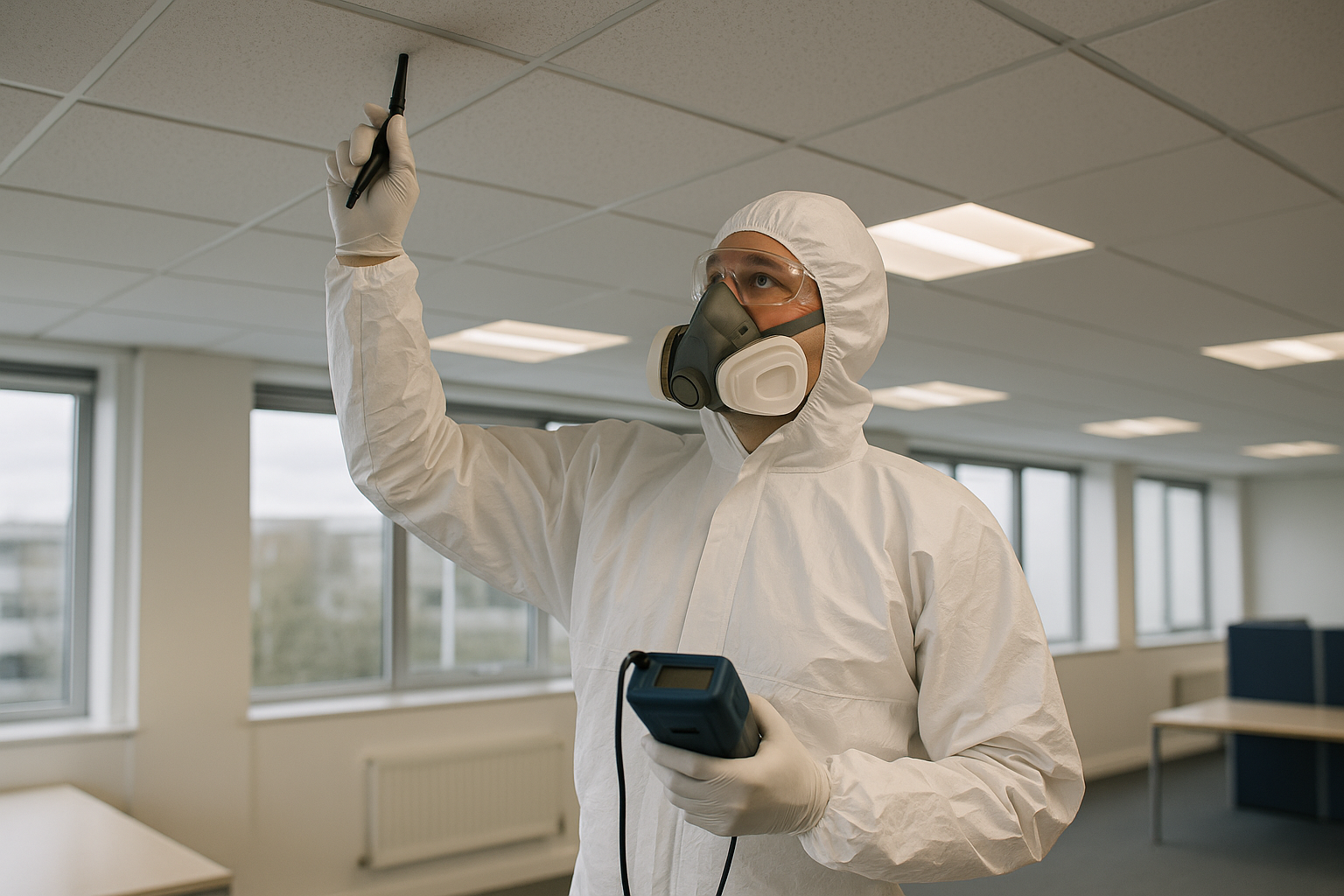
Hidden asbestos rarely announces itself politely. It turns up when a ceiling tile is lifted, when a riser is opened, or when a contractor is ready to start and suddenly needs answers. A properly scoped asbestos survey gives you those answers early, so you can manage risk, protect occupants and keep projects moving.
For property managers, landlords, duty holders and managing agents, an asbestos survey is not a paperwork exercise. Under the Control of Asbestos Regulations, those responsible for non-domestic premises must take reasonable steps to find out whether asbestos-containing materials are present, assess the risk, and make sure relevant information is shared with anyone who may disturb them. HSE guidance and HSG264 set the standard for how an asbestos survey should be planned, carried out and reported.
If a building was constructed before 2000, asbestos should always be considered. That does not mean it is definitely present, but it does mean you need reliable information before maintenance, refurbishment or demolition starts. Leave it too late and the usual result is delay, extra cost and avoidable disruption.
When do you need an asbestos survey?
The short answer is this: you need an asbestos survey whenever you are responsible for managing an older building, planning work that will disturb the fabric, or relying on records that may no longer be accurate. The right timing is before work starts, not when a problem has already been uncovered.
Common triggers include routine compliance, planned works, property transactions and concerns about suspect materials. If contractors, maintenance teams or occupants could disturb asbestos-containing materials, you need dependable information in place.
Typical situations where an asbestos survey is needed
- Managing non-domestic premises built before 2000
- Checking communal areas in residential blocks
- Planning maintenance, fit-outs or refurbishment works
- Preparing a structure for demolition
- Reviewing old, incomplete or unreliable asbestos records
- Investigating a specific suspect material
- Updating an asbestos register after changes in condition or layout
Even relatively minor works can disturb hidden materials. Drilling through a soffit, replacing floor finishes, accessing a ceiling void or altering service routes can all expose asbestos if the building has not been properly assessed.
How an asbestos survey works in practice
A good asbestos survey follows a clear process. It should match the building, the planned activity and the legal duty behind it. It is not a quick walk-round followed by a generic report.
1. Define the purpose
The first question is why the survey is needed. Day-to-day occupation requires a different approach from intrusive refurbishment or demolition. If the purpose is wrong, the scope will be wrong as well.
2. Review the property details
Before attending site, the surveyor should gather key information. That includes the property address, building age, occupancy, access restrictions, known hazards, previous asbestos records and the areas involved.
For intrusive work, some spaces may need to be isolated, cleared or temporarily taken out of use. If access is limited, that should be recorded honestly rather than glossed over.
3. Inspect the building
The surveyor inspects all reasonably accessible areas within the agreed scope. Depending on the survey type, this may range from a visual inspection of occupied areas to intrusive opening-up of voids, risers, boxing, floors and fixed finishes.
4. Take samples where needed
Many asbestos-containing materials cannot be identified reliably by sight alone. Representative samples are taken from suspect materials and sent for laboratory identification where appropriate.
5. Report the findings
The report should identify confirmed or presumed asbestos-containing materials, describe their location and condition, record any limitations, and recommend the next steps. That may include management in place, re-inspection, remedial action or removal.
6. Act on the report
An asbestos survey only becomes useful when the findings are applied. Update the asbestos register, brief contractors, screen planned works against the report and make sure anyone liable to disturb materials has the right information before starting.
Which type of asbestos survey do you need?
Choosing the right survey type matters. A survey that is too limited can miss hidden asbestos. A survey that does not match the planned work can leave you relying on information that was never intended for that purpose.
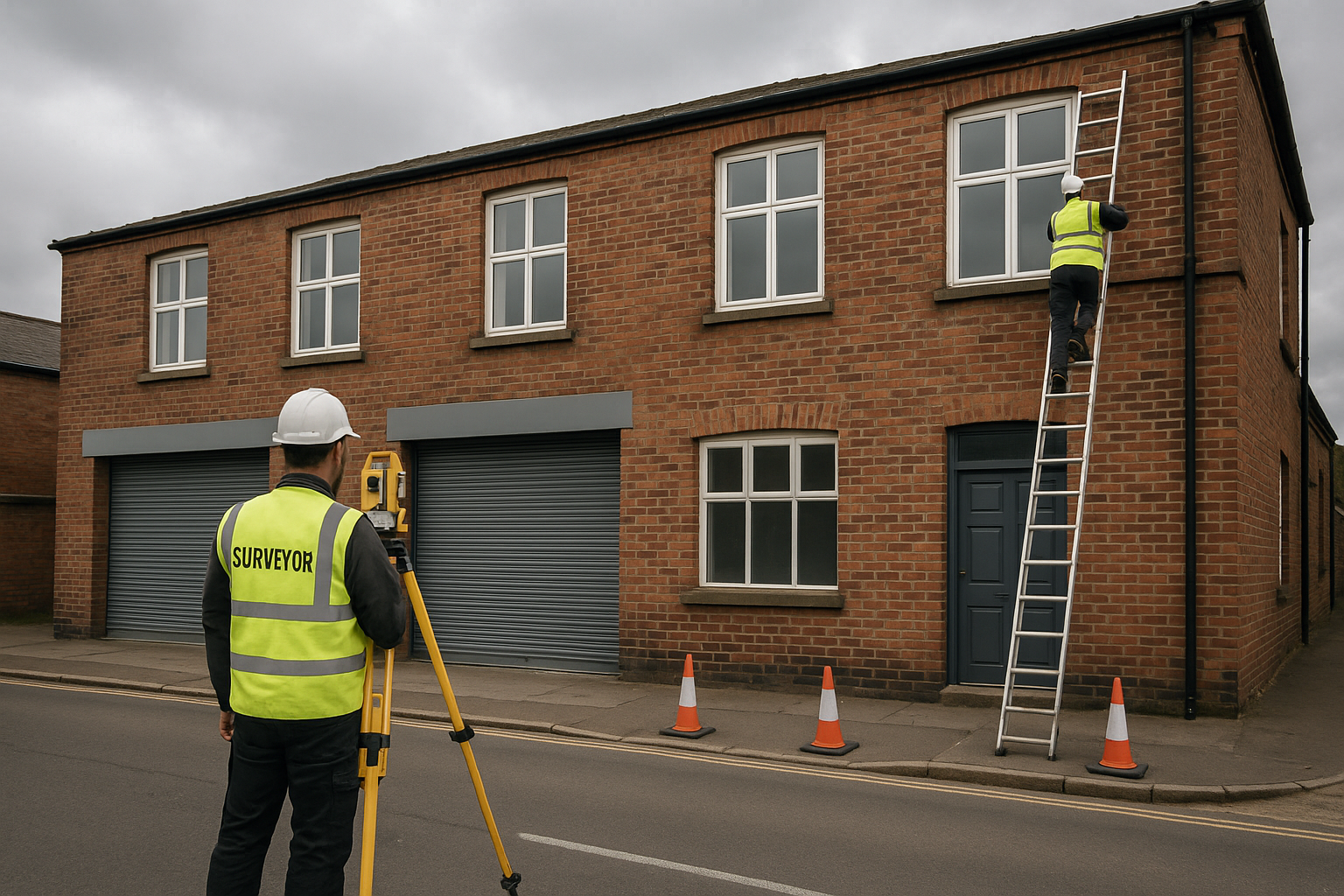
Management survey
A management survey is used for normal occupation and day-to-day management of a building. Its purpose is to locate asbestos-containing materials that could be disturbed during routine use, maintenance or reasonably foreseeable minor works.
For many duty holders, this is the starting point. It supports the asbestos register and management plan and helps make sure staff, maintenance teams and contractors have the information they need.
If you are responsible for an occupied non-domestic property, an asbestos management survey is often the most appropriate first step.
Refurbishment survey
A refurbishment survey is needed before refurbishment or intrusive maintenance in the affected area. It is designed to locate asbestos that may be hidden behind walls, above ceilings, below floors or within service voids.
This type of asbestos survey is more intrusive than a management survey. It is targeted at the specific area of planned works rather than the routine occupation of the building.
Demolition survey
A demolition survey is required before a building, or part of it, is demolished. It is fully intrusive and aims to identify all reasonably accessible asbestos-containing materials so they can be dealt with before demolition proceeds.
If demolition is planned, this survey must be done before work starts. Demolition without suitable asbestos information creates serious legal and safety problems and can stop a project immediately.
Re-inspection survey
Where asbestos-containing materials are being managed in place, a re-inspection survey helps confirm whether their condition has changed and whether records remain accurate.
This is especially useful where there has been wear, damage, maintenance activity or a change in occupancy. Re-inspection supports ongoing compliance and helps you spot deterioration before it becomes a bigger issue.
Buildings and sectors where an asbestos survey is commonly needed
Asbestos is not confined to one type of property. It appears across a wide range of sectors, which is why an asbestos survey is relevant to so many organisations.
- Commercial offices and business parks
- Schools, colleges and other education buildings
- Healthcare settings and clinics
- Retail units and shopping parades
- Factories, warehouses and industrial sites
- Hospitality and leisure venues
- Local authority and public-sector buildings
- Residential blocks with shared common areas
Each setting brings different access issues and practical considerations. A school may need surveys scheduled during holiday periods. A live industrial site may require permits and escorted access. A residential block may need clear communication with residents before intrusive work begins.
Non-domestic premises built before 2000
If you manage offices, shops, schools, healthcare buildings, warehouses or industrial premises built before 2000, an asbestos survey is often needed to support the duty to manage. The same applies to back-of-house areas, service zones and plant spaces that contractors may enter.
Communal areas in residential buildings
The duty to manage can extend to common parts of domestic premises. Corridors, stairwells, meter cupboards, risers, lift motor rooms, bin stores and shared service areas are all common examples where asbestos information may be needed.
Sampling, asbestos testing and laboratory analysis
Sampling is one of the most misunderstood parts of an asbestos survey. You cannot reliably identify every asbestos-containing material by sight. Laboratory analysis is often essential.
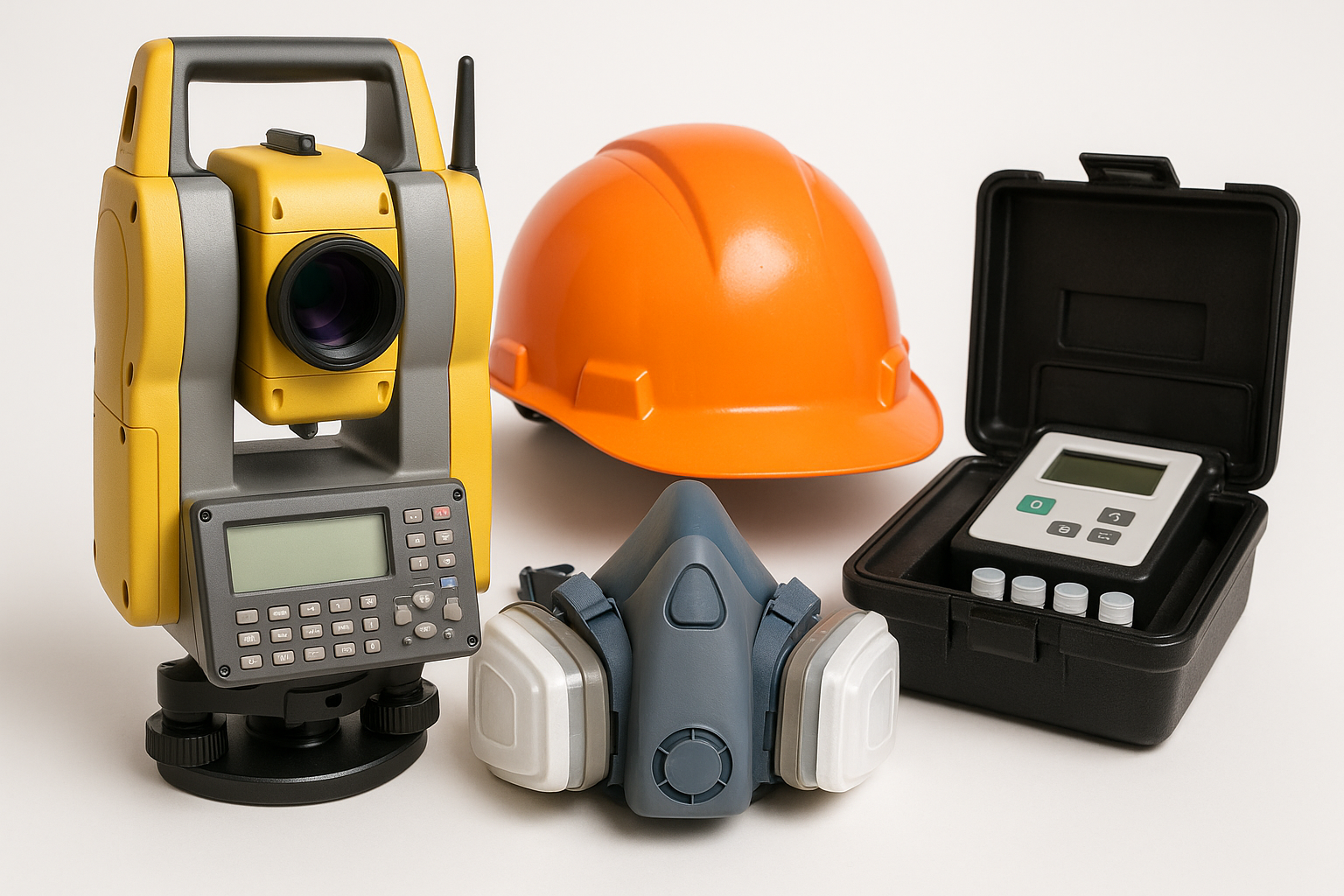
Good sampling practice should involve representative samples, controlled techniques that minimise fibre release, safe making-good at the sample point, and accurate recording of the exact location. Samples should be analysed by a UKAS-accredited laboratory.
When testing may be enough
If you have one suspect material and simply need to know whether it contains asbestos, professional asbestos testing can be a practical option. This can work well for a single concern where management duties do not require a full building survey.
For direct laboratory submission of an individual item, sample analysis is another practical route. It can confirm the composition of a specific material, but it does not replace a full asbestos survey where wider legal duties apply.
When a survey is the better option
If the issue affects a wider area, planned works, contractor safety or ongoing management, testing in isolation is usually not enough. In those cases, survey-led asbestos testing is the better route because the material needs to be understood in context.
A positive result is only part of the picture. The location, condition, extent and likelihood of disturbance all influence what should happen next.
Using a testing kit
For some clients, an asbestos testing kit offers a convenient way to submit a sample for laboratory analysis. Others may simply want a testing kit for an isolated concern before deciding on wider action.
That can be useful for a single material, but it is not a substitute for a properly scoped asbestos survey when you are managing a building or planning intrusive work. If there is any doubt about the wider risk, bring in a competent surveyor.
How to check whether an asbestos survey report is reliable
A report should help you make decisions, not create more uncertainty. Before relying on an asbestos survey for maintenance, tendering or project planning, review it carefully.
Start with the basics. The report should clearly state the survey type, purpose and scope. If that is vague or missing, the rest of the document may not be suitable for your needs.
What a good report should include
- The correct property address and building description
- The survey type and reason for the survey
- Areas accessed and areas not accessed
- Clear room references, plans or location descriptions
- Identified or presumed asbestos-containing materials
- Sample results and laboratory identification where relevant
- Condition information and material assessments where appropriate
- Practical recommendations for management, re-inspection or removal
Practical checks you can carry out
- Walk key areas with the report in hand and make sure the room references make sense.
- Check that plant rooms, risers, roof voids and service cupboards have been addressed if they fall within scope.
- Confirm inaccessible areas are clearly recorded rather than quietly omitted.
- Make sure photographs and plans match the locations described.
- Review whether the asbestos register has been updated from the report.
- Ask questions early if the recommendations are too vague to brief contractors properly.
If the building layout has changed since the report was issued, or if previous inaccessible areas can now be reached, update the information before relying on it. Old reports are not always wrong, but they are not always enough.
Practical steps to arrange an asbestos survey
Arranging an asbestos survey should be straightforward if the brief is clear. Speed matters, but clarity matters more. A rushed booking with the wrong scope can cost more than taking a little extra time to get it right.
- Identify the purpose. Decide whether you need management, refurbishment, demolition or re-inspection.
- Gather site information. Provide the address, age of building, drawings, occupancy details and any previous asbestos records.
- Define the area involved. If only part of the building is affected, be specific about rooms, floors or work zones.
- Confirm access arrangements. Include keys, permits, escorts, restricted areas and whether intrusive work requires isolation or temporary decanting.
- Check the proposed survey type. Ask why it is suitable for the legal duty or planned works.
- Ask how samples will be analysed. Make sure laboratory analysis and reporting arrangements are clear.
- Plan the next step. Decide who will update the register, brief contractors and act on urgent findings.
One of the most useful habits is thinking one step ahead. Who will hold the report? Who will issue asbestos information to contractors? What happens if damaged materials are found and immediate action is needed? Those answers should be clear before the surveyor arrives.
Common mistakes that cause delay and risk
Most asbestos problems on site are not caused by the material itself. They are caused by poor planning, unclear scope or over-reliance on old information.
- Using a management survey to support refurbishment works
- Assuming a previous report covers newly altered areas
- Failing to tell the surveyor about restricted or high-risk areas
- Booking intrusive surveys without arranging access or isolations
- Relying on a single sample result when wider building information is needed
- Not passing the report to contractors before work starts
- Failing to update the asbestos register after new findings
A little preparation avoids most of these issues. If you are unsure what level of asbestos survey is required, ask before works are priced, programmed or tendered.
What to do after an asbestos survey
The survey is only the start. Once you have the report, the next steps should be practical and immediate.
If asbestos-containing materials are identified and remain in place, update the asbestos register and management plan. Make sure maintenance staff, visiting contractors and anyone likely to disturb the materials can access the relevant information.
If the report recommends remedial action, re-inspection or removal, put timescales against those actions. If refurbishment or demolition is planned, make sure the findings are fed directly into project planning before any intrusive work starts.
Where the report records inaccessible areas, decide whether further access is needed. A limitation noted in the report is not a problem by itself, but ignoring it can become one later.
Frequently Asked Questions
Do I need an asbestos survey for a building built before 2000?
If you are responsible for a non-domestic building, or the common parts of a residential building, and it was built before 2000, asbestos should be considered. An asbestos survey is often needed to support compliance, maintenance planning and contractor safety.
What is the difference between a management survey and a refurbishment survey?
A management survey supports normal occupation and routine maintenance. A refurbishment survey is more intrusive and is required before refurbishment or intrusive works in the affected area. The two are not interchangeable.
Can asbestos be identified without sampling?
Not reliably in every case. Some materials can only be confirmed through laboratory analysis. Presumption may be used in some circumstances, but where certainty is needed, sampling and UKAS-accredited analysis are the usual route.
How often should asbestos-containing materials be re-checked?
Materials managed in place should be monitored and re-inspected at suitable intervals based on their condition, location and likelihood of disturbance. The right frequency depends on the risk and how the building is used.
Is an asbestos testing kit enough instead of a survey?
A testing kit can help with a single suspect material, but it does not replace a full asbestos survey where legal duties apply or where wider building information is needed. If the issue affects management, contractors or planned works, a survey is usually the safer option.
If you need a reliable asbestos survey with clear reporting and practical advice, Supernova Asbestos Surveys can help. We carry out management, refurbishment, demolition, re-inspection and testing services nationwide. Call 020 4586 0680 or visit asbestos-surveys.org.uk to arrange the right survey for your property.